Publication of *The Adventures of Huckleberry Finn* in the United States
1885 · New York, United States
The Adventures of Huckleberry Finn by Mark Twain is published in the United States.
November 7, 1872
The U.S. cargo ship Mary Celeste set sail from New York Harbor to Genoa, Italy, on what would become its infamous final voyage. The ship was later discovered abandoned and adrift in the Atlantic Ocean with no trace of the crew.
New York, United States | M. H. & Co.
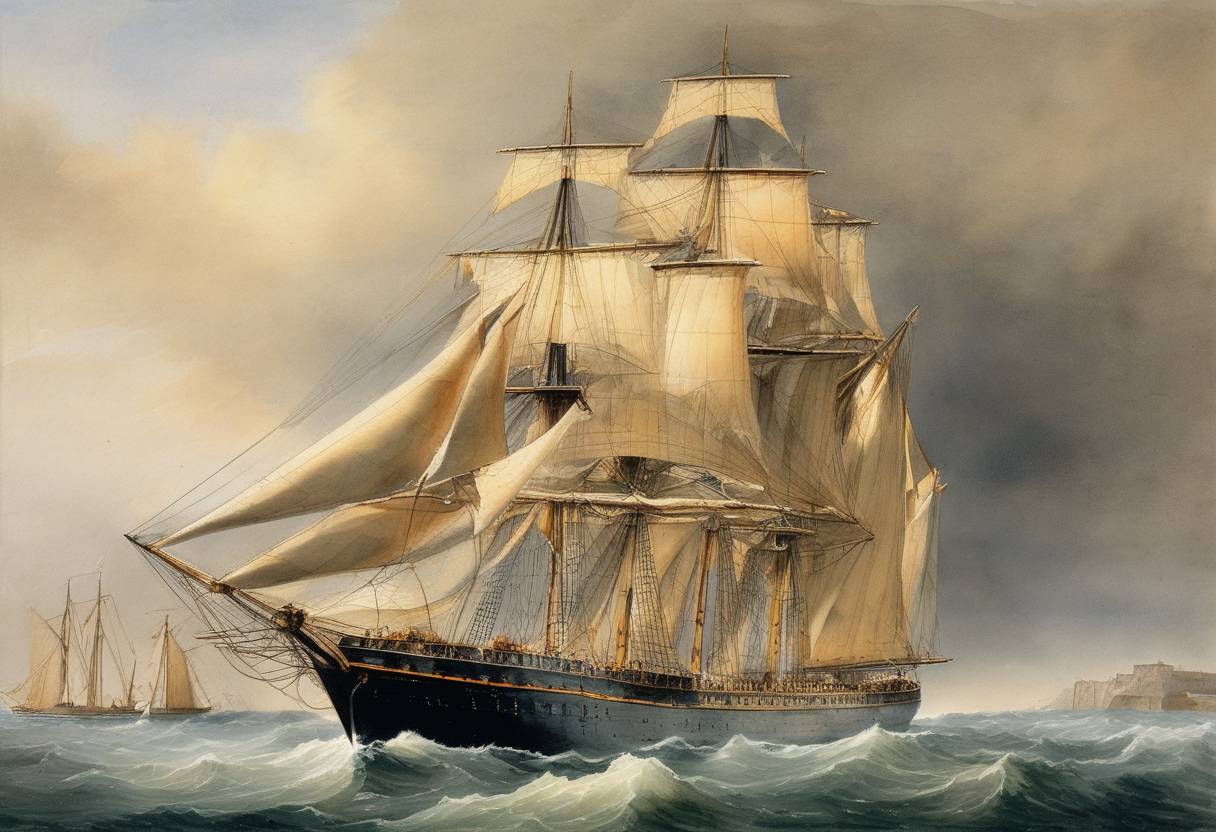
On November 7, 1872, the American brigantine cargo ship Mary Celeste set sail from New York Harbor en route to Genoa, Italy. It embarked on what would become one of the most enduring maritime mysteries in history.
The Mary Celeste was a 282-ton ship, known for its seaworthiness, that was constructed at Spencer’s Island, Nova Scotia, in 1861. It was initially christened as the Amazon before being renamed Mary Celeste after a series of ownership and refitting changes. The ship’s captain for this fateful voyage was Benjamin Briggs, an experienced mariner. Onboard were his wife, his two-year-old daughter, and a crew of seven experienced seamen.
The Mary Celeste departed New York carrying a cargo of 1,701 barrels of denatured alcohol. Captain Briggs, known for his diligent approach, had meticulously prepared for the journey. The voyage commenced without incident, and the weather conditions were reported to be favorable for the Atlantic crossing.
On December 5, 1872, approximately one month after her departure, Mary Celeste was discovered adrift and deserted in the Atlantic Ocean, near the Azores Islands, by the British brig Dei Gratia. The discovery was both bizarre and disturbing. The ship appeared seaworthy, with her cargo largely intact, and ample provisions were aboard. Notably, the crew’s personal belongings were undisturbed, yet the lifeboat was missing.
A thorough investigation into the abandonment of the Mary Celeste was conducted. Several theories arose, including mutiny, piracy, and natural phenomena like waterspouts or seaquakes. However, no definitive evidence supported any of these. The lack of physical evidence left the fate of the crew shrouded in mystery.
The case of the Mary Celeste has captivated public imagination for a century and a half, inspiring numerous books, films, and speculative accounts. Its story is often cited as the quintessential maritime mystery, symbolizing the dangers and uncertainties of sea exploration in the 19th century. The intrigue surrounding the Mary Celeste endures, highlighting both the allure and the peril of the vast oceans.
The ship itself continued to sail under various owners until it was intentionally wrecked off Haiti in an attempted insurance fraud in 1885. Despite the subsequent investigation and media attention, the fate of Captain Briggs and his crew remains one of the world’s greatest nautical enigmas.
Source: www.history.com