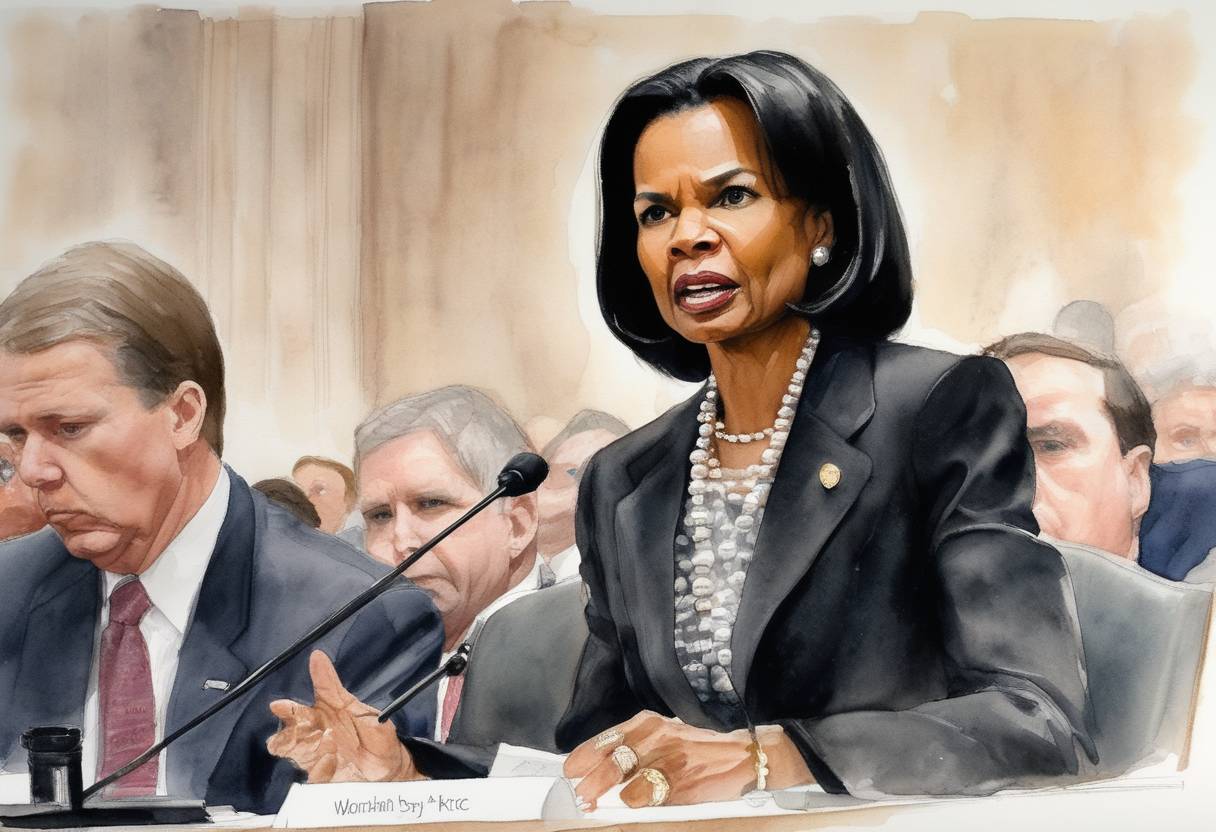
Condoleezza Rice’s Testimony Before the 9⁄11 Commission
On April 14, 2004, Condoleezza Rice, who was serving as the United States National Security Advisor, testified publicly before the National Commission on Terrorist Attacks Upon the United States, commonly known as the 9⁄11 Commission. Her appearance was a significant aspect of the commission’s efforts to investigate the circumstances surrounding the September 11 attacks and evaluate the government’s preparedness and response.
Background
The 9⁄11 Commission was established in late 2002 to provide a comprehensive account of the circumstances surrounding the 9⁄11 attacks. The Commission’s investigation aimed to identify failures in the intelligence community and government structures and recommend measures to prevent future terrorist attacks.
Content of the Testimony
Condoleezza Rice’s testimony was highly anticipated due to her role in the Bush administration during the time leading up to the attacks. The hearing focused on several key areas:
Pre-9⁄11 Intelligence: Rice addressed the level of threat intelligence the government received about Al-Qaeda and Osama bin Laden prior to the attacks, specifically discussing the Presidential Daily Briefing titled “Bin Laden Determined To Strike in U.S.” dated August 6, 2001. She described this briefing as historical in nature and downplayed its actionable intelligence.
Preventive Measures: Rice elaborated on the steps taken by the Bush administration to combat terrorism, stressing the importance of a broader strategy against Al-Qaeda that was being formulated at the time.
Coordination and Response: The testimony examined how different government agencies communicated and coordinated efforts both before and after the attacks.
Significance and Aftermath
Rice’s testimony was pivotal due to the insight it provided into the administration’s policy and decision-making processes before the attacks. She faced challenging questions from the Commission, particularly about whether enough actionable intelligence was present and whether more could have been done to prevent the attacks.
The hearing contributed to a broader understanding of the intelligence and policy environments of that period and underscored the need for improved intelligence coordination and planning. The 9⁄11 Commission’s final report, released in July 2004, made numerous recommendations that significantly influenced U.S. intelligence and security policy, including the establishment of the Director of National Intelligence position and a restructuring of counterterrorism efforts.
Rice’s testimony remains an important component of the public record on the events leading up to the September 11 attacks, marking a crucial moment in the nation’s efforts to understand and rectify lapses in security leadership and preparedness.