Inauguration of Bill Clinton as the 42nd President of the United States
1993 · Washington, D.C., United States
Bill Clinton is inaugurated as the 42nd President of the United States.
January 20, 1997
Bill Clinton is inaugurated for his second term as the 42nd President of the United States.
Washington, D.C., United States | United States Government
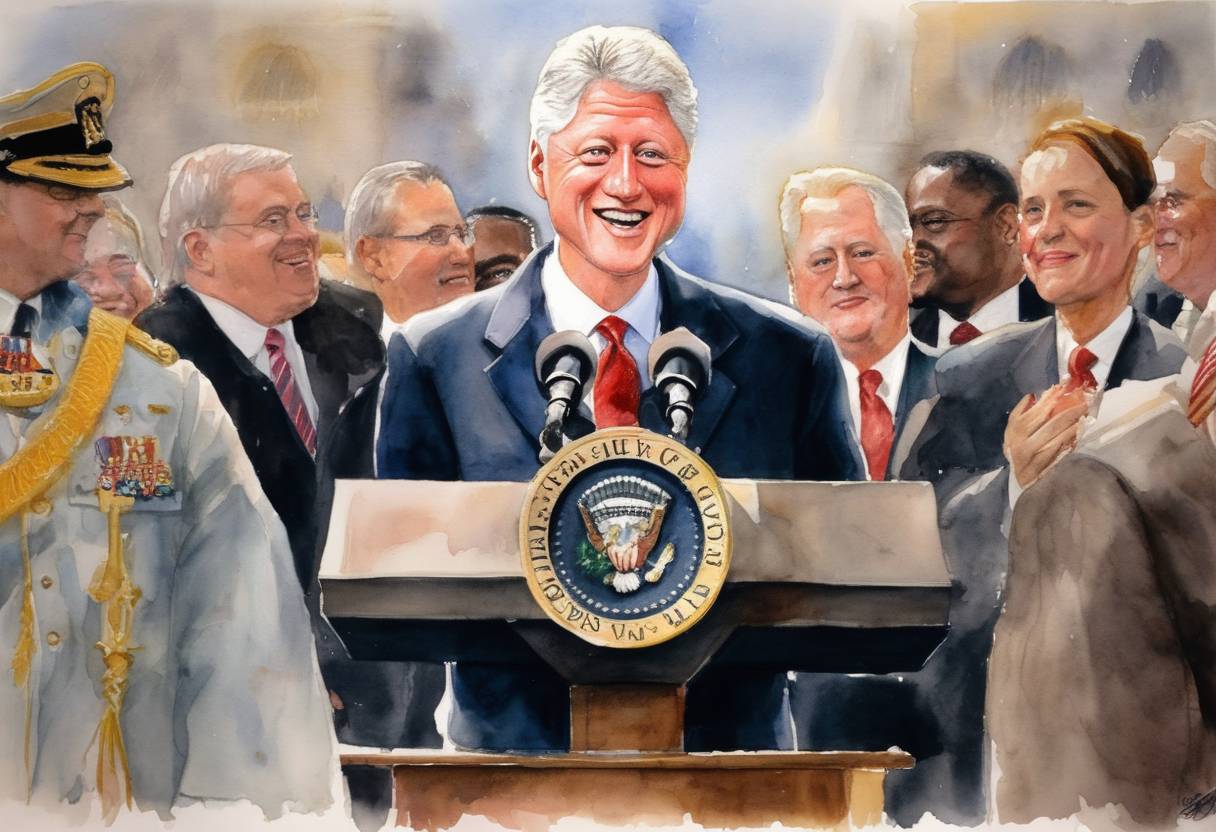
On January 20, 1997, William Jefferson Clinton was inaugurated for his second term as the 42nd President of the United States. This inauguration marked an important event in American politics as it underscored the continuation of Clinton’s Democratic leadership into the late 1990s.
The inauguration took place at the United States Capitol in Washington, D.C. The event was attended by a range of dignitaries, politicians, and members of the public. Supreme Court Chief Justice William Rehnquist administered the presidential oath of office to Clinton. Following the swearing-in, Clinton delivered an inaugural address that focused on themes of unity and progress, emphasizing the significance of preparing the nation for the challenges and opportunities of the 21st century.
Clinton’s speech articulated a vision of a “renewed America,” calling for adaptability to the rapidly changing technological and economic landscapes. He highlighted the importance of education, community-building, and the need for reform in the areas of welfare and crime. Clinton’s address aimed to capture a spirit of national revitalization and optimism, seeking to bridge bipartisan divides and encourage collective action for a brighter future.
Clinton’s reelection came after a successful first term during which the nation experienced economic growth and substantial legislative achievements, including the implementation of trade agreements such as NAFTA and welfare reform policies. His win in the 1996 presidential election, where he defeated Republican candidate Bob Dole, reflected voter confidence in his administration’s direction and policies.
The second inauguration solidified Clinton’s status as a central figure in 1990s American politics and laid the groundwork for endeavors aimed at sustaining economic prosperity and addressing social issues. Clinton’s presidency continued to face challenges, including partisan debates and global diplomatic concerns, but the inauguration represented a hopeful start to another four years in office.
Clinton’s second term would be marked by significant events, such as attempts at healthcare reform, ongoing economic expansion, and, ultimately, the tumultuous investigations that led to his impeachment by the House of Representatives in December 1998. Nonetheless, his presidency would conclude with a high approval rating, influenced by an economy that continued to perform strongly throughout his administration.
Clinton’s second inauguration is remembered for its call to unity and progress, reflecting longstanding themes in the nation’s narratives of hope and change as he prepared to steward America into the impending new millennium.
Source: en.wikipedia.org