The Incorporation of the Baltimore and Ohio Railroad
1827 · Baltimore, United States
The Baltimore and Ohio Railroad is incorporated, becoming the first U.S. company to be granted a charter for the transportation of passengers and freight.
June 4, 1876
The Transcontinental Express arrives in San Francisco, California, via the First Transcontinental Railroad, completing the journey in 83 hours and 39 minutes from New York City.
San Francisco, United States | First Transcontinental Railroad
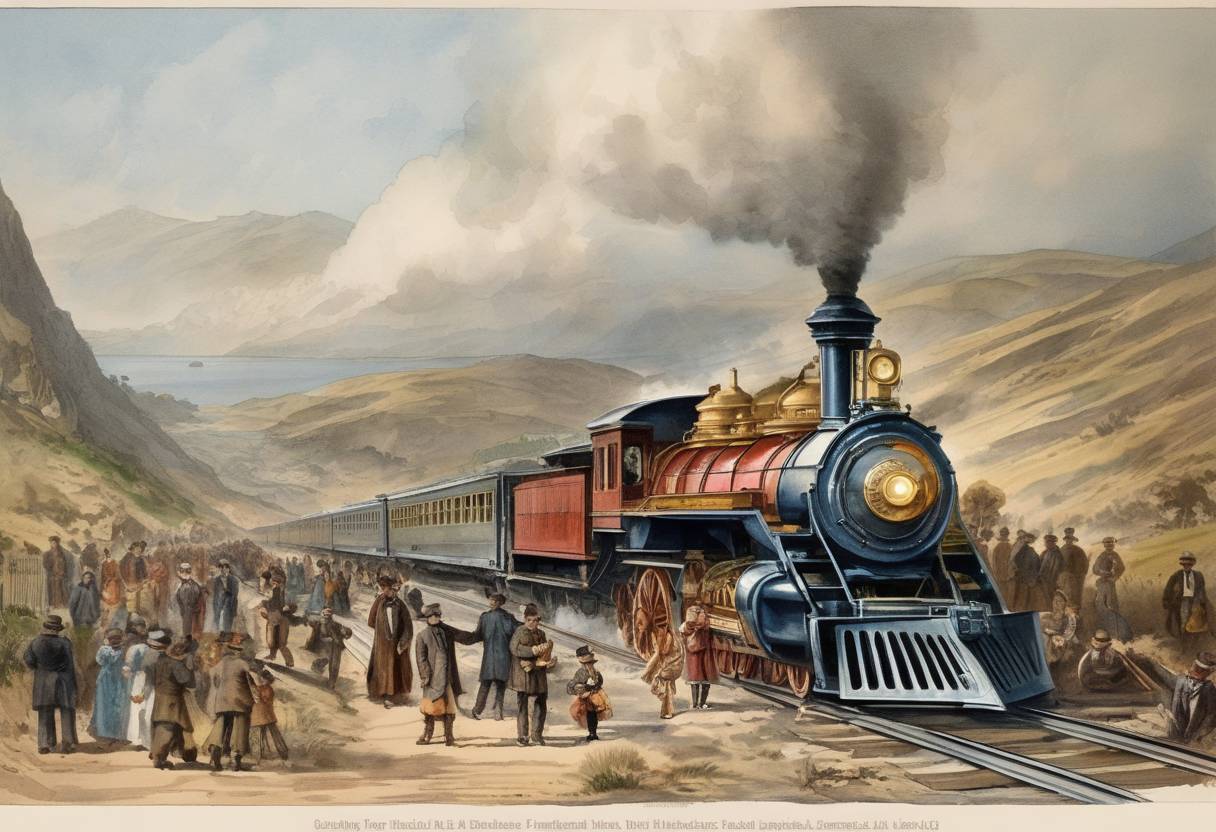
On June 4, 1876, the Transcontinental Express completed its historic journey from New York City to San Francisco, California, via the First Transcontinental Railroad. This remarkable event marked a significant milestone in American transportation history, as the train completed the cross-country journey in just 83 hours and 39 minutes.
The First Transcontinental Railroad, completed in 1869, was a monumental engineering achievement that connected the eastern United States with the Pacific Coast. It was constructed by two main companies: the Union Pacific Railroad, building westward from Omaha, Nebraska, and the Central Pacific Railroad, building eastward from Sacramento, California. The two lines met at Promontory Summit, Utah, on May 10, 1869, symbolized by the driving of the Golden Spike.
The railroad dramatically reduced travel time across the continent, which previously took months by wagon or weeks by ship. It facilitated commerce, migration, and communication, playing a crucial role in the economic development of the United States.
The Transcontinental Express departed from New York City on June 1, 1876. The journey was a demonstration of the speed and efficiency of the transcontinental rail system. The train traveled through various terrains and climates, showcasing the engineering prowess and logistical capabilities of the railroads.
The successful completion of this journey underscored the transformative impact of the railroad on American society. It demonstrated the feasibility of rapid coast-to-coast travel, which was crucial for the movement of people and goods. This event also highlighted the technological advancements of the era and the growing interconnectedness of the nation.
The Transcontinental Express’s journey in 1876 remains a testament to the transformative power of rail transportation in shaping the United States during the late 19th century.
Source: en.wikipedia.org