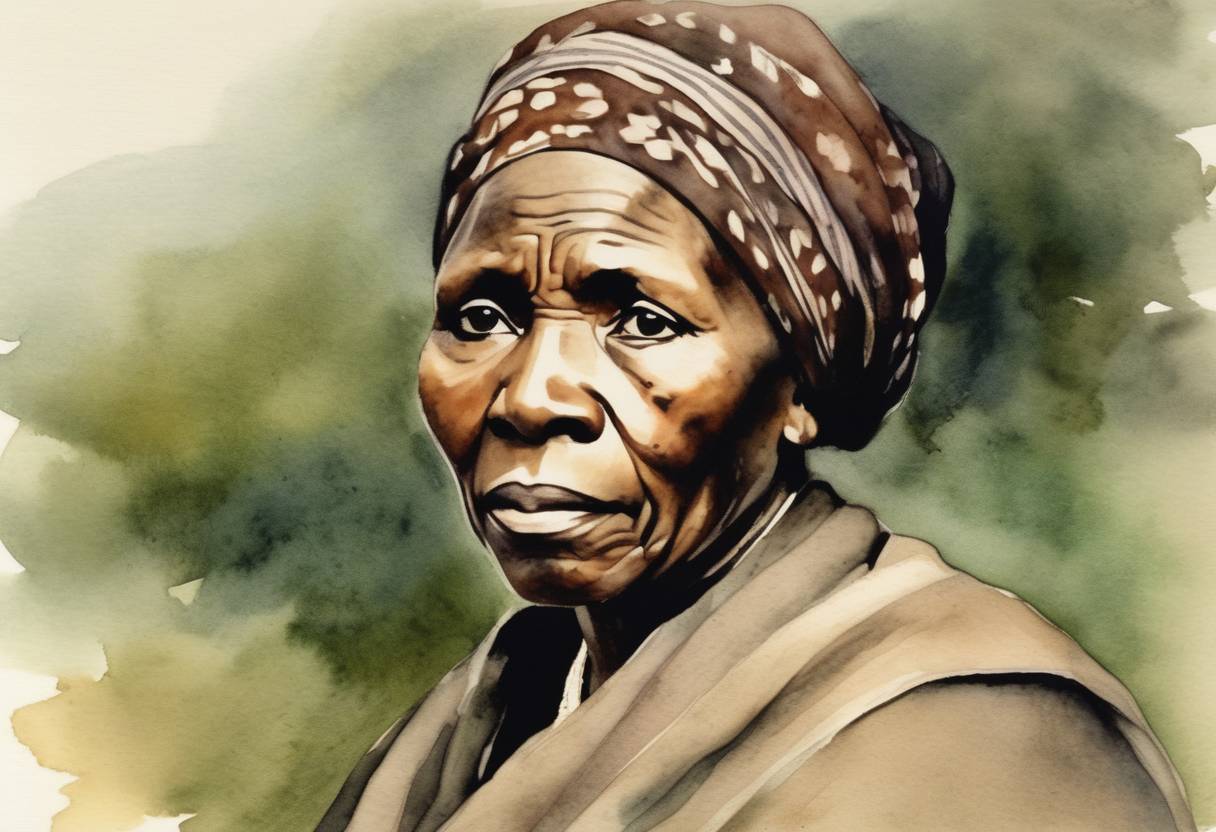
Harriet Tubman’s Escape from Slavery
Harriet Tubman, an iconic figure in American history, made her daring escape from slavery in late 1849. Although the commonly cited date of December 6, 1849, does not align with specific recorded accounts, Tubman’s escape is generally documented to have taken place earlier in the fall of that year. Despite this discrepancy, the significance of her escape remains a powerful moment in the history of the fight against slavery.
Context
Harriet Tubman was born Araminta Ross around 1822 in Dorchester County, Maryland. Tubman was born into a life of slavery and endured the harshest of conditions. Her early years were marked by brutal treatment, but her indomitable spirit and desire for freedom were evident from a young age. Following the death of her owner, Edward Brodess, and the threat of being sold away from her family, Tubman made a courageous decision to flee bondage.
The Escape
In 1849, Tubman left her husband and family behind in a bid for freedom. Relying on her resourcefulness, the experiences she gained from a grueling life on the plantations, and trusting her faith in God, she embarked on her perilous journey north. It is believed that Tubman traveled by night, making use of the Underground Railroad, a secret network of safe houses and abolitionist allies dedicated to helping enslaved individuals reach free states and Canada.
Aftermath
Upon reaching Pennsylvania, Tubman found freedom. Nevertheless, her journey was just beginning. Motivated by her own experience and the family she had left behind, she would become one of the Underground Railroad’s most famous conductors. Over the next decade, Tubman undertook around 13 missions to rescue approximately 70 enslaved individuals, including family and friends, at great personal risk. Her bravery and strategic acumen earned her the nickname “Moses.”
Broader Significance
Harriet Tubman’s escape did more than secure her freedom; it ignited a lifelong commitment to abolition and humanitarian efforts. During the American Civil War, she served as a scout, spy, and nurse for the Union Army. Her legacy is one of courage and unyielding determination in the fight for equality and remains a source of inspiration for generations. Tubman’s actions not only challenged the institution of slavery but also highlighted the critical role of African Americans in their own liberation struggles.
Despite the variances in exact dates, Tubman’s escape remains a testament to her resilience and profound impact on American history.