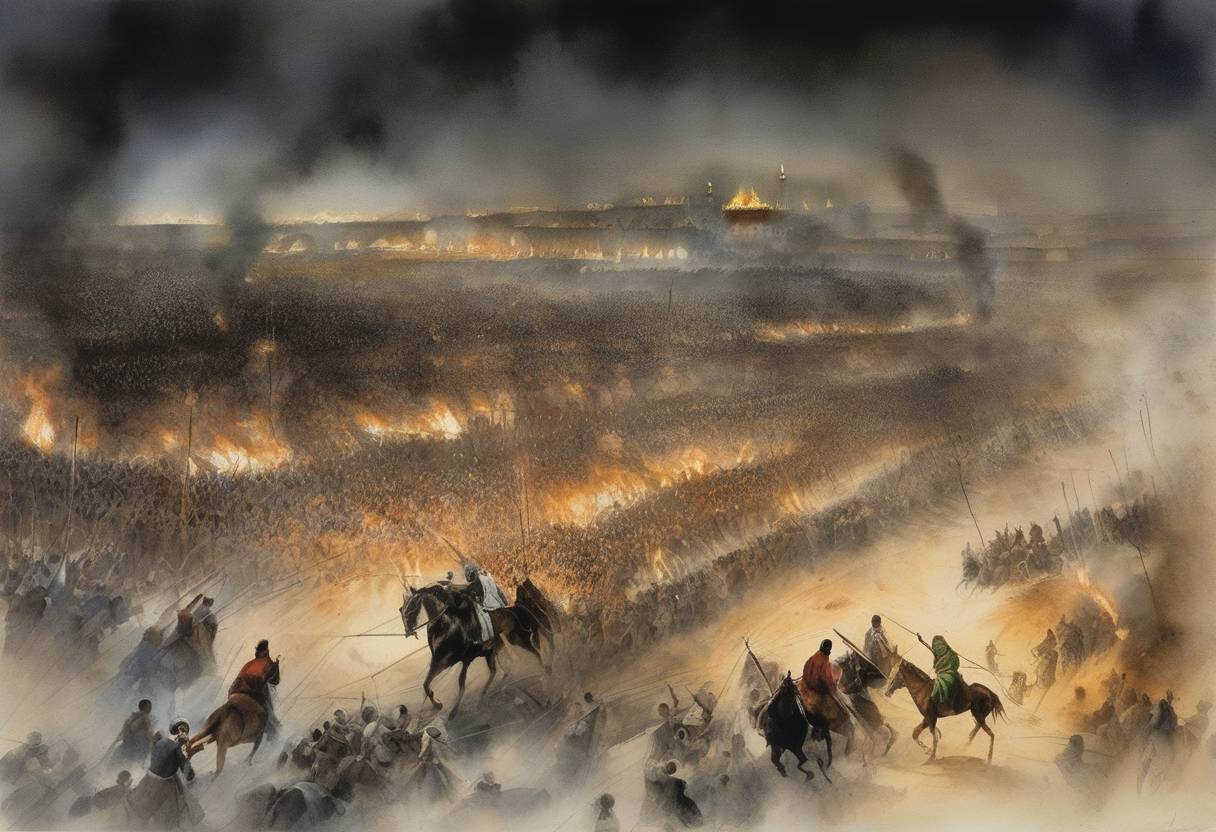
The Battle of Karbala: October 10, 680
The Battle of Karbala was a defining moment in early Islamic history, occurring on October 10, 680, in the desert plains of Karbala, located in present-day Iraq. This battle was a significant confrontation between the forces of Yazid I, the Umayyad caliph, and the supporters of Husayn ibn Ali, the grandson of the Prophet Muhammad. The event is central to the commemoration of Ashura in the Islamic calendar and has had a lasting impact on the development of Islamic sects, particularly the Sunni and Shia divide.
Background
Succession Dispute: The conflict stemmed from a contested succession after the death of Prophet Muhammad. A division had emerged between those supporting the leadership of the lineage of the Prophet, specifically Ali and his descendants, and those supporting the caliphate of the early Umayyad dynasty.
Umayyad Leadership: Following the death of Ali, Husayn’s father and a prominent leader among the Muslims, Mu’awiya of the Umayyad dynasty established himself as caliph. Upon Mu’awiya’s death, his son Yazid succeeded him, an appointment that Husayn and others did not recognize as legitimate.
Husayn’s Stand: Husayn ibn Ali became a focal point for those discontented with Umayyad rule due to his direct lineage from the Prophet. Invitations from the people of Kufa, promising allegiance to Husayn in rebellion against Yazid, triggered Husayn to mobilize towards Kufa.
The Battle
Forces: Husayn set out from Mecca with a modest group comprising family members and a few supporters, totaling approximately 70 to 100 individuals. Opposing them was a sizeable Umayyad force led by Umar ibn Sa’ad, estimated to number in the thousands.
Strategic Disadvantage: Husayn and his companions found themselves cut off from access to the Euphrates River, leading to acute water shortages and adverse conditions exacerbating their plight.
Outcome: On October 10, the two sides clashed. Despite the overwhelming odds, Husayn and his followers fought valiantly. The battle ended with the death of Husayn, his family members, and many of his supporters. His death in the confrontation became an enduring symbol of resistance against tyranny and injustice.
Aftermath and Significance
Martyrdom of Husayn: The martyrdom of Husayn at Karbala is commemorated annually by Muslims worldwide, particularly by Shia Muslims, during the observance of Ashura, the tenth day of the Islamic month of Muharram.
Sectarian Roots: This event deepened the schism between Sunni and Shia Islam. The Shia viewed Husayn as a martyr who stood for justice and righteousness, further solidifying their distinct religious and political identity.
Cultural Impact: The narrative of Karbala has inspired countless literary, artistic, and cultural traditions in the Islamic world, underscoring themes of sacrifice, loyalty, and resistance.
The legacy of Karbala continues to influence political and religious dynamics within Islam, representing a poignant chapter in the collective memory of numerous Muslim communities globally.