German Troops Enter Athens: April 27, 1941
1941 · Athens, Greece
German troops entered Athens during World War II, marking the beginning of the Axis occupation of Greece.
December 3, 1944
British troops and their allies clashed with leftist forces (EAM-ELAS) in Athens, marking the start of the Dekemvriana conflict in Greece.
Athens, Greece | EAM-ELAS, British Armed Forces
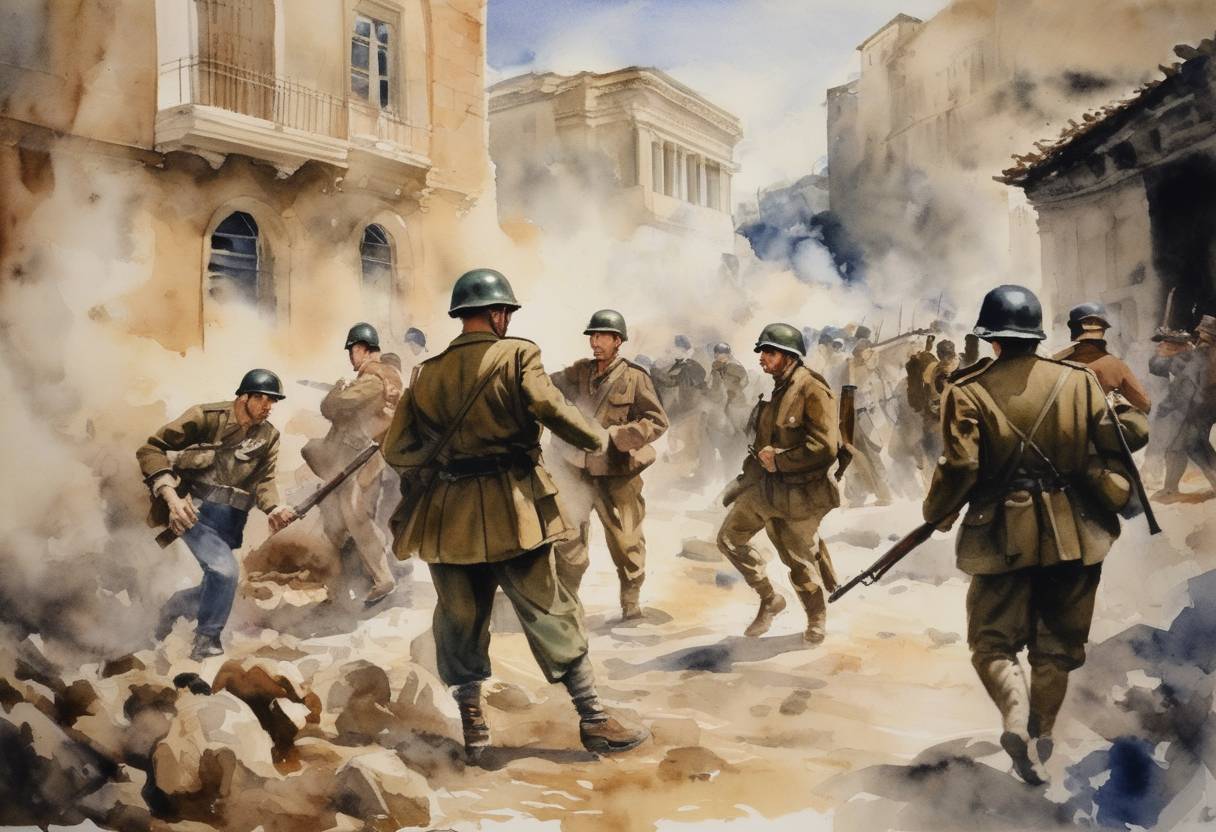
On December 3, 1944, a significant clash occurred in Athens, marking the onset of the Dekemvriana conflict. This event unfolded as British troops and their allies, including units loyal to the Greek government-in-exile, engaged in violent confrontations with leftist forces dominated by EAM-ELAS (the National Liberation Front and its military arm, the Greek People’s Liberation Army).
The political landscape in Greece during World War II was complex and fraught with tension. After Nazi Germany’s withdrawal, Greece was left in a state of power vacuum and political turmoil. To restore stability, the British supported the return of the Greek government-in-exile. However, EAM-ELAS, which had been a significant force in the resistance against Axis powers, demanded a more prominent role in the post-war government and societal egalitarian reforms.
The conflict erupted during a mass rally organized by EAM in Syntagma Square in central Athens. The demonstration was a form of protest against the predominantly right-leaning, British-backed Greek government and its exclusionary policies towards members of EAM-ELAS in the new government structure.
British forces, alongside Greek police, fired upon the demonstrators, leading to numerous casualties. This act not only intensified the pre-existing hostilities but also propelled Athens into a state of urban warfare. The skirmish set off a series of battles across the city and widened into a full-scale conflict lasting several weeks.
The Dekemvriana conflict significantly shaped post-war Greece’s political trajectory. The battles decisively impacted the balance of power, leading to the disarmament and eventual political marginalization of EAM-ELAS. This period of unrest highlighted deep ideological divides and escalated into the Greek Civil War, which erupted in March 1946 and lasted until 1949.
The conflict underscored the geopolitical stakes of the post-war era, particularly the influence exerted by Britain and later the United States, which played a crucial role in supporting non-communist factions in Greece as part of the early strategy of containment against Soviet expansionism during the emerging Cold War.
In summary, the events on December 3, 1944, represented a pivotal moment in Greek history, marking a transition from wartime occupation to internal strife that would shape the nation’s political landscape for decades.
Source: en.wikipedia.org