Norway's EU Membership Referendum, 1994
1994 · Oslo, Norway
Norway held a referendum in which the Norwegian people voted against joining the European Union.
September 10, 1945
Vidkun Quisling, the leader of Norway's collaborationist government during World War II, is sentenced to death after being found guilty of treason against Norway. His name has since become synonymous with traitor.
Oslo, Norway | Norwegian courts
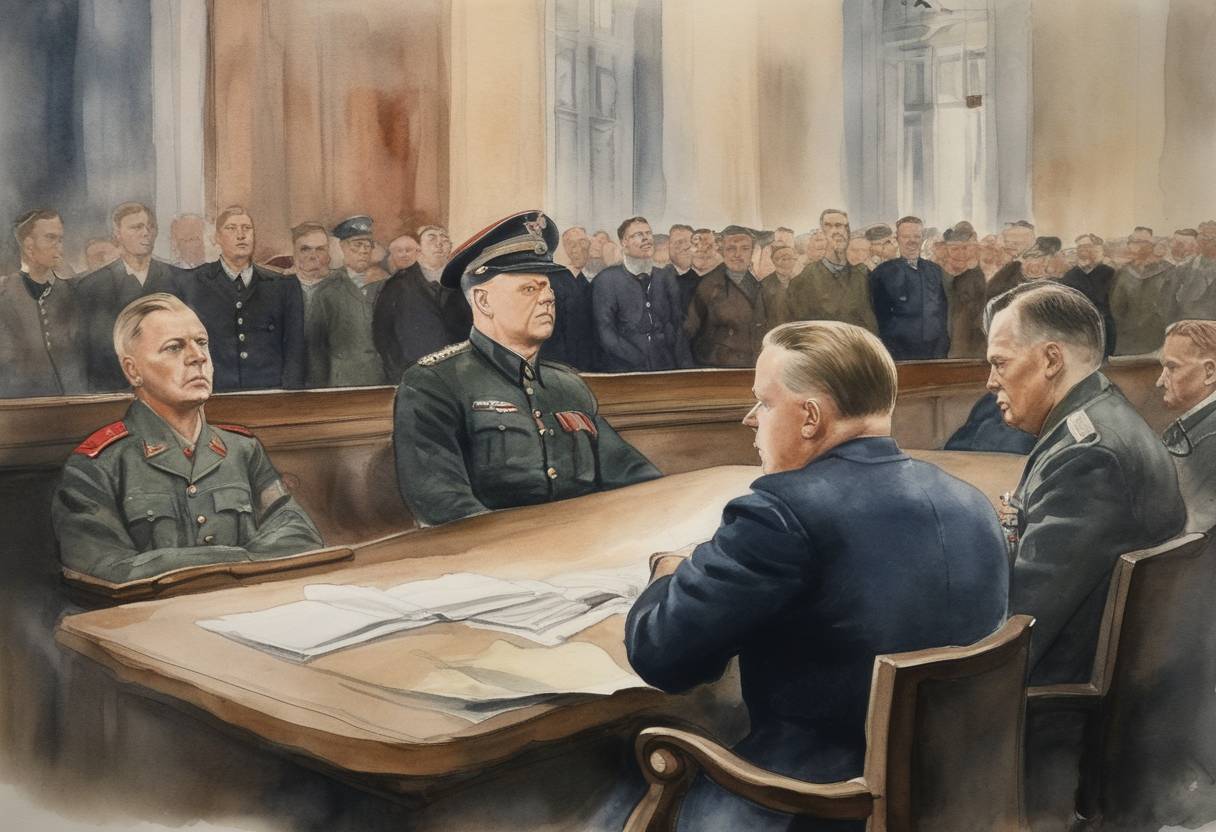
On September 10, 1945, Vidkun Quisling, the head of Norway’s collaborationist government during World War II, was sentenced to death after being found guilty of high treason against his country. Quisling’s name has since become emblematic of betrayal and treachery.
Vidkun Quisling was a Norwegian military officer and politician who emerged as a controversial figure during the tumultuous years of World War II. Prior to the war, he served in various military and political positions, but his most notorious role came when he aligned with Nazi Germany.
Quisling sought to capitalize on the German invasion of Norway in April 1940. He infamously declared a coup d’état on April 9, 1940, with the backing of German forces. Subsequently, he was appointed head of the puppet government by the Germans, leading the country in accordance with Nazi policies. His regime participated actively in the persecution of Jews and opposition members, aligning closely with Adolf Hitler’s objectives.
After the German surrender and the liberation of Norway in May 1945, Quisling was arrested and put on trial in a Norwegian court. The trial, which started in August 1945, revolved around charges of high treason, murder, and embezzlement. The proceedings attracted considerable attention, symbolizing Norway’s effort to purge itself of collaborators and reconcile the grievous impact of the occupation.
On September 10, 1945, the court found Quisling guilty of all charges. The verdict condemned him to death, a stark reflection of his betrayal of Norway during one of its darkest periods. He was executed by firing squad on October 24, 1945.
Vidkun Quisling’s actions during the Second World War rendered his name synonymous with treachery. In many languages, “quisling” is now used as a term to denote a traitor, signifying the enduring impact of his infamy.
Quisling’s trial and execution highlight the broader context of post-war justice and the complex process of national recovery and moral reckoning within occupied European countries. His story serves as a powerful reminder of the perils of collaborationism and the profound consequences of aligning with oppressive regimes.
Source: en.wikipedia.org