Acquittal of President Donald Trump: February 6, 2020
2020 · Washington D.C., United States
The United States Senate acquitted President Donald Trump on charges of abuse of power and obstruction of Congress, concluding the impeachment trial.
September 20, 1832
The impeachment trial of U.S. Federal Judge James H. Peck begins. It follows accusations of oppressive and arbitrary conduct.
Washington D.C., United States | United States Senate
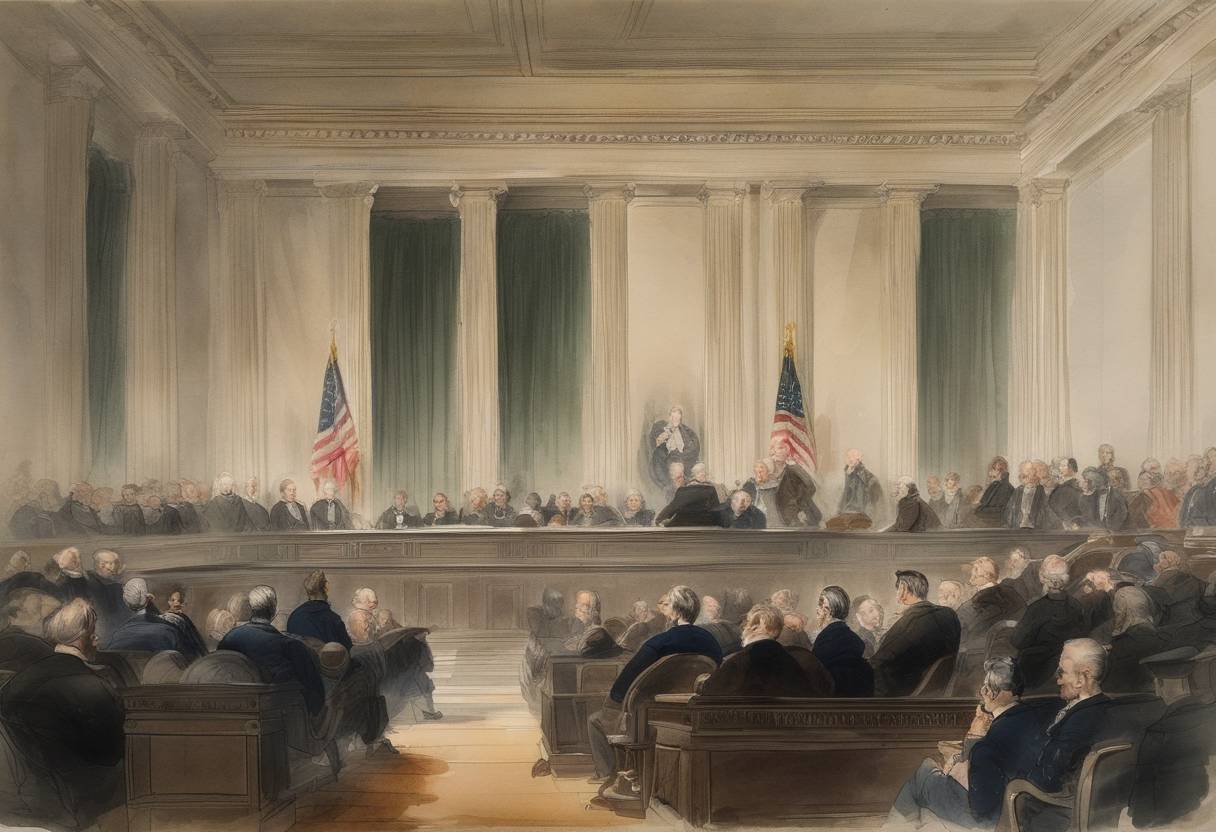
On September 20, 1832, the impeachment trial of U.S. Federal Judge James H. Peck commenced in the United States Senate. Judge Peck served as a judge for the United States District Court for the District of Missouri. His impeachment was a significant event in early American judicial history, illustrating the tensions between the judiciary’s independence and accountability.
The charges against Judge Peck centered on accusations of oppressive and arbitrary conduct that allegedly violated judicial ethics and the rights of individuals. The controversy leading to his impeachment began with a case involving a property dispute concerning land claims in St. Louis. Peck’s actions in this case and his subsequent response to criticism were at the heart of the impeachment proceedings.
The House of Representatives, led by Congressman James Buchanan, brought forth articles of impeachment, citing that Judge Peck’s actions were unconstitutional and an abuse of power. The impeachment articles specifically highlighted his violation of constitutional rights and misuse of contempt powers.
The trial in the Senate began on September 20, 1832. It marked only the second instance of an impeachment trial for a federal judge in U.S. history. The proceedings involved detailed testimonies and legal arguments about the extent of a judge’s power and the appropriate checks on that power.
Despite the serious nature of the allegations, Judge Peck was acquitted by the Senate. The vote did not reach the required two-thirds majority for conviction, revealing the challenges of securing a conviction in impeachment trials during that period.
The trial underscored the delicate balance between judiciary independence and accountability. It also contributed to ongoing debates about the limits of judicial authority, the protection of free speech, and judicial oversight, issues that remain relevant in the American legal system to this day.
Source: www.senate.gov