Idaho's Admission as the 43rd State of the United States
1890 · Boise, United States
Idaho was admitted as the 43rd state of the United States.
November 16, 1907
Oklahoma becomes the 46th state of the United States.
Guthrie, United States | United States Congress
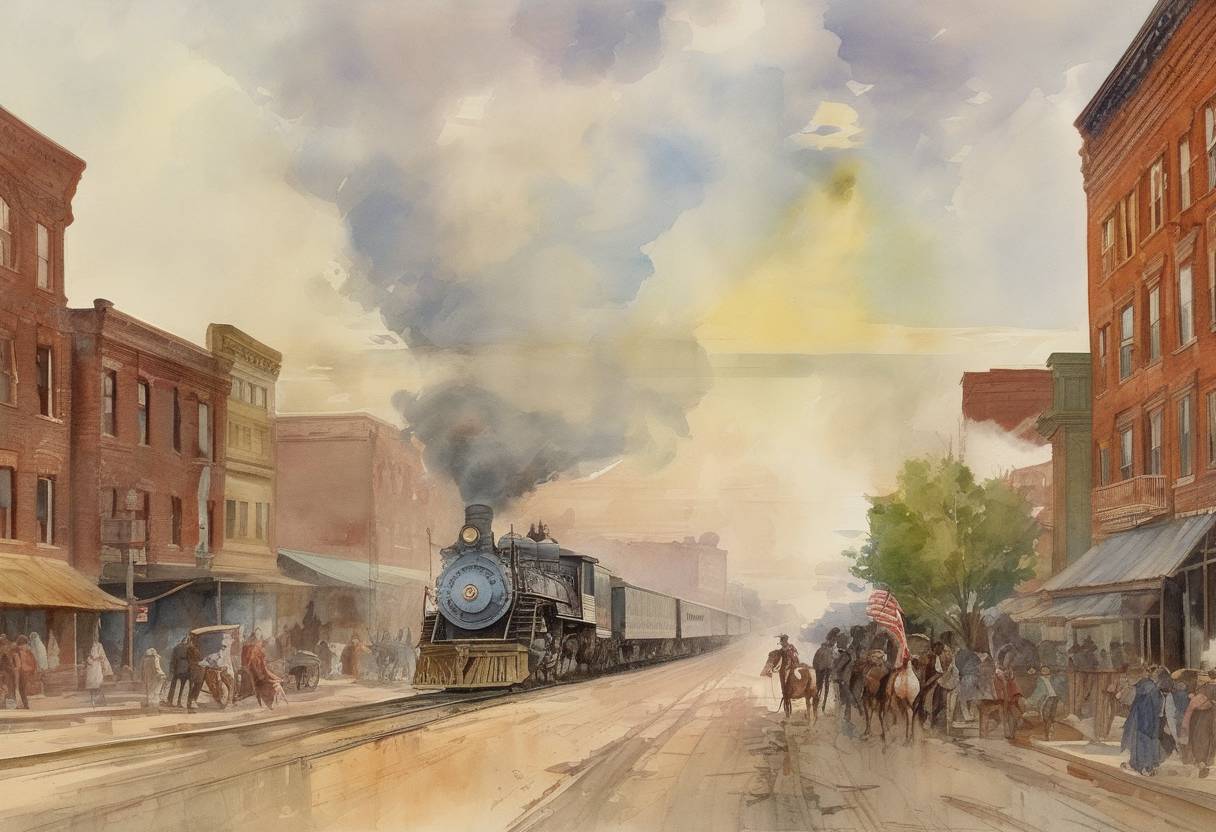
On November 16, 1907, Oklahoma was officially admitted to the United States as the 46th state. This significant event marked the culmination of a complex history involving Native American tribes, European settlers, and the expansionist policies of the U.S. government.
Before statehood, the region that would become Oklahoma was primarily designated as Indian Territory. This area was home to numerous Native American tribes, including the Cherokee, Choctaw, Chickasaw, Creek, and Seminole, collectively known as the Five Civilized Tribes. These tribes were forcibly relocated to the area during the 1830s under the Indian Removal Act, a tragic period known as the Trail of Tears.
In the late 19th century, pressures for settlement increased, leading to the opening of unassigned lands to non-Native settlers. The most famous of these events was the Land Run of 1889, which allowed thousands of settlers to claim land in what is now central Oklahoma. This influx of settlers accelerated the push for statehood.
The Dawes Act of 1887 further disrupted Native American landholdings by allotting individual plots to Native Americans and opening the remaining land to settlers. This policy aimed to assimilate Native Americans into American society but resulted in significant loss of tribal lands.
The Enabling Act of 1906 was a crucial step towards statehood. It allowed the people of Oklahoma Territory and Indian Territory to draft a state constitution and seek admission to the Union. The act also provided for the merging of the two territories into a single state.
Delegates from both territories convened to draft a state constitution, which was completed in 1907. The constitution was progressive for its time, including provisions for labor rights and education, and it was approved by voters in a referendum.
On November 16, 1907, President Theodore Roosevelt signed the proclamation admitting Oklahoma as the 46th state. The new state capital was established in Guthrie, although it was later moved to Oklahoma City in 1910.
The admission of Oklahoma as a state was a pivotal moment in American history, symbolizing the closing of the frontier and the integration of diverse cultural and ethnic groups into the fabric of the nation. It also highlighted the ongoing challenges faced by Native American communities, whose lands and sovereignty were significantly impacted by these developments.
Oklahoma’s statehood contributed to the economic and political growth of the region, playing a vital role in the agricultural and energy sectors. Today, Oklahoma’s rich cultural heritage reflects its complex history, with influences from Native American, European, and African American communities.
In summary, Oklahoma’s journey to statehood was marked by significant cultural and political changes, reflecting broader themes of American expansion and diversity.
Source: en.wikipedia.org