Pope Zosimus Dies: Succession Crisis in the Catholic Church
418 · Rome, Italy
Pope Zosimus dies, leading to a succession crisis in the Catholic Church.
December 26, 0795
Pope Leo III is elected as the 96th pope of the Catholic Church.
Rome, Italy | Catholic Church
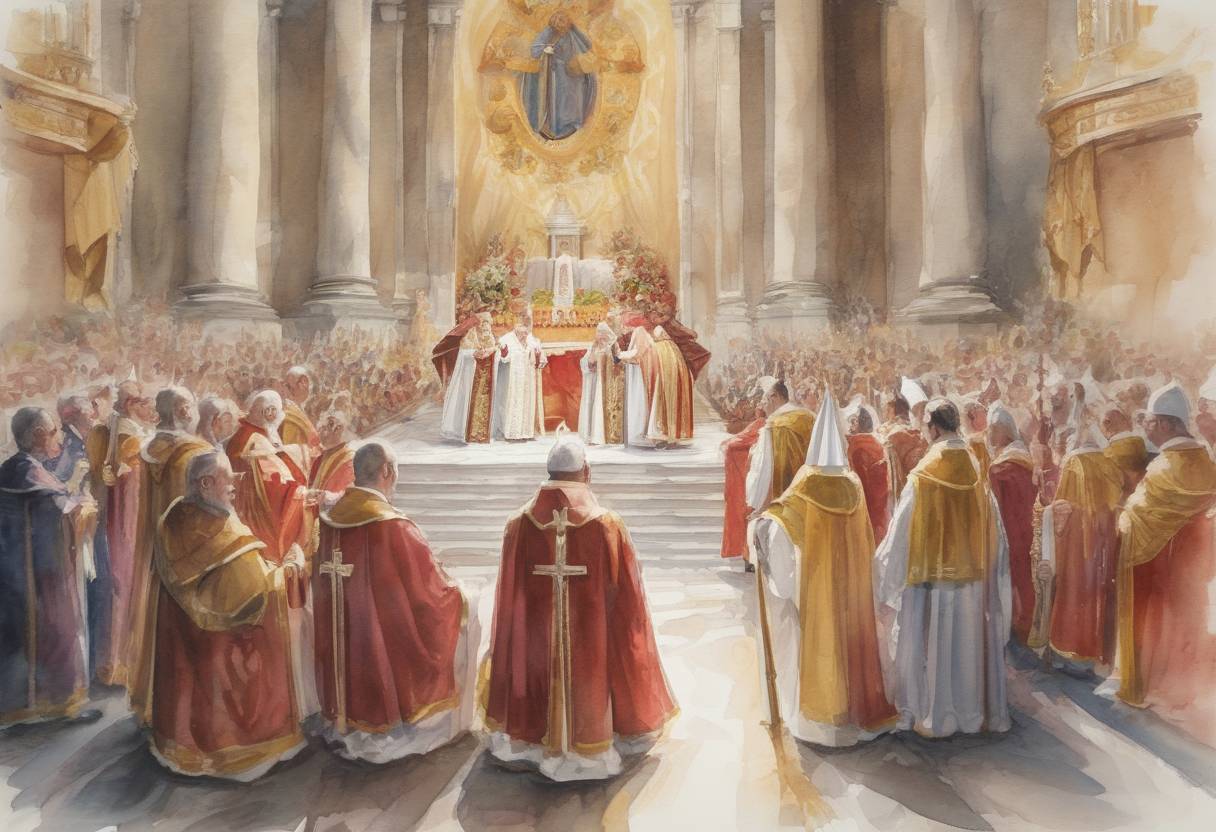
On December 26, 795, Pope Leo III was elected as the 96th pope of the Catholic Church. His election marked a significant moment in the history of the papacy, occurring during a time of considerable political and religious transformation in Europe.
Pope Leo III succeeded Pope Adrian I, who had a long and influential papacy from 772 to 795. Adrian I’s tenure was marked by a close alliance with Charlemagne, the King of the Franks, which significantly strengthened the position of the papacy in temporal affairs. This relationship laid the groundwork for the Carolingian Renaissance, a revival of art, culture, and learning based on classical models.
Alliance with Charlemagne: One of the most notable aspects of Leo III’s papacy was his continuation of the alliance with Charlemagne. This relationship was crucial for both the papacy and the Frankish kingdom, as it provided mutual support against external threats and internal dissent.
Coronation of Charlemagne: On Christmas Day in the year 800, Pope Leo III crowned Charlemagne as the “Emperor of the Romans” in St. Peter’s Basilica. This event was pivotal, as it marked the revival of the Western Roman Empire and established the precedent for the Holy Roman Empire. It also symbolized the fusion of Roman, Christian, and Germanic elements that would shape medieval European civilization.
Challenges and Controversies: Leo III faced significant challenges during his papacy, including accusations of misconduct by Roman nobles. In 799, he was attacked and nearly blinded, prompting him to seek refuge with Charlemagne. The support of Charlemagne was instrumental in restoring Leo to his position and maintaining his authority.
Pope Leo III’s papacy was instrumental in shaping the medieval papacy’s role in European politics. His alliance with Charlemagne not only secured the papacy’s influence but also laid the foundation for the medieval concept of Christendom, where the Church and state were closely intertwined.
The coronation of Charlemagne had long-lasting implications, as it established the precedent for the pope’s role in legitimizing secular rulers, a theme that would recur throughout the Middle Ages. This event also highlighted the growing divide between the Eastern and Western Christian worlds, as the Byzantine Empire viewed the coronation with suspicion and as a challenge to its own claims of imperial authority.
In summary, Pope Leo III’s election and subsequent actions were pivotal in shaping the medieval Church’s relationship with European monarchies and in influencing the political landscape of Europe for centuries to come.
Source: www.britannica.com