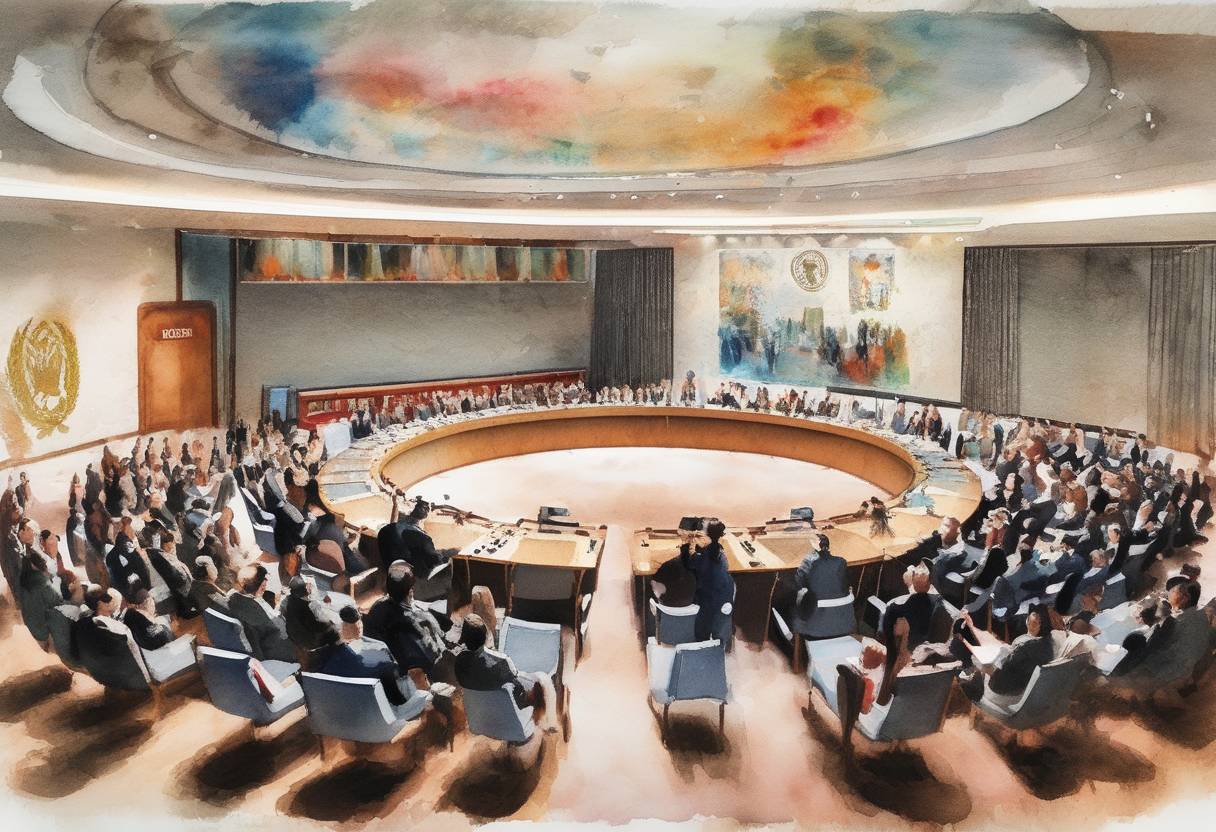
United Nations Security Council Resolution 2397
On December 22, 2017, the United Nations Security Council (UNSC) unanimously adopted Resolution 2397, imposing a new set of stringent sanctions on North Korea. This action was a direct response to North Korea’s continued development and testing of ballistic missiles, which posed significant concerns for international peace and security.
Context Leading to the Resolution
In 2017, North Korea conducted a series of ballistic missile tests, including the launch of an intercontinental ballistic missile (ICBM) on November 28, 2017. This test demonstrated North Korea’s potential capability to strike targets as far away as the continental United States, escalating tensions and prompting international condemnation.
The UNSC had previously imposed sanctions on North Korea through various resolutions, aiming to curb its nuclear and missile programs. However, North Korea’s persistent defiance and advancements in missile technology necessitated further action.
Key Provisions of Resolution 2397
Resolution 2397 introduced several measures designed to pressure North Korea into compliance with international norms:
Oil Supply Restrictions: The resolution capped the supply of refined petroleum products to North Korea at 500,000 barrels per year and crude oil at 4 million barrels annually. This aimed to limit the resources available for North Korea’s military programs.
Repatriation of North Korean Workers: Member states were required to repatriate all North Korean nationals earning income abroad within 24 months. This measure sought to cut off a significant source of foreign currency for the North Korean regime.
Maritime Interdiction: The resolution authorized member states to seize, inspect, and impound any vessel in their territorial waters found to be illicitly providing oil or other prohibited items to North Korea.
Export Bans: The resolution expanded bans on North Korean exports, including food products, machinery, electrical equipment, earth and stone, and wood.
Asset Freezes and Travel Bans: Additional individuals and entities associated with North Korea’s nuclear and missile programs were subjected to asset freezes and travel bans.
Aftermath and Significance
Resolution 2397 represented one of the most comprehensive sanctions packages imposed on North Korea, reflecting the international community’s unified stance against its nuclear ambitions. The resolution aimed to bring North Korea back to the negotiating table by cutting off critical resources and financial streams.
Despite these measures, North Korea continued to pursue its nuclear and missile programs, leading to ongoing diplomatic challenges. The resolution underscored the complexities of enforcing international sanctions and the need for sustained diplomatic efforts to achieve denuclearization on the Korean Peninsula.
Resolution 2397 remains a pivotal moment in the international community’s efforts to address the North Korean nuclear issue, highlighting the role of multilateral diplomacy in maintaining global security.