Coronation of Henry VI of England
1429 · London, England
Henry VI of England was crowned King of England at Westminster Abbey.
December 16, 1431
Henry VI of England is crowned King of France at Notre Dame in Paris.
Paris, France | English Monarchy
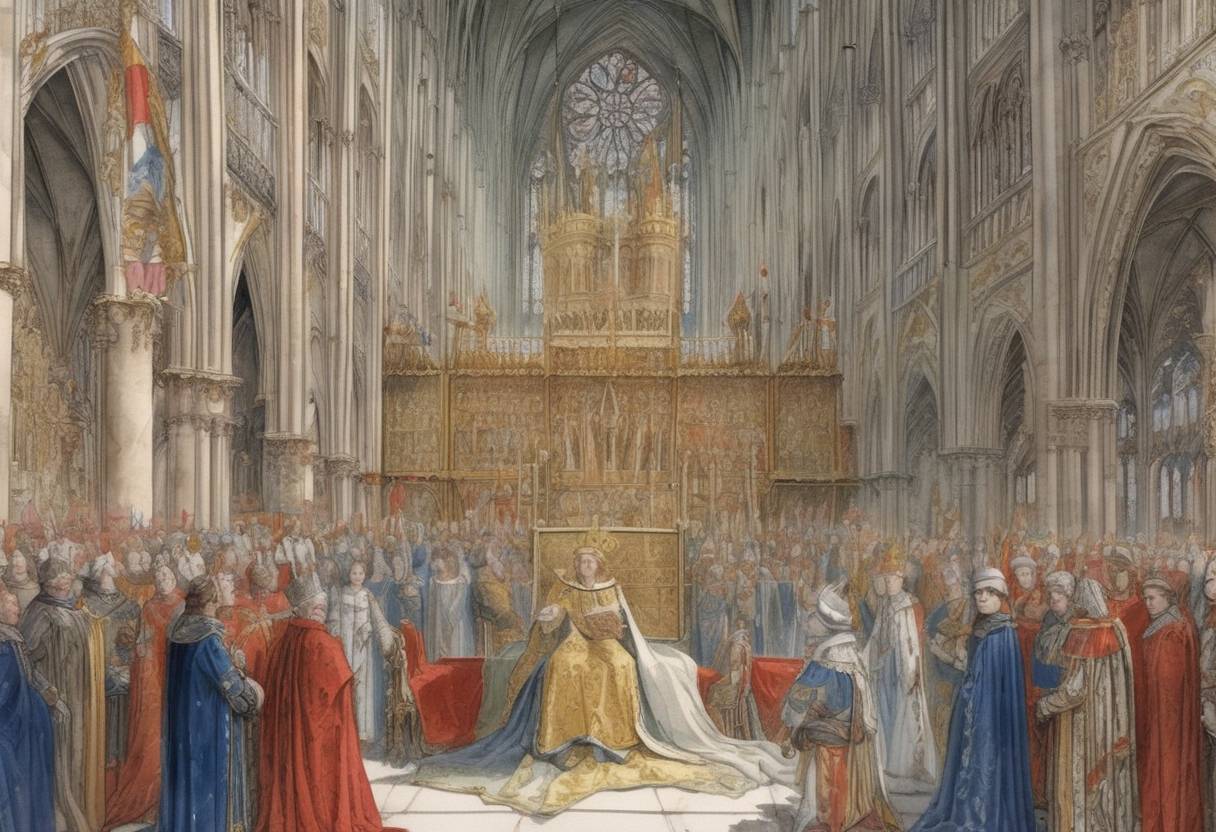
On December 16, 1431, a significant event in the history of the Hundred Years’ War took place: Henry VI of England was crowned King of France at the Notre Dame Cathedral in Paris. This event was a pivotal moment in the ongoing conflict between England and France, rooted in the complex claims to the French throne.
The Hundred Years’ War (1337-1453) was a series of conflicts waged between the Kingdom of England and the Kingdom of France, primarily over claims to the French throne. The war was marked by several phases of intense fighting, punctuated by periods of relative peace.
The Treaty of Troyes, signed in 1420, was a crucial turning point. It recognized Henry V of England as the heir to the French throne, disinheriting the Dauphin Charles (later Charles VII of France). Henry V married Catherine of Valois, the daughter of King Charles VI of France, further solidifying his claim.
The coronation of Henry VI as King of France was a symbolic assertion of English claims to the French crown. The ceremony took place at the iconic Notre Dame Cathedral in Paris, a traditional site for French royal coronations. The event was attended by English and Burgundian nobles, allies in the conflict against the Dauphin Charles.
Henry VI’s coronation as King of France was emblematic of the dynastic struggles that characterized the late medieval period. It underscored the complexities of medieval politics, where claims to thrones were often contested through warfare and strategic marriages. The event also highlighted the shifting power dynamics in Europe, setting the stage for the eventual rise of centralized nation-states.
In summary, while Henry VI’s coronation was a moment of triumph for English ambitions, it ultimately could not alter the course of history, which favored the consolidation of French power under Charles VII.
Source: en.wikipedia.org