The Third Siege of Rome by the Visigoths: August 14, 410
410 · Rome, Western Roman Empire
The Visigoths, led by King Alaric I, begin their third siege of Rome, which eventually leads to the sack of the city later in August.
August 24, 0410
The Visigoths, led by King Alaric I, sack Rome after a prolonged siege, marking the first time in nearly 800 years that the city fell to a foreign enemy.
Rome, Italy | Visigoths
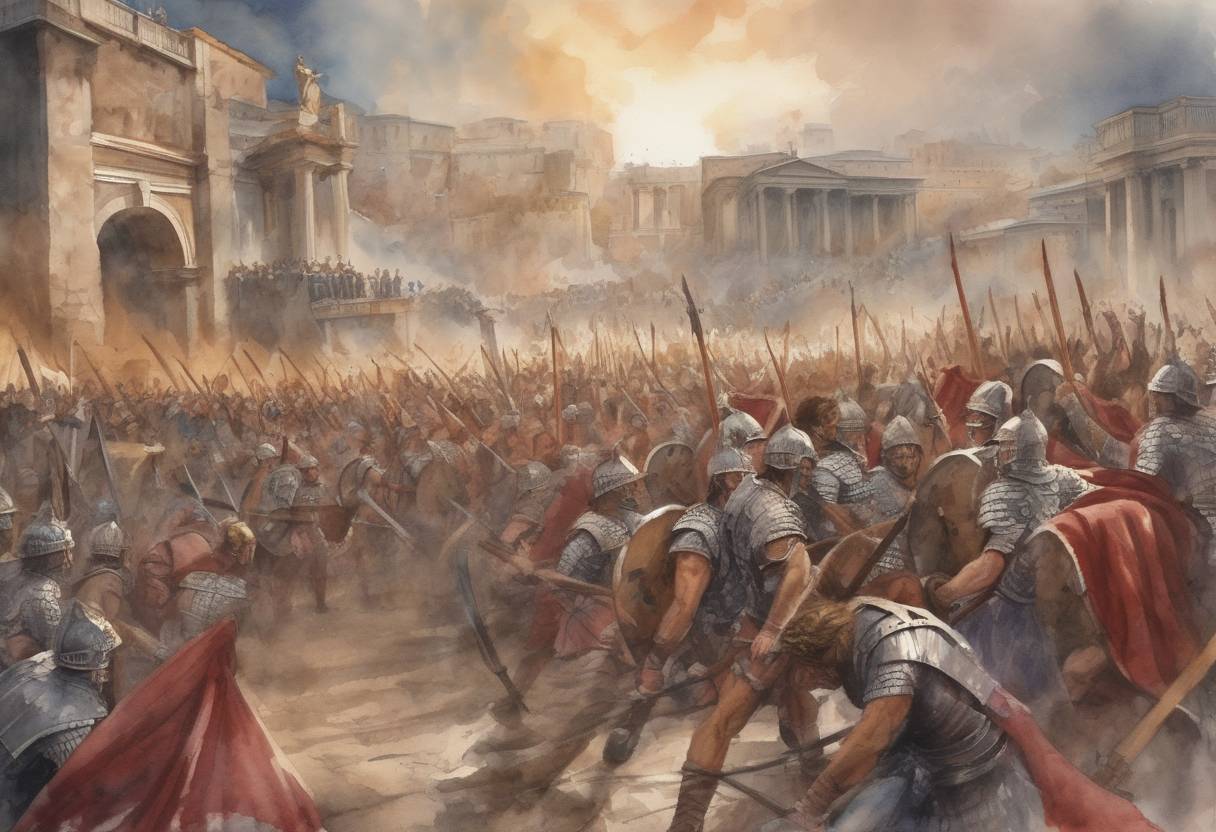
On August 24, 410, a pivotal event in the decline of the Western Roman Empire occurred: the sack of Rome by the Visigoths under the leadership of King Alaric I. This marked the first time in nearly 800 years that Rome had fallen to a foreign enemy, a significant psychological blow to the Roman world.
The Visigoths, originally a Germanic tribe, had been migrating across Europe due to pressures from the Huns and other tribes. They first entered the Roman Empire in 376, seeking refuge and eventually settling in the Balkans. However, tensions between the Visigoths and the Roman authorities led to the Battle of Adrianople in 378, where the Visigoths decisively defeated the Roman army.
Alaric I, who became king of the Visigoths around 395, sought to secure a stable and prosperous future for his people within the Roman Empire. Despite his efforts to negotiate with the Roman authorities, including demands for land and a formal position within the Roman military hierarchy, his requests were largely ignored or inadequately addressed.
By 408, Alaric had grown frustrated with the Roman government’s refusal to meet his demands. He led his forces into Italy, laying siege to Rome in 408 and again in 409. Each time, he extracted concessions but was ultimately unsatisfied with the outcomes.
On August 24, 410, after a prolonged siege and failed negotiations, Alaric’s forces entered Rome. The Visigoths sacked the city over three days, looting and pillaging but reportedly sparing many of the city’s churches, including St. Peter’s Basilica, due to Alaric’s Christian beliefs.
The sack of Rome sent shockwaves throughout the Roman Empire and beyond. It symbolized the vulnerability of the once-invincible city and marked a significant step in the empire’s decline. The event was a harbinger of the eventual fall of the Western Roman Empire in 476.
The sack also had profound cultural and psychological impacts. It challenged the perception of Rome as the eternal city and the center of the civilized world. St. Augustine, in response to the event, wrote “The City of God,” which sought to provide a theological explanation for the calamity and to reassure Christians of their spiritual security despite the temporal fall of Rome.
Following the sack, Alaric continued his campaign in Italy but died later in 410. His successor, Ataulf, led the Visigoths into Gaul and eventually into Hispania, where they established a kingdom that would become a significant power in the post-Roman world.
The sack of Rome by the Visigoths in 410 remains a landmark event in history, symbolizing the transition from the ancient world to the medieval era and illustrating the shifting power dynamics of late antiquity.
Source: en.wikipedia.org