Inauguration of William McKinley as the 25th President of the United States
1897 · Washington, D.C., United States
William McKinley was inaugurated as the 25th President of the United States.
March 4, 1881
James A. Garfield was inaugurated as the 20th President of the United States.
Washington, D.C., United States | United States Government
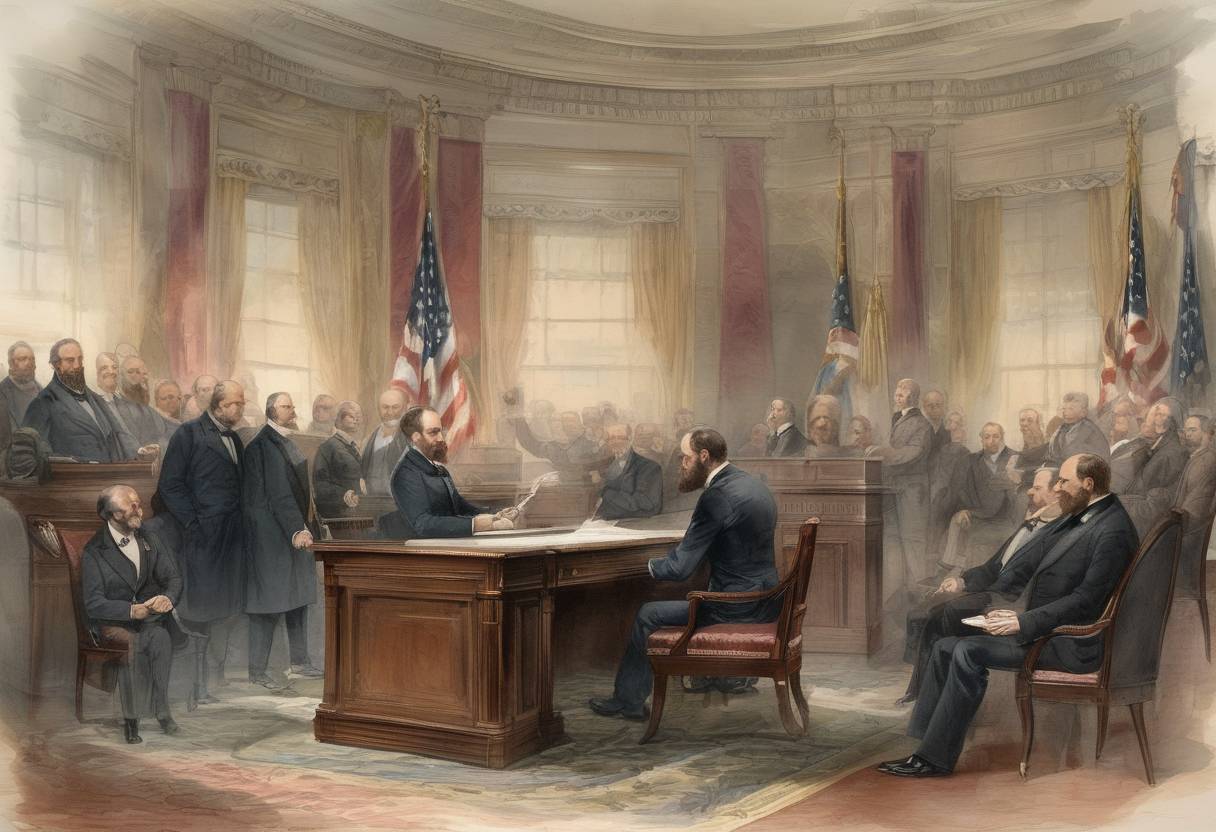
On March 4, 1881, James Abram Garfield was inaugurated as the 20th President of the United States. This event marked the beginning of a presidency that, although tragically short-lived, was significant in the context of post-Civil War America and the ongoing struggles with political reform.
James A. Garfield was a prominent figure in the Republican Party and had served as a member of the U.S. House of Representatives for nearly two decades before his presidency. He emerged as a compromise candidate during the 1880 Republican National Convention after 36 ballots, reflecting the deep divisions within the party between the Stalwarts, who supported the patronage system, and the Half-Breeds, who advocated for civil service reform.
Garfield’s inauguration took place at the East Portico of the United States Capitol in Washington, D.C. The ceremony was attended by a large crowd, including dignitaries and citizens eager to witness the transition of power. Chester A. Arthur was inaugurated as Vice President alongside Garfield.
National Unity: Garfield emphasized the importance of healing the divisions that had lingered since the Civil War, advocating for a united nation.
Civil Service Reform: He addressed the need for reform in the civil service system, a contentious issue of the time, highlighting his commitment to merit-based appointments over the prevalent patronage system.
Education and Civil Rights: Garfield underscored the significance of education and civil rights, particularly for African Americans, as essential to the nation’s progress.
Garfield’s presidency was cut short when he was assassinated on July 2, 1881, just four months into his term. His death on September 19, 1881, led to the presidency of Chester A. Arthur. Despite the brevity of his time in office, Garfield’s assassination brought attention to the issues of civil service reform, which eventually led to the Pendleton Civil Service Reform Act of 1883, a significant step towards reducing corruption in government appointments.
Garfield’s inauguration and subsequent presidency are remembered for their emphasis on reform and national unity during a period of significant political and social change in the United States.
Source: en.wikipedia.org