Dmitry Medvedev Elected President of Russia - March 2, 2008
2008 · Moscow, Russia
Dmitry Medvedev was elected as the President of Russia, succeeding Vladimir Putin, who became the Prime Minister.
July 1, 2020
Russia held a national vote on constitutional amendments, which included a provision allowing President Vladimir Putin to potentially remain in power until 2036.
Moscow, Russia | Russian Government
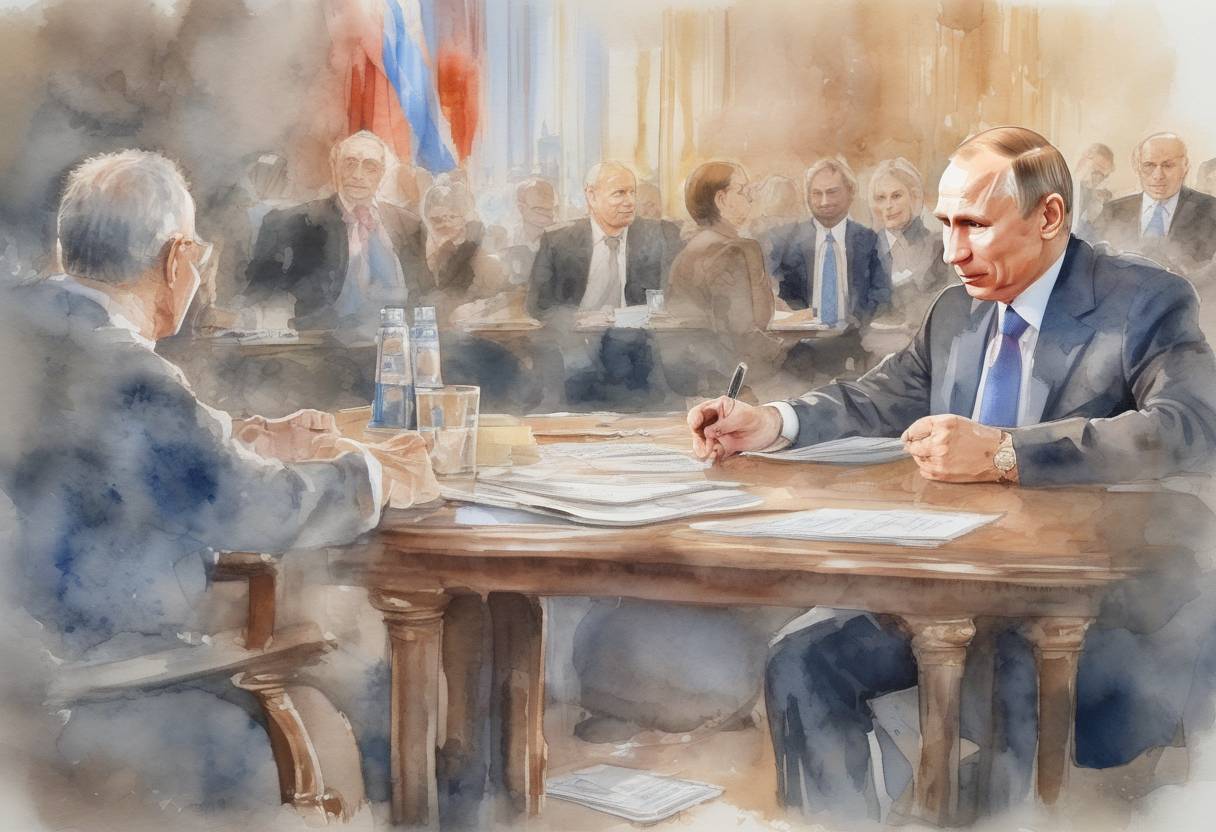
On July 1, 2020, Russia held a nationwide vote on a series of constitutional amendments, the most significant of which included a provision that could allow President Vladimir Putin to remain in power until 2036. This referendum marked a pivotal moment in Russian politics, with far-reaching implications for the country’s governance and political landscape.
Vladimir Putin has been a dominant figure in Russian politics since he first became president in 2000. Over the years, he has served as both President and Prime Minister, maintaining a strong grip on power. The Russian constitution, prior to the amendments, limited the presidency to two consecutive terms. Putin’s current term was set to end in 2024.
In January 2020, Putin proposed a series of constitutional changes, which were swiftly passed by the Russian parliament. These amendments were then put to a public vote, framed as a national referendum, although it was technically a nationwide poll since the Russian constitution does not require a referendum for such changes.
The constitutional amendments included a wide range of changes, but the most controversial was the “reset” of presidential term limits. This provision effectively nullified Putin’s previous terms, allowing him to run for two more six-year terms after his current term ends in 2024. If he chooses to do so and wins, he could potentially remain in power until 2036.
Other amendments included:
The voting process was conducted over a week, culminating on July 1, 2020, to prevent overcrowding amid the COVID-19 pandemic. The official results showed that nearly 78% of voters supported the amendments, with a turnout of about 65%. However, the vote was marred by allegations of irregularities and lack of transparency, with critics arguing that the process was designed to ensure a favorable outcome for the Kremlin.
The approval of these amendments has been seen as a move to consolidate Putin’s power and ensure political stability, at least from the perspective of the Russian government. However, it has also drawn criticism both domestically and internationally, with concerns about the erosion of democratic principles and the potential for increased authoritarianism in Russia.
The 2020 constitutional referendum is a significant event in the history of modern Russia, reflecting the ongoing tension between democratic processes and authoritarian governance. It underscores the challenges faced by Russian civil society and opposition groups in advocating for political reform and accountability.
The potential extension of Putin’s presidency has implications not only for Russia’s domestic politics but also for its foreign relations, as it suggests continuity in Russia’s strategic policies and its approach to international affairs.
Overall, the referendum and its outcomes highlight the complexities of governance in Russia and the enduring influence of Vladimir Putin on the country’s political trajectory.
Source: en.kremlin.ru