Battle of Rabaul: January 21, 1942
Context
The Battle of Rabaul, a critical engagement in the Pacific Theater of World War II, began on January 21, 1942. This battle was part of Japan’s broader strategy to dominate the Southwest Pacific and cut off Australia from potential aid by capturing strategic locations held by the Allies.
Strategic Importance
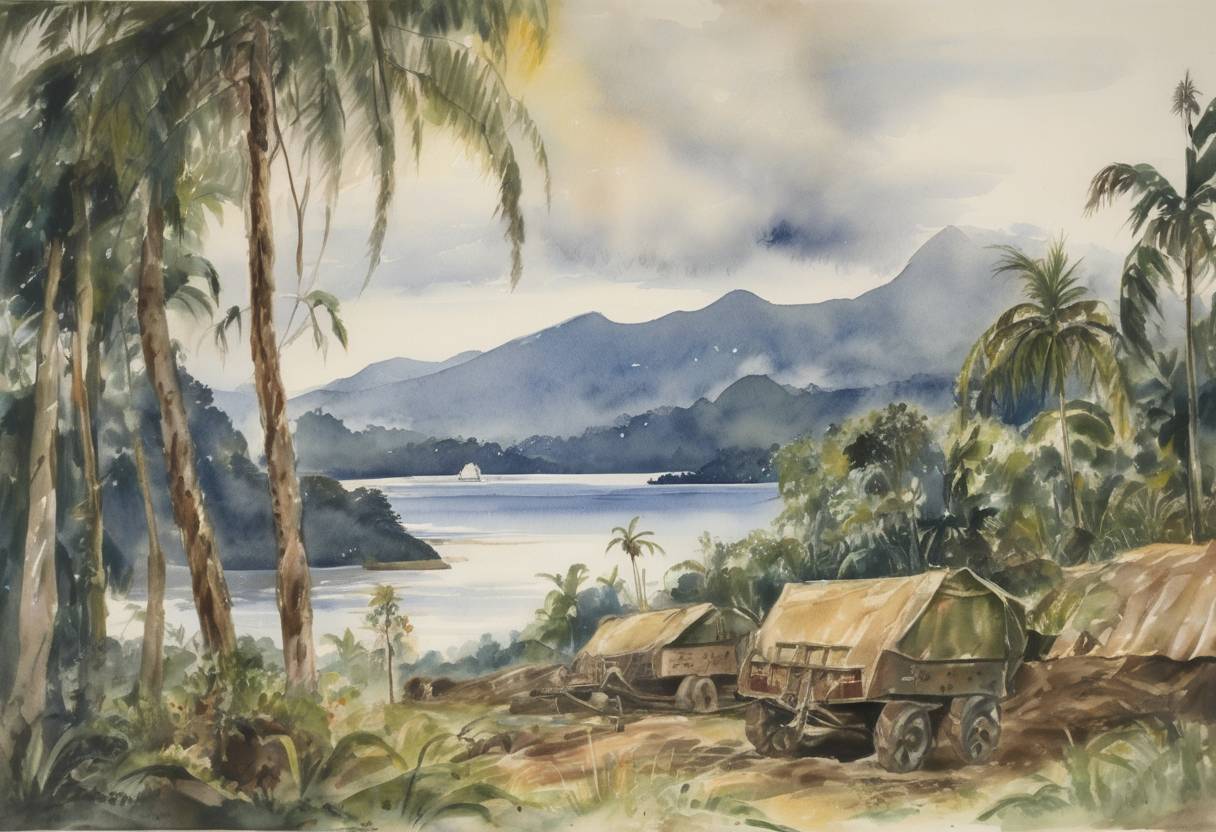
Rabaul, situated on the northeastern tip of New Britain in the Bismarck Archipelago, was a crucial harbor due to its well-protected anchorage and proximity to Papua New Guinea and the Australian mainland. Its capture would provide the Japanese a significant forward base to facilitate further advances in the South Pacific and strengthen their defensive perimeter.
Japanese Invasion
The Japanese 8th Area Army, under the command of General Tomitaro Horii, spearheaded the invasion with a well-coordinated assault. On the morning of January 21, 1942, Japanese naval, air, and ground forces began their attack on Rabaul. The assault was part of Japan’s rapid expansion following the attack on Pearl Harbor in December 1941.
Defense and Aftermath
The Australian defenders, primarily members of Lark Force, consisting of about 1,400 troops, were significantly outnumbered and outgunned. Despite their valiant efforts, the defenders were unable to withstand the Japanese onslaught. The Japanese forces quickly captured Rabaul, establishing it as a major base for air and naval operations.
Consequences
Rabaul’s capture marked a significant setback for the Allies in the Pacific. It provided Japan with a strategic point from which they could launch more operations against Allied positions throughout the Pacific. The occupation of Rabaul would continue until it was effectively neutralized by Allied forces through sustained aerial bombardment, rather than direct recapture, later in the war.
Historical Significance
The fall of Rabaul underscored the challenges faced by the Allied forces in the early stages of the Pacific War. It highlighted the need for better coordination and resource allocation to prevent further Japanese advances. The capture of Rabaul remained an essential part of Japan’s defense network until the end of hostilities in 1945.