The November Constitution and the Second Schleswig War
1863 · Copenhagen, Denmark
King Christian IX of Denmark signed the November Constitution, which declared Schleswig a part of Denmark, leading to the Second Schleswig War.
January 16, 1864
The Danish Monarchy declared the Constitution of Denmark, adopting parliamentary democracy while maintaining the monarchy.
Copenhagen, Denmark | Danish Monarchy
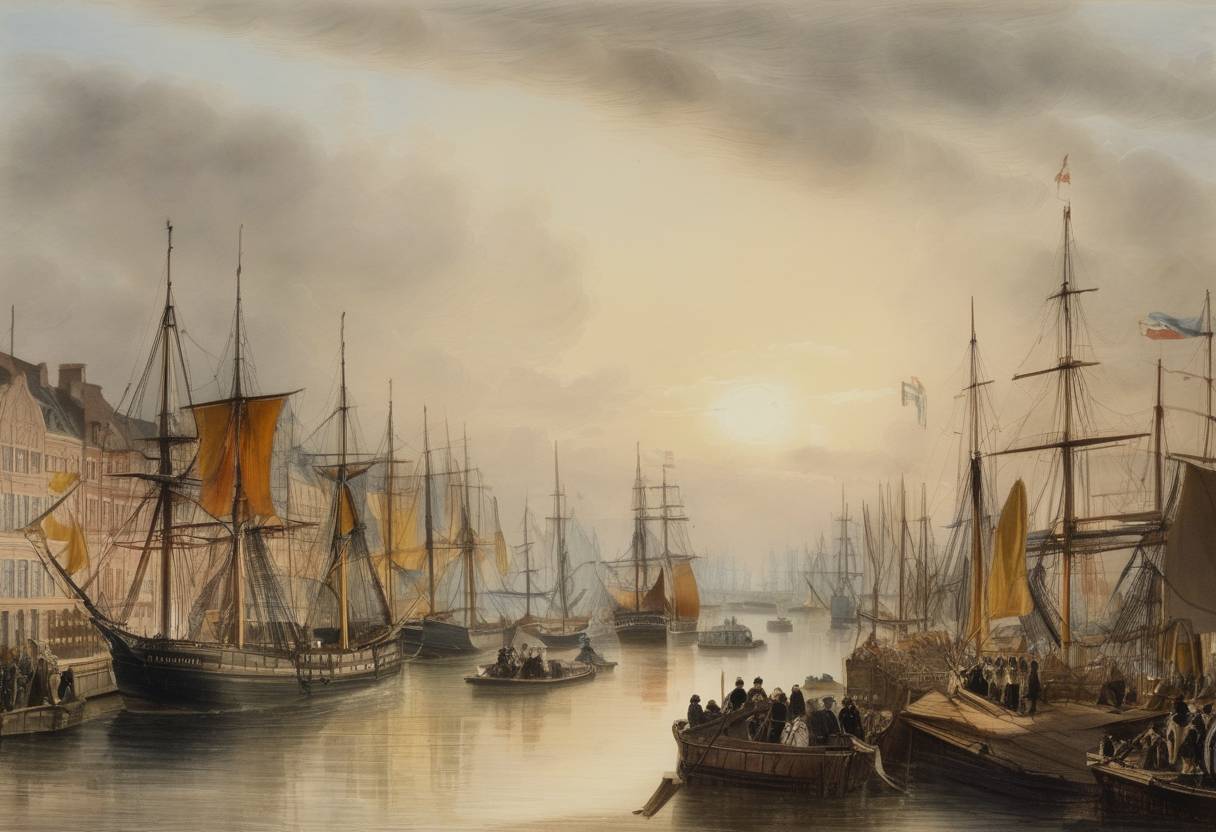
On January 16, 1864, Denmark witnessed a transformational moment in its political history as the Danish Monarchy declared the Constitution of Denmark. This pivotal event marked the formal adoption of parliamentary democracy, effectively reshaping the governance structure while still preserving the monarchy’s role.
The mid-19th century was a period of significant constitutional evolution across Europe, as many nations grappled with the rising tide of democratic ideals and nationalistic movements. Denmark was no exception. The initial push for constitutional governance in Denmark began earlier, with the adoption of the first Danish Constitution in 1849, known as the “June Constitution.” This laid the foundation for a constitutional monarchy by establishing a bicameral parliament and granting civil liberties. However, the political landscape was far from stable, leading to further developments.
The backdrop to the 1864 declaration involved a period of intense socio-political and economic changes in Europe. The conflicts around the Schleswig and Holstein regions, which were heavily influenced by German nationalism and Danish state policies, were critical in escalating tensions that would subsequently lead to the Second Schleswig War in 1864.
In response to internal and external pressures, the Danish Crown sought to reconsolidate its governance structure. Christian IX, who had ascended to the throne in 1863, faced immediate challenges to his rule, notably the demand for more democratic reforms amidst the national crisis over disputed territories.
The 1864 Constitution came at a time when Denmark was striving to stabilize its political apparatus and retain control over the contested duchies of Schleswig and Holstein. It reasserted the principles of constitutional monarchy, but crucially, it formally adopted parliamentary democracy. This meant enhancing the powers and influence of the elected parliament, thus reducing the absolute powers previously enjoyed by the monarchy.
Despite the constitution’s aims to democratize governance, the onset of the Second Schleswig War led to significant territorial losses for Denmark shortly thereafter, notably with the defeat to Prussian and Austrian forces, which critically affected national morale and market perception of the new political framework.
The constitutional reforms initiated in 1864 have had a long-lasting impact on the structure of the Danish government. Although faced with setbacks, including loss of southern territories, Denmark emerged over the subsequent decades as a stable parliamentary democracy. Over time, this shift helped integrate democratic practices more firmly within the Scandinavian political tradition, influencing neighboring countries as well.
The Danish Monarchy continued to exist alongside the parliamentary system, symbolizing continuity and national unity despite the broader political and territorial changes. The dual system of monarchy and parliamentary democracy initiated with the 1864 enactment has since become a defining feature of Denmark’s modern political identity.
In conclusion, the January 16, 1864, declaration marked a turning point in Denmark’s history, reflecting both the pressures and aspirations of its society in a rapidly transforming Europe. The constitutional changes initiated continued to resonate, laying the groundwork for Denmark’s present-day democratic governance.
Source: en.wikipedia.org