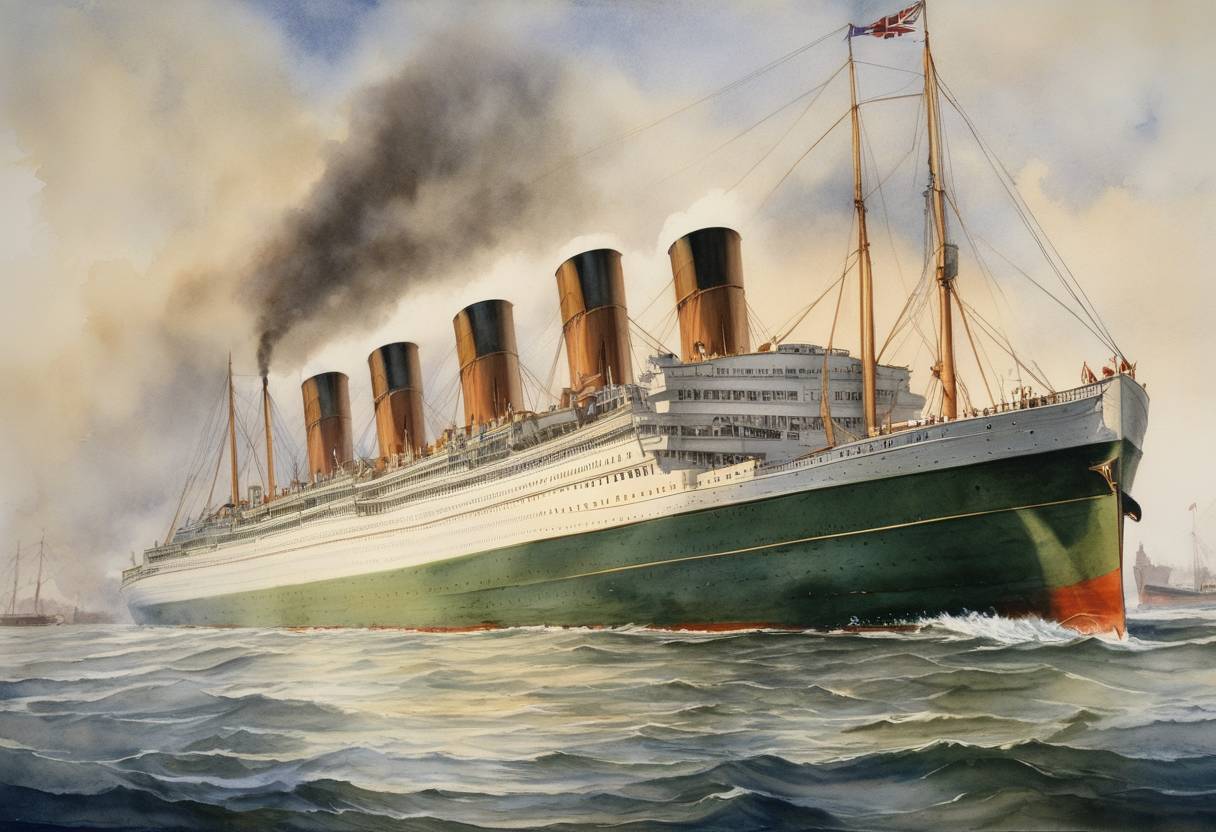
Launch of HMHS Britannic
On February 26, 1914, the HMHS Britannic, the third and largest of the Olympic-class ocean liners constructed by the White Star Line, was launched. The Britannic was originally designed to be a transatlantic passenger liner, following in the footsteps of her sister ships, the RMS Olympic and RMS Titanic. However, due to the outbreak of World War I, she was repurposed as a hospital ship before ever completing her intended role as a passenger vessel.
Specifications and Design
- Dimensions: The Britannic was larger than both her predecessors, measuring approximately 882 feet in length and boasting a gross tonnage of around 48,158.
- Passenger Capacity: Designed to carry up to 2,394 passengers, the Britannic was equipped with luxurious accommodations, reflecting the standards of the White Star Line at the time.
- Safety Enhancements: In response to the Titanic disaster, the Britannic was constructed with additional safety features, including improved watertight compartments and lifeboat arrangements for better evacuation capabilities.
Role as a Hospital Ship
With the escalation of World War I, the British government requisitioned the Britannic and converted her into a hospital ship in 1915. Renamed His Majesty’s Hospital Ship (HMHS) Britannic, she was outfitted to transport and treat wounded soldiers, equipped with state-of-the-art medical facilities.
- Medical Capacity: The Britannic could accommodate over 3,300 patients, served by a crew of more than 1,000 medical personnel and auxiliary staff.
- Operational Area: She primarily operated in the Mediterranean Sea, transporting injured soldiers from the Gallipoli campaign and other fronts to hospitals in the United Kingdom.
Significance and Legacy
The Britannic’s transformation from passenger luxury liner to a vessel of mercy is a reflection of the shifting priorities during wartime. Her service played a crucial role in the treatment and evacuation of thousands of soldiers during World War I.
- Despite her short-lived career, the Britannic remains a symbol of both the grandeur of early 20th-century ocean liners and the adaptability required during times of global conflict.
- Her sinking on November 21, 1916, after hitting a mine in the Aegean Sea, marked the end of her service. Fortunately, due to improved safety measures and swift emergency response, the majority of her crew and patients were successfully evacuated, preventing a high casualty toll.
The story of the HMHS Britannic is a poignant reminder of a time when ocean liners not only represented the pinnacle of maritime travel but also played vital roles in humanitarian efforts during war.