The Human Be-In: Prelude to the Summer of Love
1967 · San Francisco, United States
The Human Be-In, a prelude to San Francisco's Summer of Love, takes place in Golden Gate Park, San Francisco.
January 29, 1967
The Mantra-Rock Dance takes place at the Avalon Ballroom in San Francisco, a historic counterculture music concert featuring Swami Bhaktivedanta, Allen Ginsberg, The Grateful Dead, and Big Brother and the Holding Company.
San Francisco, United States | International Society for Krishna Consciousness
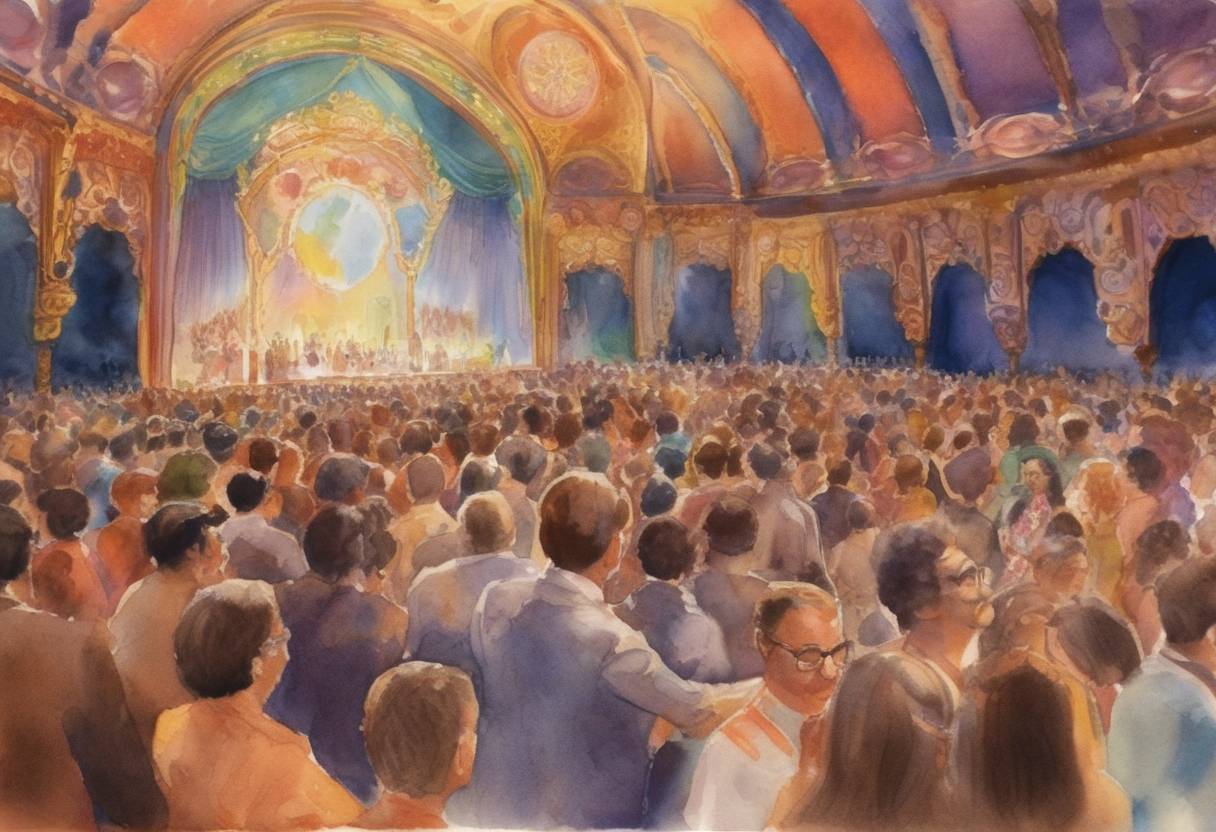
On January 29, 1967, the Avalon Ballroom in San Francisco hosted the Mantra-Rock Dance, a pivotal event in the counterculture movement of the 1960s. This unique concert brought together influential cultural figures, musicians, and spiritual leaders in an atmosphere that symbolized the era’s blend of music, spirituality, and social change.
Swami A.C. Bhaktivedanta Swami Prabhupada: The founder of the International Society for Krishna Consciousness (ISKCON), Swami Prabhupada played a crucial role in the event. His presence at the Mantra-Rock Dance was instrumental in exposing the Western youth to the spiritual teachings of the Hare Krishna movement.
Allen Ginsberg: A leading figure of the Beat Generation, poet Allen Ginsberg had a deep interest in Eastern religions and was an ardent supporter of the Hare Krishna movement. At the event, he chanted Sanskrit mantras and played the harmonium, adding a spiritual dimension to the gathering.
The Grateful Dead: Known for their psychedelic sound and improvisational performances, The Grateful Dead’s participation brought significant attention to the event. Their presence signified the fusion of rock music and spiritual exploration.
Big Brother and the Holding Company: Featuring Janis Joplin as their lead singer, this band contributed to the concert’s musical diversity. Their raw, energetic style was a hallmark of the San Francisco sound of the time.
The Mantra-Rock Dance was more than just a concert; it was a convergence of music, spirituality, and counterculture ethos. It captured the spirit of experimentation and cross-cultural exploration that defined the 1960s. The event is often credited with fostering a greater understanding and appreciation of Eastern philosophical concepts among Western audiences.
The impact of the Mantra-Rock Dance extended beyond the Avalon Ballroom. It helped to popularize the Hare Krishna movement in the United States, attracting young people interested in alternative lifestyles and spiritual growth. The event also reinforced the role of music as a bridge between diverse cultural and spiritual traditions, reflecting a growing trend of seeking enlightenment beyond conventional Western practices.
The Mantra-Rock Dance remains a symbol of the transformative power of art and spirituality, highlighting a moment in history when music and mantra met to inspire a generation seeking new ways of living and understanding the world.
Source: www.krsna.com