Election of Pope Stephen IV (V) - June 12, 816
816 · Rome, Italy
Pope Stephen IV (V) was elected as the 97th pope of the Roman Catholic Church.
March 26, 0752
Pope Stephen II, who was elected to the papacy after the death of Pope Zachary, died before being consecrated. As he had not been officially consecrated, he is sometimes omitted from the official list of popes.
Rome, Holy Roman Empire | Roman Catholic Church
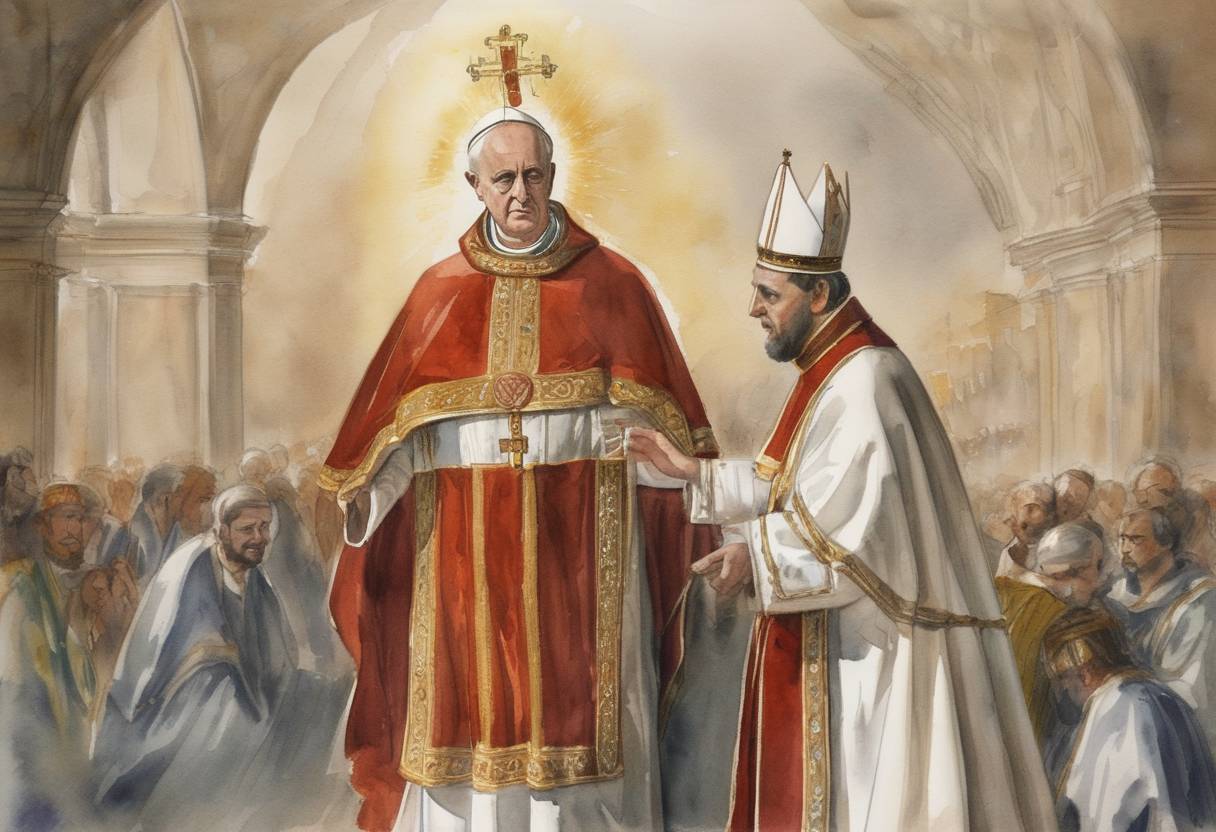
Pope Stephen II’s election on March 23, 752, and subsequent death on March 26, 752, mark an intriguing moment in the history of the Catholic Church. He was chosen as pope following the death of Pope Zachary. During this time, the papacy was both a spiritual and political position, shaping the relationship between the Church and the numerous European powers.
Stephen II was elected pope immediately after the death of his predecessor, Pope Zachary. The rapid election signified the urgent need for leadership amid ongoing political challenges, including pressures from the Lombards and the Byzantine Empire. This period was characterized by complex relationships, with the papacy often caught between asserting religious authority and negotiating temporal power with other rulers.
Stephen II’s pontificate was exceptionally short-lived, lasting only three days, from March 23 to March 26, 752. He died before he could be consecrated, which was necessary for him to assume the full powers of the papacy officially. His death pivoted the election process to select a new pope who would eventually take over as the next pope officially. Shortly after Stephen II’s death, a new conclave elected another man with the name Stephen, who was subsequently consecrated and is recognized as Pope Stephen II.
Because Stephen II died before his consecration, he is generally omitted from the official lists of popes, as the canonical rule during that time required consecration for a pontiff to exercise papal authority. Thus, the next elected Stephen took on the name Stephen II upon his consecration, sometimes causing confusion in papal numbering in historical records.
Pope Stephen II’s brief encounter with the papacy highlights the procedural and canonical aspects underpinning the papal office in the 8th century. His case underscores the necessity of consecration for papal authority and delineates a rare historical quirk in which a papal figure is elected but not consecrated, potentially altering the course of papal succession.
Source: www.britannica.com