Abraham Lincoln Signs the Thirteenth Amendment
1865 · Washington, D.C., United States
President Abraham Lincoln signs the Thirteenth Amendment to the United States Constitution, abolishing slavery.
June 8, 1845
Andrew Jackson, the seventh president of the United States, passed away at his plantation, The Hermitage, near Nashville, Tennessee. His presidency is known for significant political changes, including the expansion of democratic rights and the controversial Indian Removal Act.
Nashville, United States | United States Government
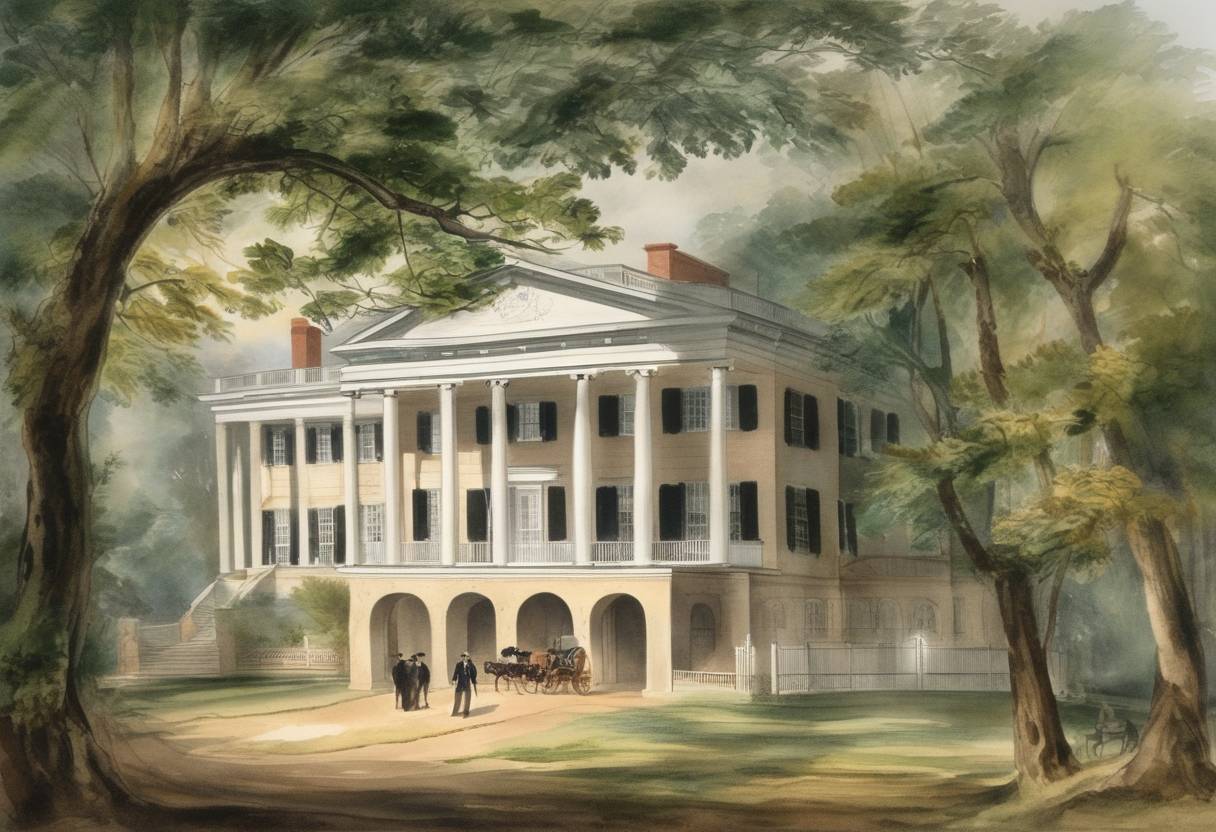
On June 8, 1845, Andrew Jackson, the seventh President of the United States, died at his plantation, The Hermitage, located near Nashville, Tennessee. Known as a polarizing figure, his legacy is marked by significant political and societal changes in the young nation.
Andrew Jackson was born on March 15, 1767, in the Waxhaws region on the border between North and South Carolina. He gained national fame as a general during the War of 1812, particularly for his decisive victory in the Battle of New Orleans. His military prowess and populist appeal propelled him to the presidency, which he held from 1829 to 1837.
Jackson’s presidency is often associated with the expansion of democratic rights. He was a staunch advocate of the “common man” and sought to make government more accessible to the average citizen. His efforts helped to dismantle the elitist political structures of the day, evidenced by his support for universal white male suffrage, eliminating property ownership as a voting requirement.
One of the most contentious aspects of Jackson’s presidency was the Indian Removal Act of 1830. This policy authorized the forced relocation of Native American tribes living east of the Mississippi River to lands west of the river. This resulted in the infamous Trail of Tears, during which thousands of Native Americans suffered from disease, exposure, and starvation, leading to many deaths.
Jackson also dealt with the Nullification Crisis, a confrontation between the federal government and South Carolina, which attempted to nullify federal tariffs. Jackson asserted the supremacy of the federal government, a stance that reinforced the authority of federal law over state legislation.
Jackson’s presidency fundamentally altered the political landscape of the United States. He strengthened the executive branch’s power and laid the groundwork for the modern Democratic Party. However, his policies toward Native Americans and his advocacy for slavery have left a controversial legacy.
Jackson passed away on June 8, 1845, at the age of 78, due to chronic dropsy and heart failure. His death marked the end of an era defined by his relentless drive to reshape American democracy and expand its frontiers, for better or worse. His life and presidency continue to be studied and debated, underscoring his enduring influence on American history.
Source: en.wikipedia.org