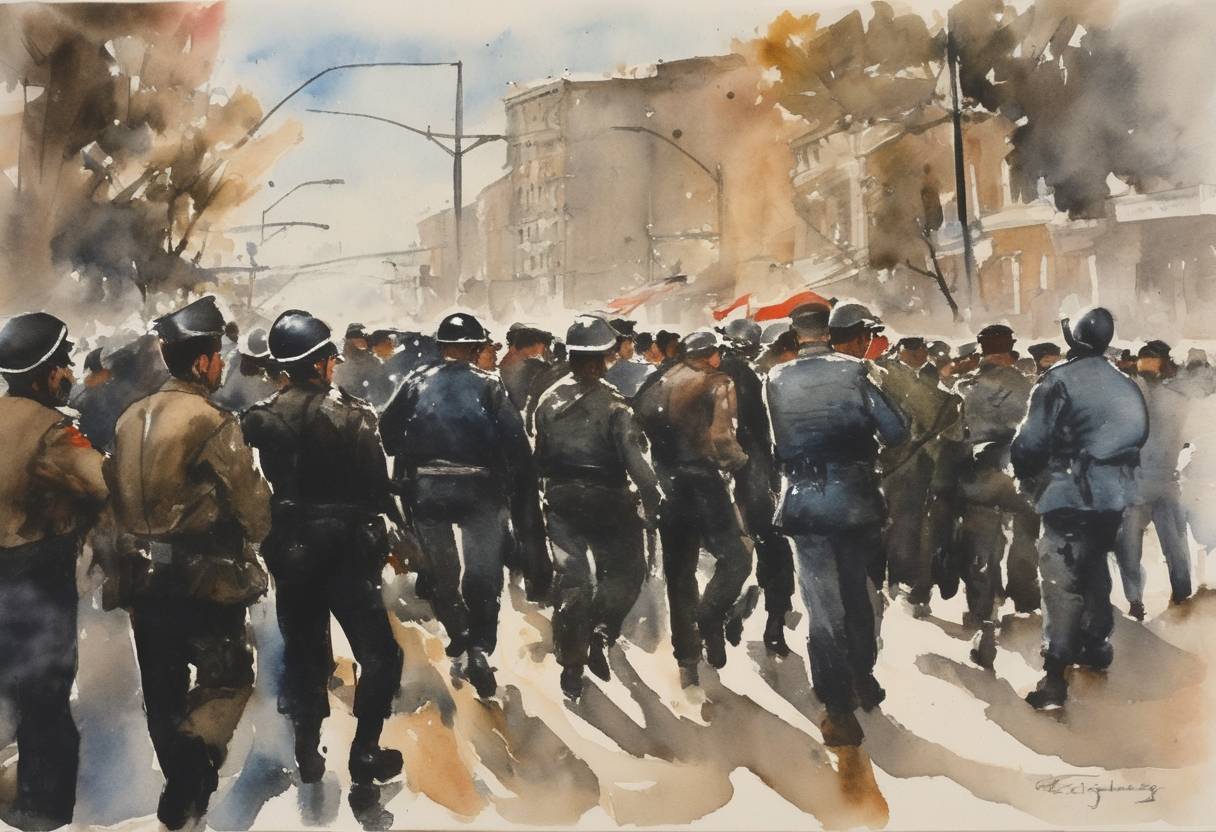
Demonstrations in Greece Against NATO Missile Base - May 19, 1963
On May 19, 1963, Greece witnessed significant civil unrest as large demonstrations erupted in opposition to the establishment of a NATO missile base on Greek soil. This period in Greek history was marked by widespread anti-NATO sentiment, largely fueled by the geopolitical tensions of the Cold War and national concerns over foreign military presence.
Context and Prelude to the Demonstration
- Cold War Dynamics: The global conflict between the United States and the Soviet Union saw countries around the world caught in the struggle for influence. NATO, established in 1949, acted as a collective defense organization for Western nations, with Greece joining in 1952.
- Domestic Tensions: Greece, having recently emerged from a civil war (1946-1949), was politically divided. The domestic left-wing groups and communists were opposed to Western military involvement, particularly American influence, in Greek affairs.
The Demonstration
- Participants: The demonstration was organized by various leftist groups, including prominent intellectuals and political activists, who were against military collaboration with Western powers and feared the repercussions of Greece becoming a potential target in a nuclear conflict.
- Reaction: The Greek police, under the instruction of a government keen to maintain its NATO alliances, were deployed to manage and suppress the protests. Clashes erupted between demonstrators and law enforcement.
- Arrests: Several protesters were arrested amidst the unrest, highlighting the contentious nature of this issue within Greek society.
Aftermath and Historical Significance
- Public Sentiment: The incident underscored the deep-seated divisions in Greek society concerning NATO and foreign policy, contributing to ongoing debates about Greece’s role in the Cold War.
- Political Impact: The tension between the government and leftist elements within the country persisted, eventually influencing future political developments and contributing to the volatile political environment of 1960s Greece.
This demonstration is emblematic of the broader geopolitical currents of the time, reflecting both the local and international dimensions of Cold War politics affecting nations within the NATO alliance.