Francis Gary Powers Charged with Espionage
1960 · Moscow, Soviet Union
Francis Gary Powers was charged with espionage by the Soviet Union after his U-2 spy plane was shot down over Soviet airspace.
May 1, 1960
The U-2 incident occurred when an American U-2 spy plane was shot down over the Soviet Union, escalating Cold War tensions.
Sverdlovsk, Soviet Union | CIA
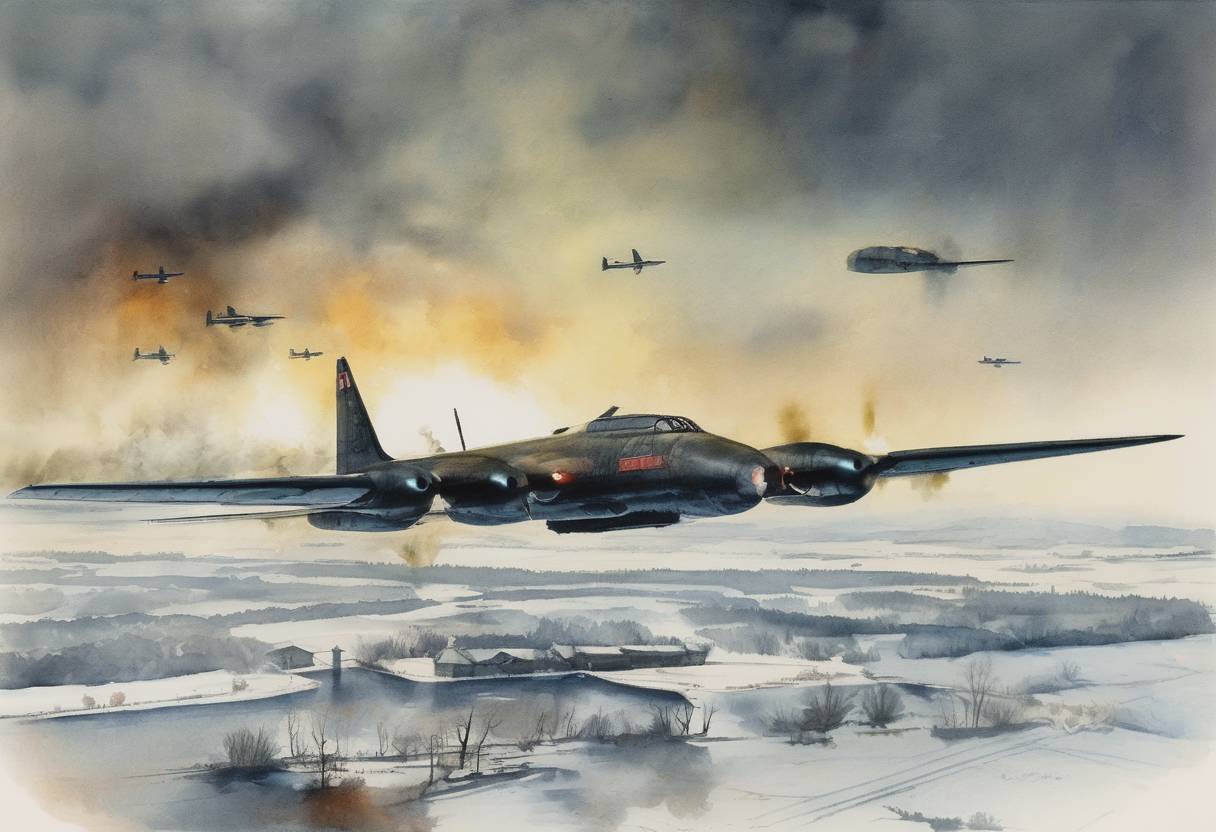
On May 1, 1960, a significant event in Cold War history unfolded when an American U-2 spy plane was shot down over Soviet airspace. This incident, known as the U-2 Incident, marked a pivotal moment in U.S.-Soviet relations, exacerbating tensions during a period already fraught with geopolitical rivalry.
The U-2 spy plane, developed by the United States, was designed for high-altitude reconnaissance missions. It was capable of flying at altitudes beyond the reach of Soviet fighter jets and anti-aircraft missiles, making it a critical tool for gathering intelligence on Soviet military capabilities.
The U.S. had been conducting U-2 flights over the Soviet Union since 1956, collecting valuable information on Soviet missile and nuclear developments. These missions were highly secretive, and the U.S. government was keen to keep them concealed from the public and the Soviets.
On May 1, 1960, Francis Gary Powers, a pilot for the Central Intelligence Agency (CIA), took off from a base in Pakistan on a mission to fly over the Soviet Union and photograph military installations. However, as Powers flew over the Soviet city of Sverdlovsk (now Yekaterinburg), his plane was detected by Soviet radar.
The Soviet military responded by launching several surface-to-air missiles, one of which successfully hit the U-2, causing it to crash. Powers parachuted to safety but was captured by Soviet forces. The U.S. initially attempted to cover up the mission, claiming it was a weather research flight that had strayed off course.
The incident had immediate and far-reaching consequences:
Diplomatic Fallout: The U-2 Incident severely damaged U.S.-Soviet relations. The Soviet Premier, Nikita Khrushchev, used the incident to publicly embarrass the United States, revealing the true nature of the mission and displaying the captured pilot and wreckage.
Collapse of the Paris Summit: The incident occurred just days before a planned summit in Paris between the United States, the Soviet Union, the United Kingdom, and France. The summit, intended to ease Cold War tensions, collapsed after Khrushchev demanded an apology from President Dwight D. Eisenhower, who refused to halt U-2 flights.
Impact on U.S. Intelligence Operations: The incident exposed the risks associated with aerial reconnaissance and led to increased investment in satellite technology, which would eventually replace manned spy flights.
Trial and Release of Powers: Francis Gary Powers was tried and convicted of espionage by the Soviet Union, receiving a ten-year sentence. However, he was released in 1962 in a prisoner exchange for Soviet spy Rudolf Abel.
The U-2 Incident underscored the intense mistrust and competition between the superpowers during the Cold War. It highlighted the lengths to which both sides would go to gather intelligence and maintain strategic advantages. The event also accelerated the development of reconnaissance satellites, which would become a cornerstone of intelligence gathering in the subsequent decades.
In retrospect, the U-2 Incident is a stark reminder of the precarious nature of international relations during the Cold War and the potential for espionage activities to escalate into broader conflicts.
Source: en.wikipedia.org