Singapore Becomes a Self-Governing State
1959 · Singapore, Singapore
Singapore becomes a self-governing state within the British Empire after the dissolution of the State of Singapore Act.
August 9, 1965
Singapore separated from Malaysia and became an independent republic.
Singapore, Singapore | Government of Singapore
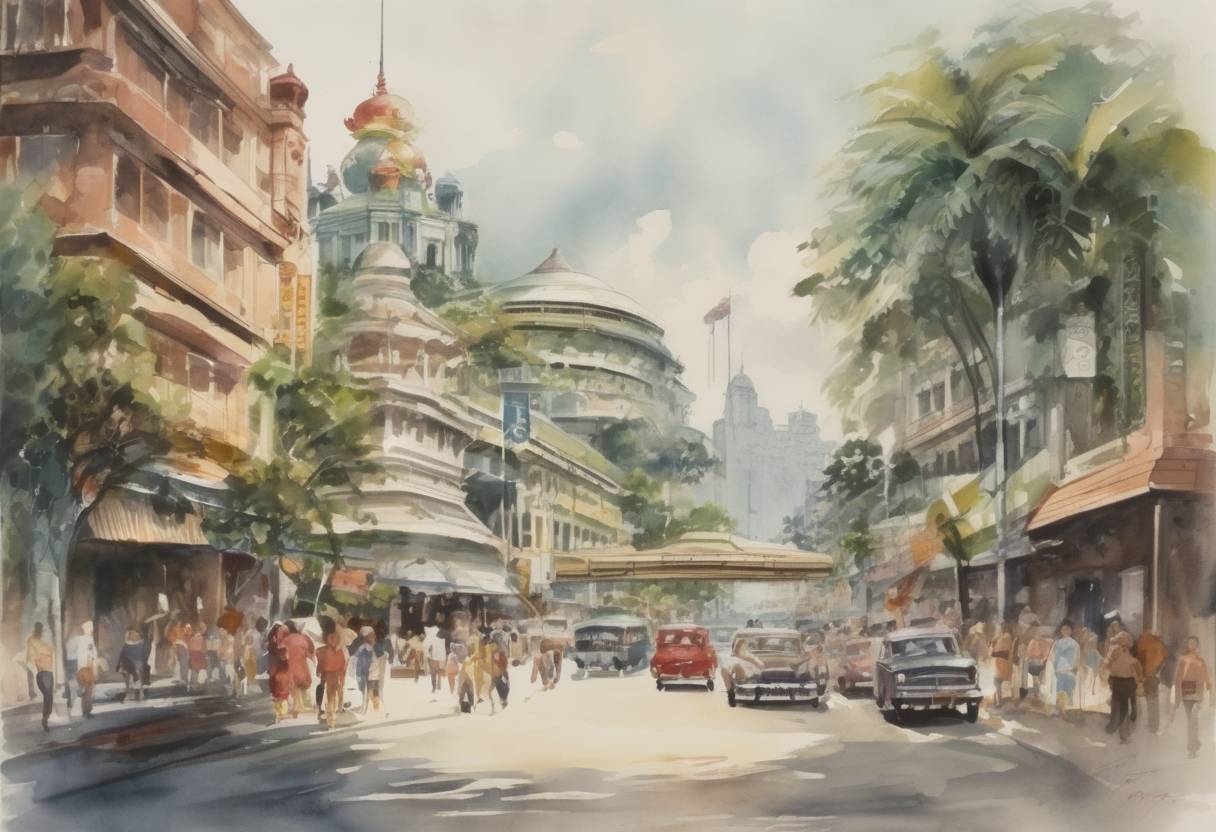
On August 9, 1965, Singapore officially separated from Malaysia, marking its emergence as an independent republic. This significant event was the culmination of a series of political and social tensions that had been brewing since Singapore’s merger with Malaysia in 1963.
Formation of Malaysia (1963): Singapore joined the Federation of Malaysia on September 16, 1963, along with Malaya, Sabah, and Sarawak. The merger was initially seen as a strategic move to foster economic growth and counter communist influence in the region.
Rising Tensions: The union was fraught with difficulties from the start. Key issues included economic disagreements, political rivalry, and racial tensions. Singapore’s ruling People’s Action Party (PAP) and Malaysia’s United Malays National Organization (UMNO) had conflicting visions for the federation, particularly concerning the role of race in politics.
Economic Disputes: Singapore sought a more significant economic role within Malaysia, advocating for a common market. However, disagreements over financial contributions and economic policies led to friction between the two governments.
Racial Strife: The racial composition of Malaysia was a sensitive issue. Singapore’s predominantly Chinese population clashed with the federal government’s pro-Malay policies, leading to racial riots in 1964.
Political Breakdown: By 1965, the relationship between Singapore and the Malaysian federal government had deteriorated significantly. The Malaysian Prime Minister, Tunku Abdul Rahman, concluded that separation was the best course of action to prevent further conflict.
Declaration of Independence: On August 9, 1965, the Malaysian Parliament passed a resolution to expel Singapore from the federation. Singapore’s Prime Minister, Lee Kuan Yew, announced the separation in a televised address, expressing deep emotion and a commitment to building a successful independent nation.
Immediate Challenges: As a newly independent state, Singapore faced numerous challenges, including establishing its own defense, securing international recognition, and developing a sustainable economy.
Economic Development: Under Lee Kuan Yew’s leadership, Singapore embarked on a rapid industrialization and modernization program. The government focused on attracting foreign investment, developing infrastructure, and fostering a skilled workforce.
International Relations: Singapore quickly sought to establish diplomatic relations worldwide, joining the United Nations on September 21, 1965, and becoming a member of the Commonwealth of Nations.
Legacy: Singapore’s separation from Malaysia is a pivotal moment in its history. It marked the beginning of its transformation into a prosperous, multicultural, and globally connected city-state. The event also underscored the complexities of post-colonial nation-building in Southeast Asia.
Today, Singapore is recognized for its economic success and political stability, serving as a model for development in the region. The separation from Malaysia remains a defining moment that shaped its national identity and trajectory.
Source: en.wikipedia.org