The Last Sermon of Prophet Muhammad
632 · Mount Arafat, Arabian Peninsula
The Last Sermon of Prophet Muhammad is delivered during the Farewell Pilgrimage, which is a pivotal event in Islamic history.
July 16, 0622
The Islamic calendar begins with the Hijra, the migration of the Prophet Muhammad and his followers from Mecca to Medina, marking the start of the Islamic era.
Medina, present-day Saudi Arabia | Islamic community
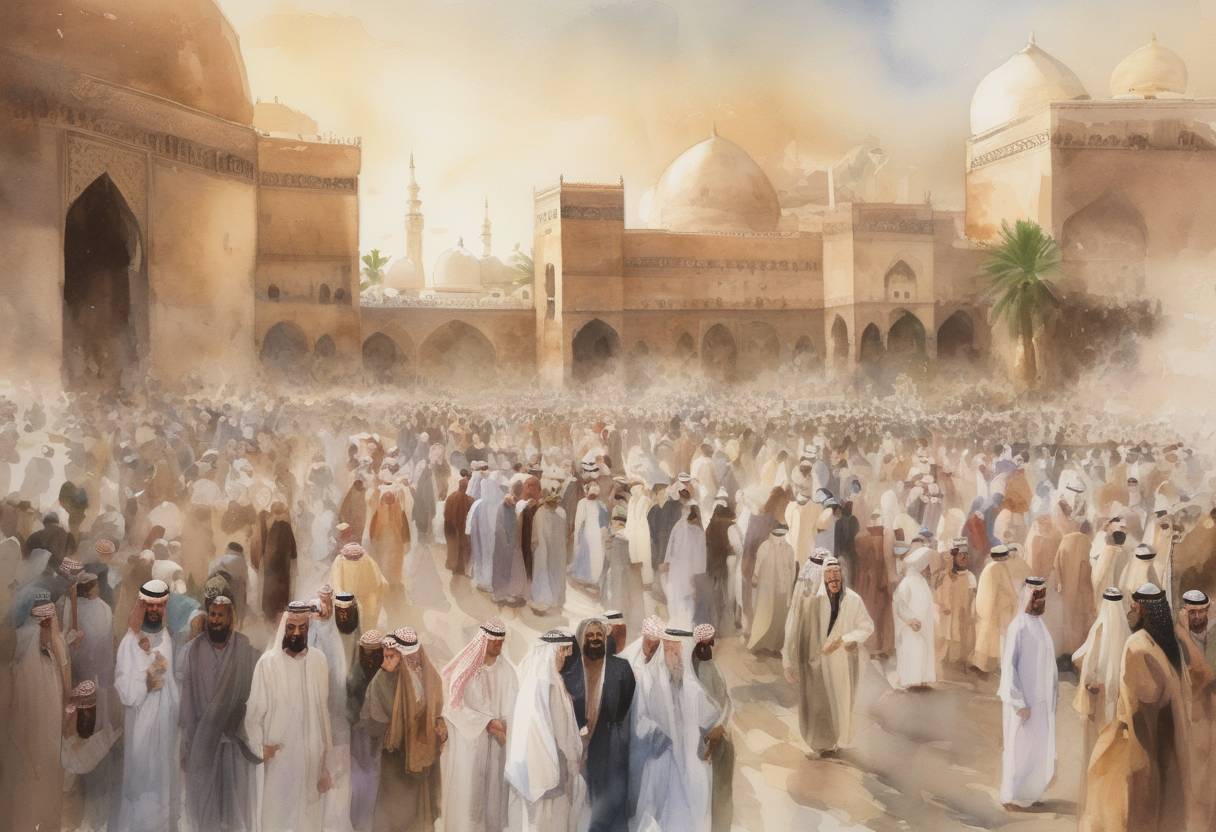
The Islamic calendar, also known as the Hijri calendar, marks its beginning with the significant event of the Hijra, which occurred on July 16, 622 CE. This pivotal moment in Islamic history involved the migration of the Prophet Muhammad and his followers from Mecca to Medina. This event not only signifies the start of the Islamic era but also represents a turning point in the establishment of Islam as a community and a faith.
Persecution in Mecca: Prior to the Hijra, the Prophet Muhammad and his followers faced increasing persecution in Mecca. The Quraysh tribe, which held significant power in Mecca, opposed Muhammad’s monotheistic teachings, which threatened their social and economic status, particularly their control over the Kaaba, a major religious and commercial center.
Invitation from Medina: The situation in Mecca became untenable, prompting Muhammad to seek a new base for his followers. Meanwhile, in Yathrib (later renamed Medina), two influential tribes, the Aws and the Khazraj, were embroiled in conflict. They invited Muhammad to mediate and bring peace, recognizing his leadership and the potential for unifying under Islam.
The Journey: The migration began in secrecy to avoid the Quraysh’s attempts to thwart their departure. Muhammad and his close companion, Abu Bakr, took a less-traveled route to avoid detection. After several days of travel, they arrived in Medina, where they were warmly received by the local Muslim converts, known as the Ansar (helpers).
Establishment of the Ummah: Upon arrival, Muhammad established the first Muslim community, or Ummah, in Medina. This community was built on principles of social justice, mutual support, and religious unity, transcending tribal affiliations.
Start of the Islamic Calendar: The Hijra marks the beginning of the Islamic calendar, with the year 622 CE designated as 1 AH (Anno Hegirae, “in the year of the Hijra”). This calendar is lunar-based and is used by Muslims worldwide for religious observances.
Foundation of the Islamic State: The migration allowed for the establishment of the first Islamic state, with Muhammad as both a spiritual and political leader. This laid the groundwork for the expansion of Islam beyond the Arabian Peninsula.
Social and Political Reforms: In Medina, Muhammad implemented significant social and political reforms, including the drafting of the Constitution of Medina, which outlined the rights and responsibilities of all citizens, including Muslims, Jews, and other tribes.
Consolidation of Islam: The Hijra facilitated the consolidation of Islam as a major religious and political force. It enabled the spread of Islamic teachings and the eventual unification of the Arabian Peninsula under Islam.
Legacy: The Hijra is commemorated annually by Muslims during the Islamic New Year, reflecting on the themes of sacrifice, perseverance, and community.
In summary, the Hijra was a transformative event that not only marked the beginning of the Islamic calendar but also set the stage for the growth and development of Islam as a major world religion.
Source: en.wikipedia.org