Appointment of Pu Yi as Emperor
1908 · Beijing, China
Pu Yi was appointed Emperor of the Qing dynasty at the age of two following the death of his uncle, the Guangxu Emperor.
October 16, 0690
Wu Zetian became the first and only female emperor of China, founding the Zhou Dynasty.
Luoyang, China | Zhou Dynasty
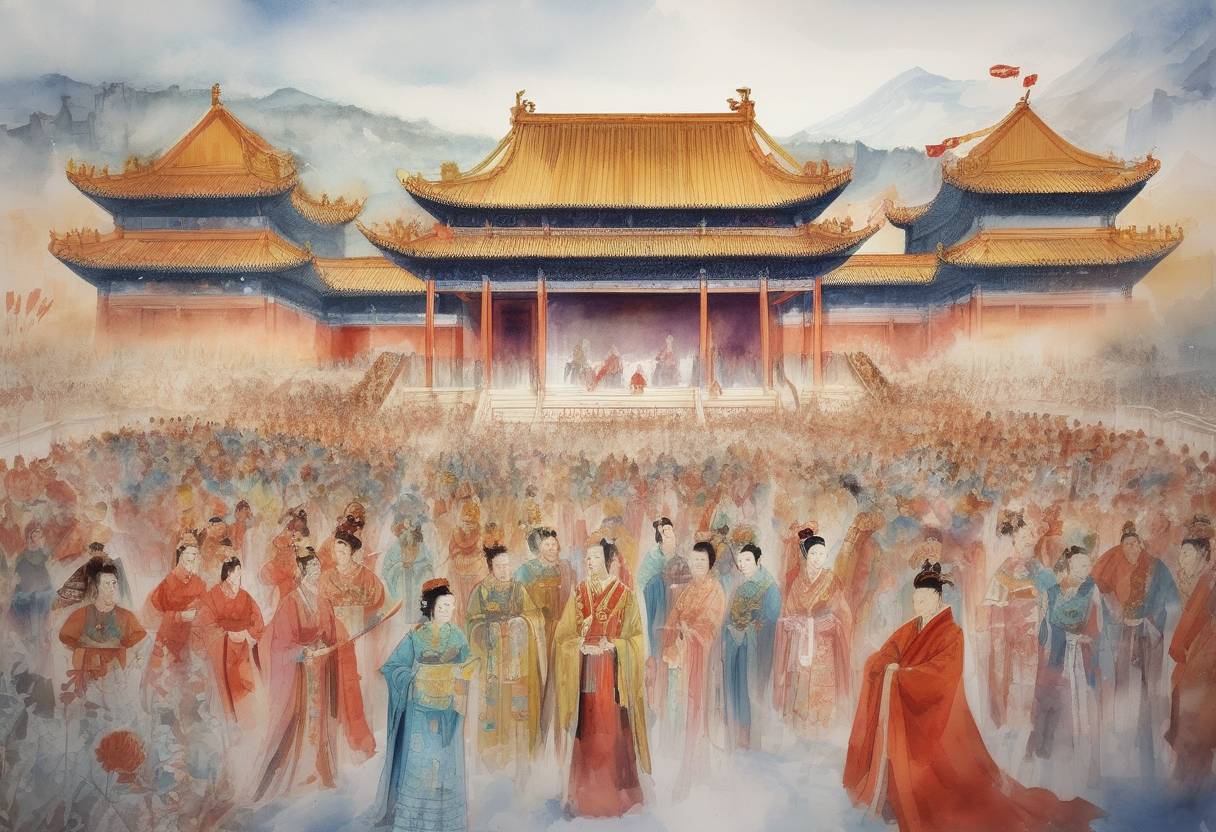
On October 16, 690, Wu Zetian, a formidable and astute political figure, declared herself the emperor of China, marking the establishment of the Zhou Dynasty. This event is significant as Wu Zetian remains the only woman in Chinese history to assume the title of emperor, a role traditionally reserved for men.
Wu Zetian was born in 624 during the Tang Dynasty. She entered the imperial court as a concubine to Emperor Taizong and later became the favored consort of his successor, Emperor Gaozong. Her intelligence and political acumen allowed her to rise through the ranks, eventually becoming Empress Consort.
Following Emperor Gaozong’s death, Wu Zetian effectively controlled the empire as the regent for her sons, who were nominally emperors. Her influence and authority grew, and she skillfully navigated court politics, eliminating rivals and consolidating power.
In 690, Wu Zetian took the unprecedented step of proclaiming herself emperor, establishing the Zhou Dynasty, which interrupted the Tang Dynasty. She justified her rule through a combination of Buddhist and Confucian ideologies, presenting herself as a divine ruler destined to bring prosperity and stability.
Wu Zetian’s reign was marked by several significant achievements:
Bureaucratic Reforms: She restructured the government, promoting meritocracy by expanding the civil service examination system, which allowed talented individuals from diverse backgrounds to enter the bureaucracy.
Cultural Flourishing: Her reign saw a flourishing of culture and arts, with a particular emphasis on Buddhism, which she supported as a state religion.
Military and Economic Policies: Wu Zetian strengthened the military and implemented policies that improved agricultural productivity and economic stability.
Wu Zetian’s reign lasted until 705, when she was forced to abdicate in favor of her son, restoring the Tang Dynasty. Despite the brevity of the Zhou Dynasty, her rule left a lasting impact on Chinese history. Wu Zetian is remembered for her effective governance and the challenges she posed to traditional gender roles in imperial China.
Her legacy is complex, as historical accounts often reflect the biases of later Confucian historians who criticized her for her methods of consolidating power. Nonetheless, Wu Zetian remains a significant figure in Chinese history, symbolizing both the potential for female leadership and the complexities of political power.
Source: en.wikipedia.org