Capture of Fort Donelson: February 16, 1862
1862 · Fort Donelson, United States
American Civil War: General Ulysses S. Grant captures Fort Donelson, Tennessee.
May 10, 1865
Confederate President Jefferson Davis is captured by Union troops near Irwinville, Georgia, effectively ending the American Civil War.
Irwinville, United States | Union Army
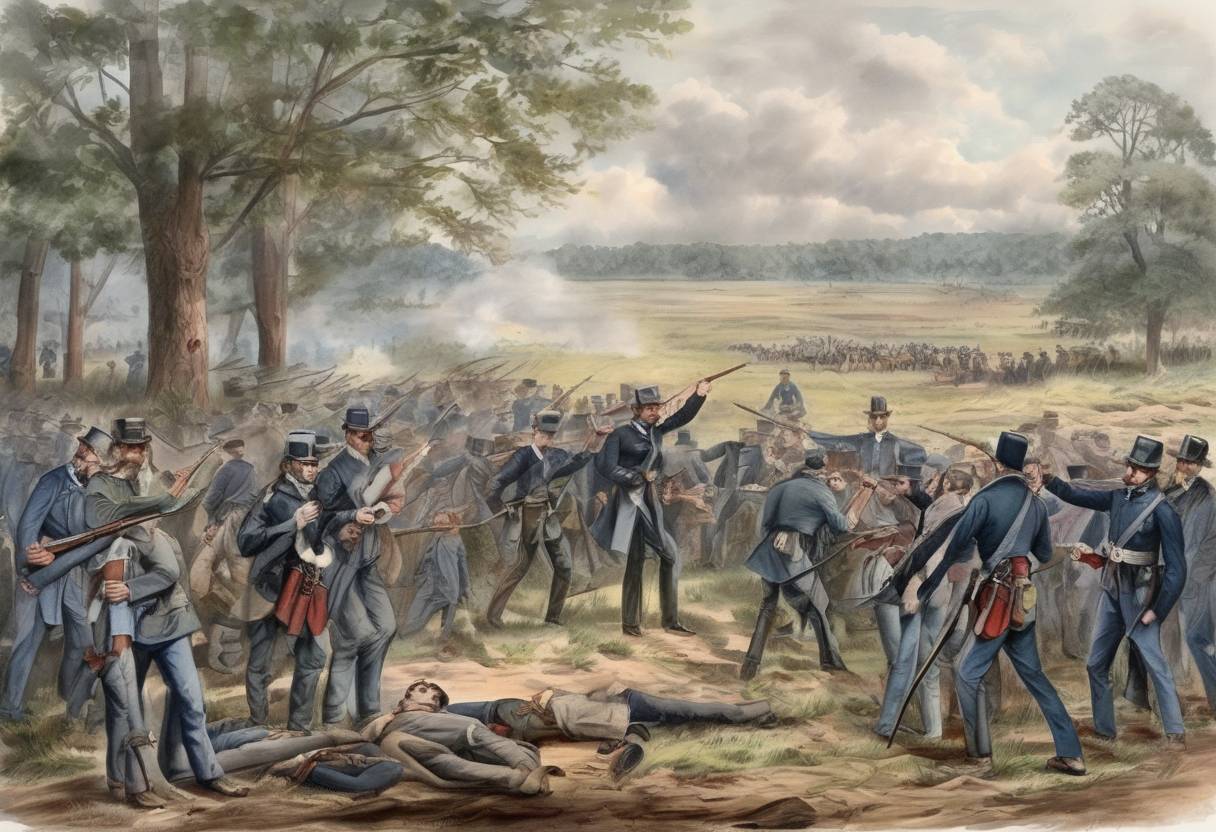
On May 10, 1865, Jefferson Davis, the President of the Confederate States of America, was captured by Union troops near Irwinville, Georgia. This event marked a significant moment in the closing chapter of the American Civil War, symbolizing the definitive collapse of the Confederate government.
The American Civil War, which began in 1861, had reached its conclusion with the surrender of General Robert E. Lee at Appomattox Court House on April 9, 1865. Despite Lee’s surrender, some Confederate forces continued to resist, and the Confederate government, led by Jefferson Davis, was on the run.
Following the fall of Richmond, Virginia, the Confederate capital, in early April 1865, Davis and his cabinet fled southward, hoping to continue the fight or escape to a sympathetic foreign nation. However, the Union forces were determined to capture Davis and dismantle the remaining Confederate resistance.
Davis was captured by elements of the 4th Michigan and 1st Wisconsin Cavalry regiments. The Union troops, under the command of Lieutenant Colonel Benjamin Pritchard, surrounded Davis’s camp in the early morning hours. The capture was relatively uneventful, with Davis reportedly attempting to evade capture by disguising himself in his wife’s overcoat, a detail that later became the subject of much ridicule and myth.
The capture of Jefferson Davis effectively ended any organized Confederate resistance. Davis was taken to Fort Monroe in Virginia, where he was imprisoned for two years. Although he was charged with treason, he was never tried and was released on bail in May 1867.
The capture of Davis symbolized the end of the Confederate States of America and the reunification of the United States. It also marked the beginning of the Reconstruction era, a complex and challenging period of rebuilding the nation and integrating the Southern states back into the Union.
Reconstruction Era: The capture and subsequent imprisonment of Davis highlighted the Union’s commitment to re-establishing federal authority over the Southern states. The Reconstruction era would bring significant changes, including the passage of the 13th, 14th, and 15th Amendments, which abolished slavery and aimed to secure civil rights for former slaves.
Legacy of Jefferson Davis: Davis remained an unrepentant symbol of the Confederate cause until his death in 1889. His capture and the myths surrounding it contributed to the “Lost Cause” narrative that romanticized the Confederacy and its leaders.
National Healing: The end of the Civil War and the capture of its leaders were crucial steps toward healing a nation divided by four years of brutal conflict. The challenges of Reconstruction, however, underscored the deep-seated divisions that would continue to affect American society for generations.
The capture of Jefferson Davis on May 10, 1865, remains a pivotal moment in American history, marking the definitive end of the Confederate government and setting the stage for the nation’s long and difficult journey toward reconciliation and equality.
Source: www.history.com