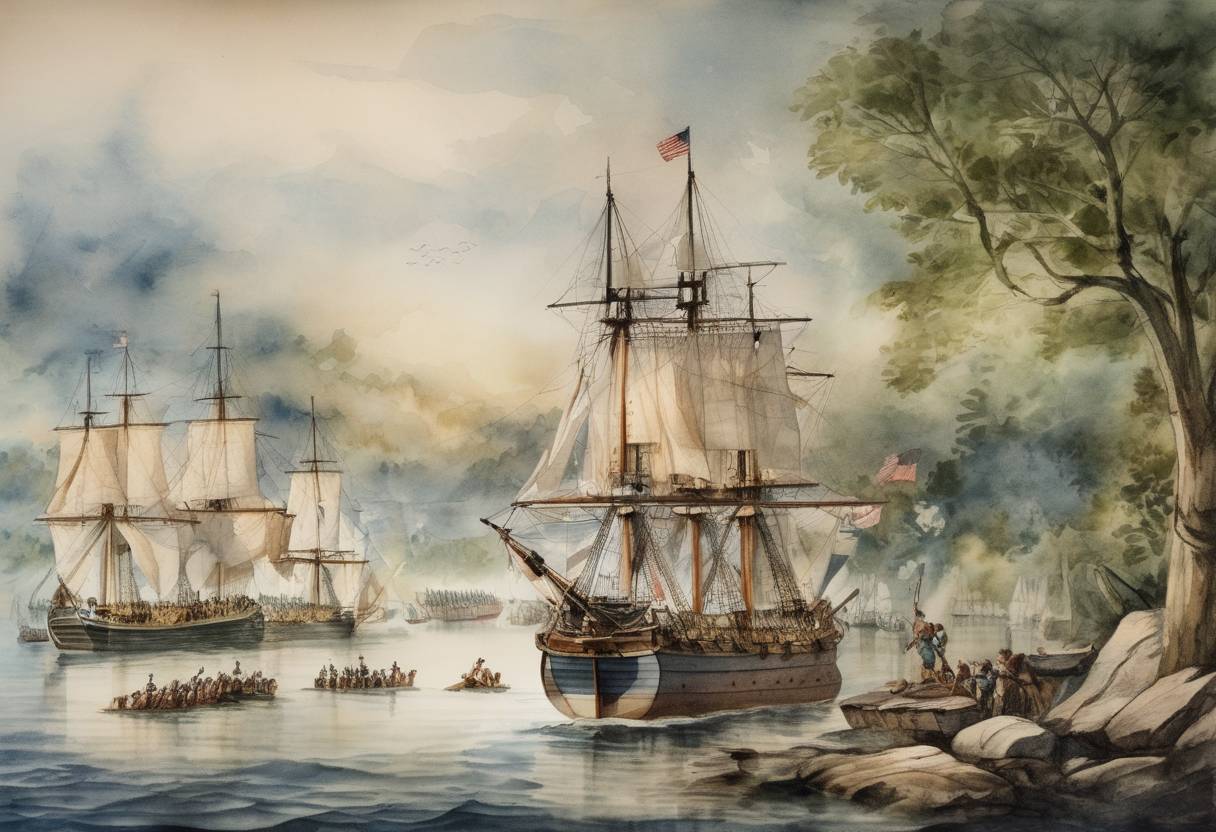
The Battle of Valcour Island
Overview
The Battle of Valcour Island was a pivotal naval engagement during the American Revolutionary War, taking place on October 11, 1776. It occurred on Lake Champlain, a strategic waterway between New York and Quebec, and was a significant confrontation between the fledgling American naval forces and the British Royal Navy.
Context
Strategic Importance
- Lake Champlain: This lake was a crucial route for both the British and American forces. Control over it meant easier movement of troops and supplies between Canada and the American colonies.
- American Strategy: The Americans, led by General Benedict Arnold, sought to delay the British advance from Canada into the colonies, buying time to strengthen their defenses.
Prelude to the Battle
- Construction of the Fleet: Under Arnold’s leadership, the Americans hastily constructed a small fleet of ships at Skenesborough (modern-day Whitehall, New York). This fleet included the flagship USS Congress, the schooner USS Royal Savage, and several gunboats.
- British Preparations: The British, commanded by General Guy Carleton, assembled a superior fleet at St. John’s, Quebec, which included the ship Inflexible and the schooner Maria.
The Battle
Engagement
- Location: The battle took place in the narrow strait between Valcour Island and the New York mainland, a location chosen by Arnold to negate the British fleet’s numerical superiority.
- Tactics: On October 11, the British fleet, led by Captain Thomas Pringle, engaged the American forces. Arnold’s positioning forced the British to attack in a line, limiting their ability to use their larger ships effectively.
- Outcome: Despite a valiant defense, the American fleet was outgunned and suffered significant damage. The Royal Savage was grounded and abandoned, and several other vessels were lost.
Aftermath
- American Retreat: Under the cover of darkness, Arnold led a daring retreat southward. The remaining American ships were pursued and eventually caught near Crown Point, where Arnold ordered them burned to prevent capture.
- Strategic Delay: Although a tactical defeat, the battle delayed the British advance, preventing them from reaching the Hudson River before winter. This delay was crucial for the American forces, allowing them time to prepare for future engagements.
Significance
- Naval Innovation: The battle demonstrated the importance of naval power in the Revolutionary War and highlighted Arnold’s strategic acumen.
- Morale and Legacy: While a loss, the battle boosted American morale by showcasing their ability to challenge the British Navy. It also underscored the need for a strong naval presence in future conflicts.
The Battle of Valcour Island remains a testament to the ingenuity and resilience of the American forces during the Revolutionary War, marking a significant moment in the struggle for independence.