Robert II Becomes King of Scotland: The Beginning of the Stuart Dynasty
1371 · Scone, Scotland
Robert II became King of Scotland, marking the beginning of the Stuart dynasty.
November 25, 1034
Duncan I becomes King of Scotland following the death of Malcolm II.
Scone, Scotland
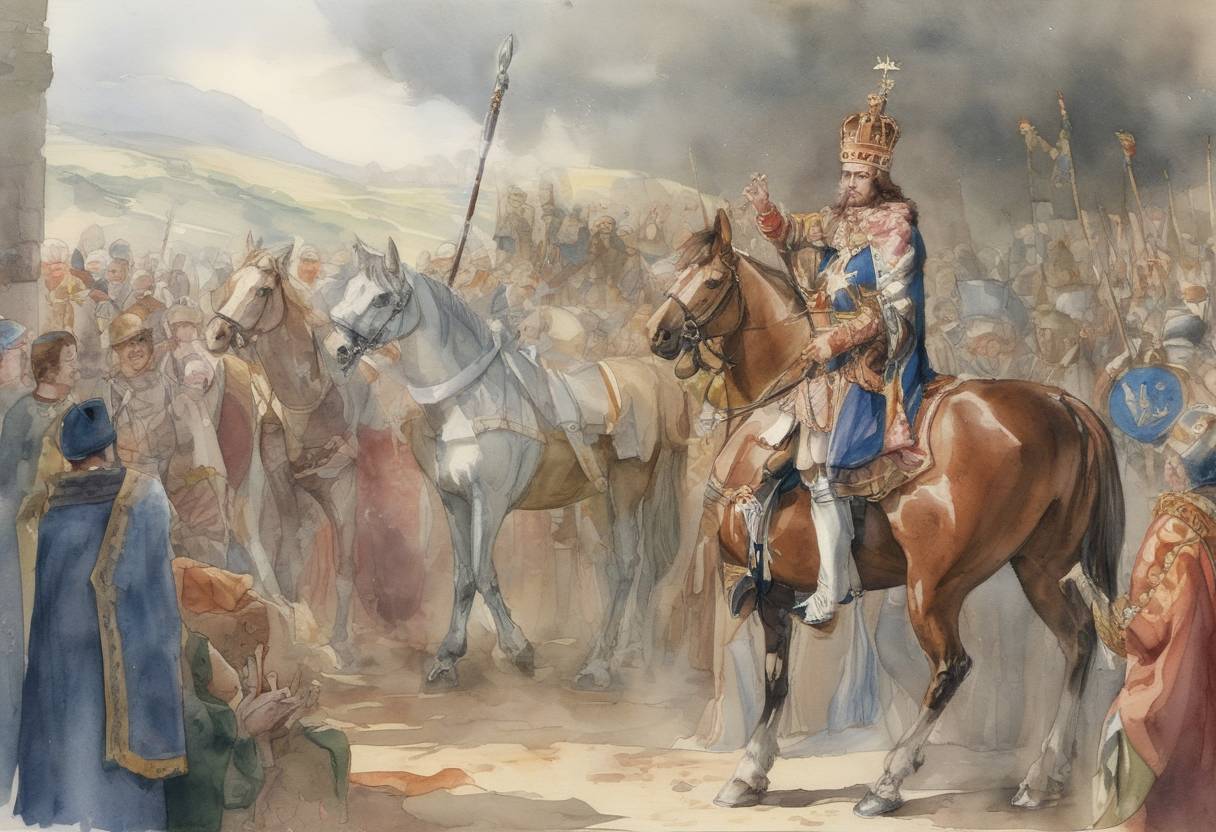
On November 25, 1034, Duncan I ascended to the throne of Scotland following the death of his grandfather, King Malcolm II. This transition marked a significant moment in Scottish history, as it was one of the early instances of a relatively peaceful succession in a period often characterized by violent power struggles.
Malcolm II’s Reign: Malcolm II had ruled Scotland since 1005. His reign was notable for consolidating power and expanding the kingdom’s influence. He was the last king of the House of Alpin, a dynasty that had ruled Scotland for several generations.
Succession Planning: Unlike many of his predecessors, Malcolm II managed to secure a relatively stable succession plan. He had no surviving sons, so he worked to ensure his grandson, Duncan, would inherit the throne. This was achieved through strategic alliances and political maneuvering.
Lineage: Duncan I, also known as Donnchad mac Crinain, was the son of Crínán, the Abbot of Dunkeld, and Bethóc, Malcolm II’s daughter. This lineage made him a legitimate heir to the Scottish throne.
Peaceful Transition: Duncan’s ascension was relatively peaceful, a rarity in medieval Scottish history. This was largely due to Malcolm II’s efforts to eliminate rival claimants and secure Duncan’s position before his death.
Challenges: Despite the peaceful start, Duncan’s reign (1034–1040) was fraught with challenges. He faced opposition from various factions within Scotland and external threats from neighboring regions.
Military Campaigns: Duncan’s reign included attempts to assert control over northern England, which were largely unsuccessful. His military endeavors strained resources and weakened his position.
Death and Succession: Duncan I’s reign ended abruptly in 1040 when he was killed in battle by Macbeth, a rival claimant to the throne. This event was later dramatized by William Shakespeare in his famous play “Macbeth,” although the historical account differs significantly from the fictional portrayal.
Legacy: Duncan’s death led to a period of instability, but his lineage continued to play a crucial role in Scottish history. His son, Malcolm III, eventually became king and established the House of Dunkeld, which ruled Scotland for several generations.
Duncan I’s ascension and subsequent reign highlight the complexities of medieval Scottish politics and the ongoing struggle for power among the nobility. His story is a testament to the turbulent nature of Scottish history during this era.
Source: en.wikipedia.org