Evo Morales Inaugurated as Bolivia's First Indigenous President
2006 · La Paz, Bolivia
Evo Morales is inaugurated as the first indigenous president of Bolivia, marking a significant shift in the country's political landscape.
April 9, 1952
The Bolivian National Revolution began, leading to significant social and economic reforms in Bolivia.
La Paz, Bolivia | Revolutionary Nationalist Movement
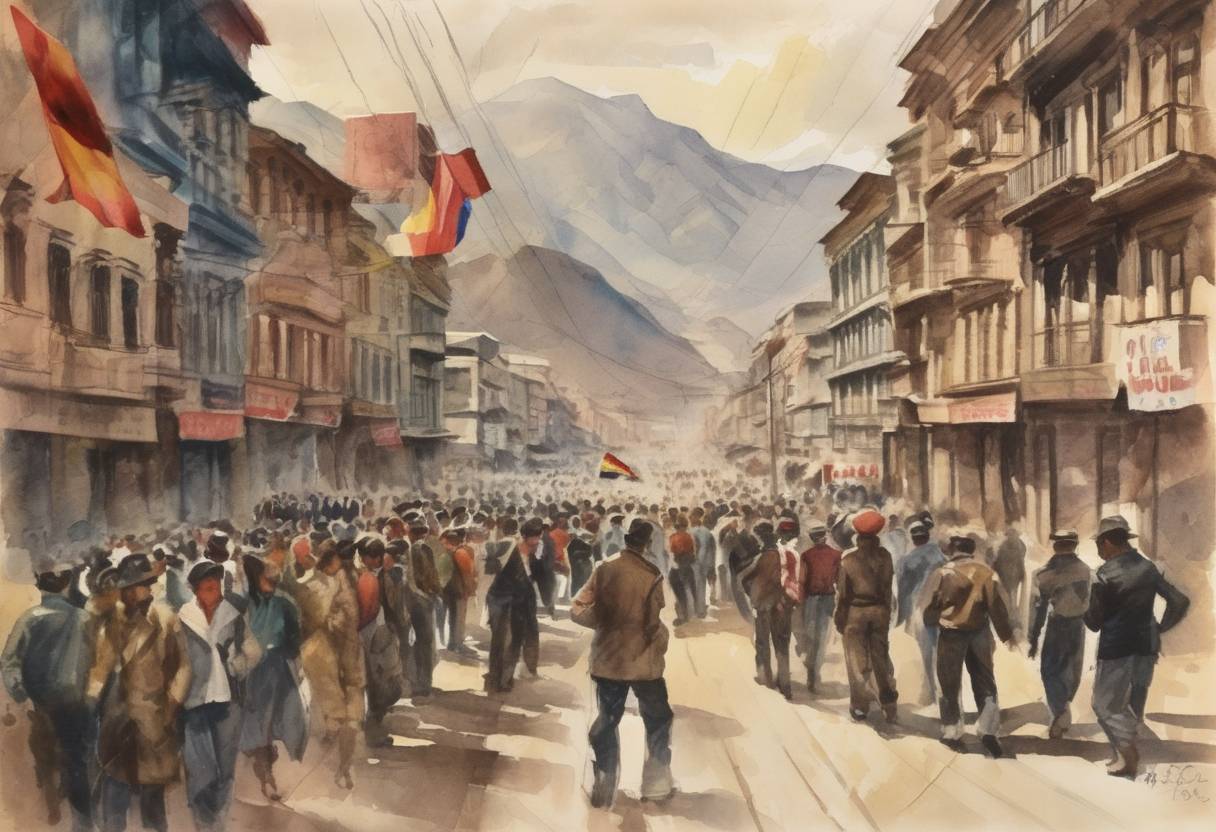
The Bolivian National Revolution, which began on April 9, 1952, marks a pivotal moment in Bolivia’s history, characterized by profound social and economic reforms. This revolution was led by the Movimiento Nacionalista Revolucionario (MNR), a political party that sought to address the deep-rooted inequalities and economic challenges faced by the country.
Before the revolution, Bolivia was plagued by extreme social stratification, with a small elite controlling the majority of the country’s wealth and resources. The indigenous population, which made up a significant portion of the populace, was largely marginalized and disenfranchised. The economy was heavily dependent on tin mining, controlled by a few powerful families and foreign interests, leaving the country vulnerable to global market fluctuations.
Several factors contributed to the revolutionary climate:
The revolution was sparked by a series of events and actions led by the MNR:
April 9, 1952: The MNR, supported by workers, miners, and indigenous groups, launched an armed uprising against the government of President Mamerto Urriolagoitía. The revolt quickly gained momentum, leading to the overthrow of the existing regime.
Seizure of Power: Within days, the MNR, under the leadership of Víctor Paz Estenssoro, took control of the government. This marked the beginning of a new era in Bolivian politics.
The revolution led to significant reforms that reshaped Bolivian society:
Nationalization of Mines: One of the first major acts of the new government was the nationalization of the tin mines, which were placed under state control. This move aimed to redistribute wealth and reduce foreign influence over the Bolivian economy.
Agrarian Reform: The government implemented land reforms to redistribute land to indigenous and peasant communities, aiming to dismantle the traditional hacienda system and promote agricultural productivity.
Universal Suffrage: The revolution extended voting rights to all adults, including indigenous people and women, significantly broadening the democratic base of the country.
Education and Social Policies: Efforts were made to improve education and healthcare, with a focus on integrating indigenous populations into the national framework.
The Bolivian National Revolution had lasting impacts on the country’s political and social landscape:
Political Changes: The revolution set the stage for a more inclusive political system, although Bolivia continued to experience political instability in the following decades.
Economic Challenges: While the nationalization of mines and land reforms were significant, Bolivia faced ongoing economic challenges, including managing state-controlled industries and addressing poverty.
Cultural Impact: The revolution fostered a sense of national identity and pride, particularly among indigenous communities, who gained greater recognition and rights.
Overall, the Bolivian National Revolution of 1952 is seen as a transformative period that sought to address historical injustices and lay the groundwork for a more equitable society. Its legacy continues to influence Bolivian politics and social dynamics to this day.
Source: en.wikipedia.org