990 · Prague, Bohemia
The death of Adalbert of Prague, a Bohemian missionary and bishop who played a significant role in the Christianization of Central Europe.
December 2, 0935
Saint Wenceslaus I, Duke of Bohemia, is posthumously declared a martyr and saint, having been assassinated by his brother Boleslaus the Cruel in 935.
Stará Boleslav, Bohemia | Christian Church
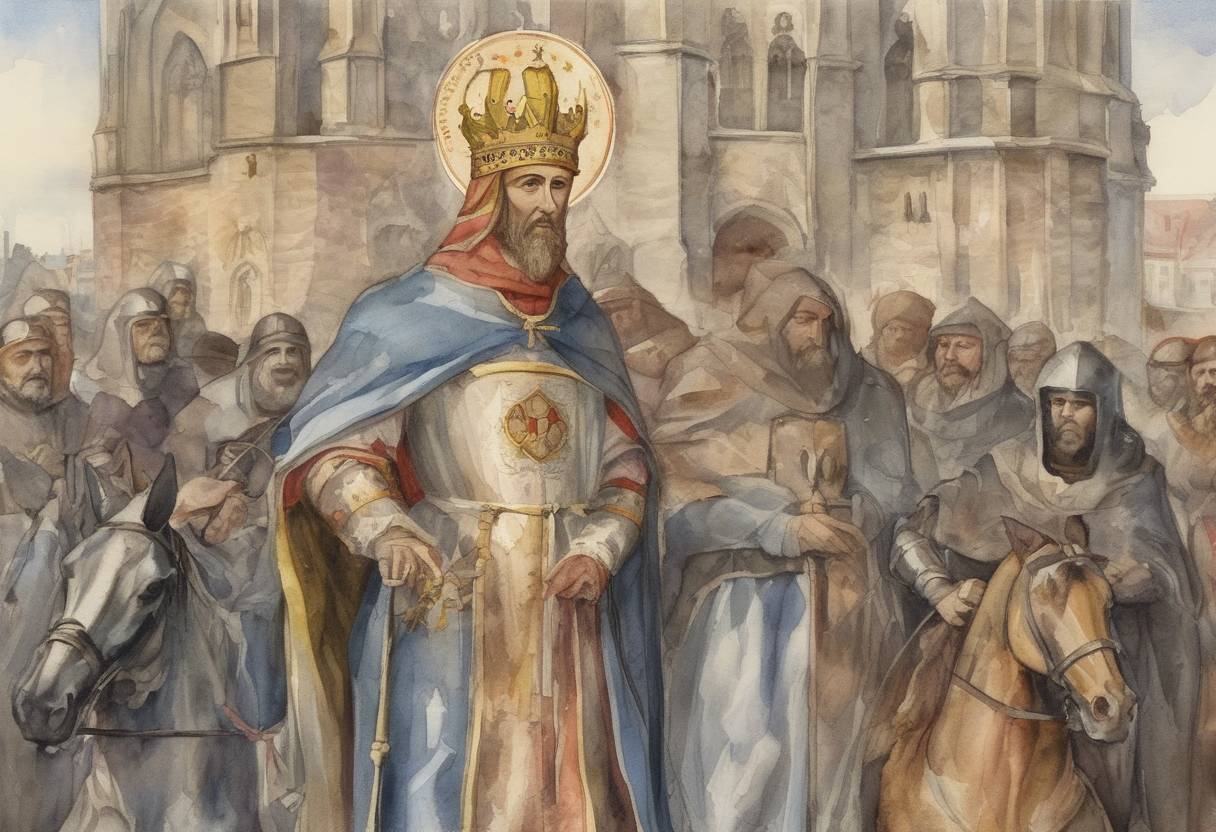
Saint Wenceslaus I, also known as Václav the Good, was born around 907 in the region that is now the Czech Republic. He was the son of Duke Vratislaus I of Bohemia and Drahomíra, and he was raised in a Christian environment, heavily influenced by his grandmother, Ludmila, who was a devout Christian and later canonized as a saint herself.
Wenceslaus became the Duke of Bohemia in 921 after the death of his father. His reign was marked by efforts to consolidate Christianity in Bohemia, which was still largely pagan at the time. He was known for his piety, dedication to the Christian faith, and efforts to promote peace and stability in his realm. Wenceslaus sought to strengthen ties with the Holy Roman Empire, particularly with King Henry the Fowler, which helped to secure Bohemia’s position in the region.
On September 28, 935, Wenceslaus was assassinated by his younger brother, Boleslaus the Cruel, at the gates of a church in Stará Boleslav. The murder was motivated by political and religious differences, as Boleslaus opposed Wenceslaus’s pro-Christian and pro-German policies. This fratricide was a pivotal moment in Bohemian history, as it led to Boleslaus’s ascension to power.
Wenceslaus was posthumously declared a martyr and saint due to his devout Christian faith and the circumstances of his death. His martyrdom was recognized by the Church, and he became the patron saint of the Czech people and the Czech Republic. His feast day is celebrated on September 28, the anniversary of his death.
Wenceslaus’s legacy endures in the cultural and religious history of the Czech lands. He is remembered as a symbol of Czech statehood and Christian virtue. The famous Christmas carol “Good King Wenceslas” further immortalizes his legacy, celebrating his generosity and piety.
The assassination of Wenceslaus and his subsequent canonization had significant implications for the Christianization of Bohemia and the consolidation of power in the region. His life and death highlight the complex interplay of religion, politics, and family dynamics in medieval Europe. Wenceslaus’s story is a testament to the enduring influence of Christian values in shaping European history and identity.
Source: en.wikipedia.org