Fukui Earthquake of June 22, 1948
1948 · Fukui, Japan
A 7.3 magnitude earthquake struck the Fukui Prefecture in Japan, causing significant damage and loss of life.
September 1, 1923
The Great Kantō earthquake strikes the Kantō region of Japan, causing widespread destruction and loss of life in Tokyo and Yokohama.
Tokyo, Japan | Japanese government
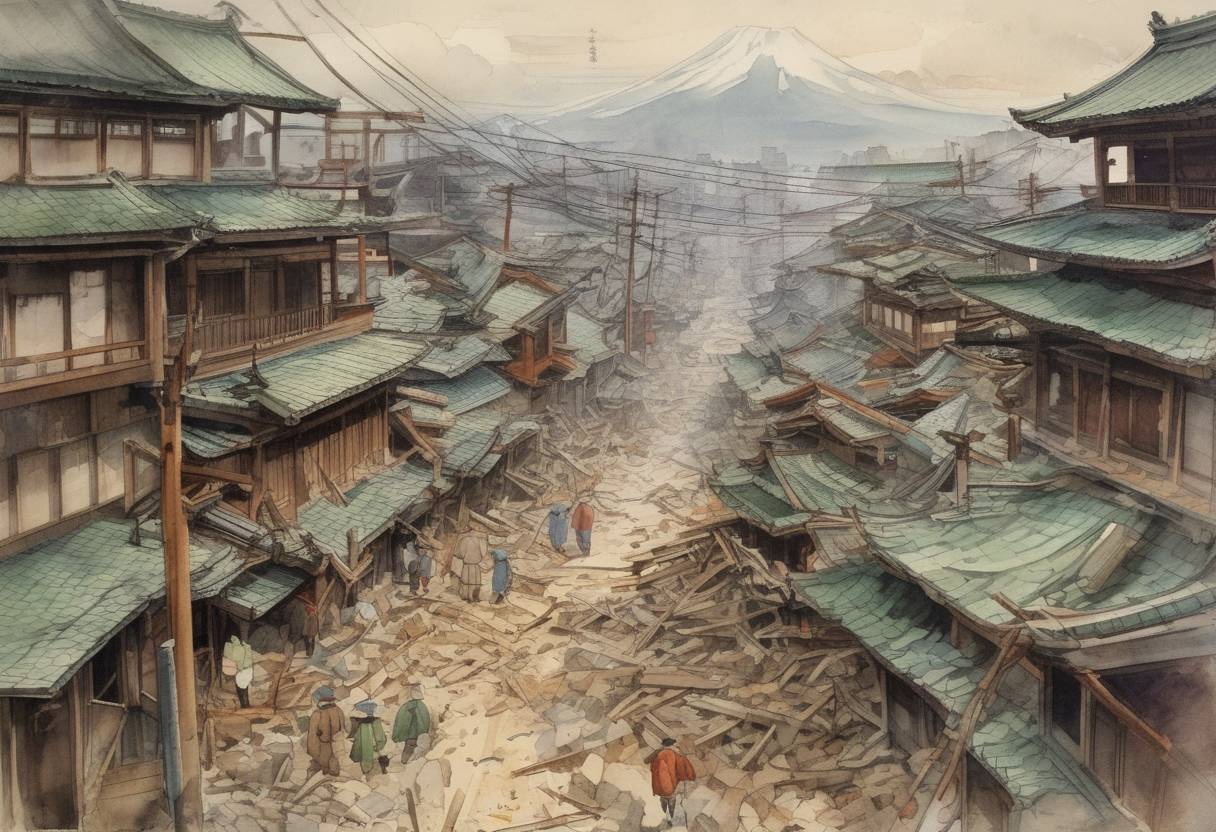
On September 1, 1923, the Great Kantō Earthquake struck the Kantō region of Japan, causing catastrophic destruction and significant loss of life, particularly in the cities of Tokyo and Yokohama. This seismic event is one of the most devastating in Japanese history and had profound implications for the country’s development and urban planning.
Geographical Setting: The Kantō region, located on the eastern part of Honshu, Japan’s largest island, includes Tokyo, the nation’s capital, and Yokohama, a major port city. This area is situated near the convergence of several tectonic plates, making it highly susceptible to seismic activity.
Pre-1923 Japan: In the early 20th century, Japan was undergoing rapid industrialization and modernization. Tokyo, as the capital, was a burgeoning metropolis, while Yokohama was a key hub for international trade.
Magnitude and Duration: The earthquake struck at 11:58 AM local time and registered a magnitude of 7.9 on the Richter scale. The shaking lasted for approximately 4 to 10 minutes, depending on the location.
Epicenter: The epicenter was located beneath Sagami Bay, about 80 kilometers southwest of Tokyo.
Immediate Impact: The earthquake triggered widespread fires, exacerbated by the wooden structures prevalent in the region. These fires caused more destruction than the quake itself, as they raged uncontrollably for days.
Human Toll: The earthquake and subsequent fires resulted in the deaths of an estimated 100,000 to 142,000 people. Many were killed by collapsing buildings, while others perished in the fires.
Infrastructure Damage: Over 570,000 homes were destroyed, leaving approximately 1.9 million people homeless. Key infrastructure, including roads, bridges, and railways, was severely damaged.
Economic Impact: The economic losses were staggering, with the destruction of commercial districts and industrial facilities crippling the region’s economy.
Reconstruction Efforts: The disaster prompted a massive reconstruction effort, led by the Japanese government. This included modernizing building codes to improve earthquake resistance and redesigning urban areas to prevent future fire outbreaks.
Social and Political Effects: The earthquake had significant social repercussions, including a rise in anti-Korean sentiment, leading to violent reprisals against Korean residents in Japan.
Long-term Implications: The disaster highlighted the need for improved disaster preparedness and response strategies, influencing future urban planning and emergency management policies in Japan.
The Great Kantō Earthquake was a pivotal moment in Japanese history, reshaping the physical and social landscape of the nation. It underscored the vulnerability of urban centers to natural disasters and spurred advancements in engineering, architecture, and disaster management that continue to influence Japan’s approach to seismic safety today.
Source: en.wikipedia.org