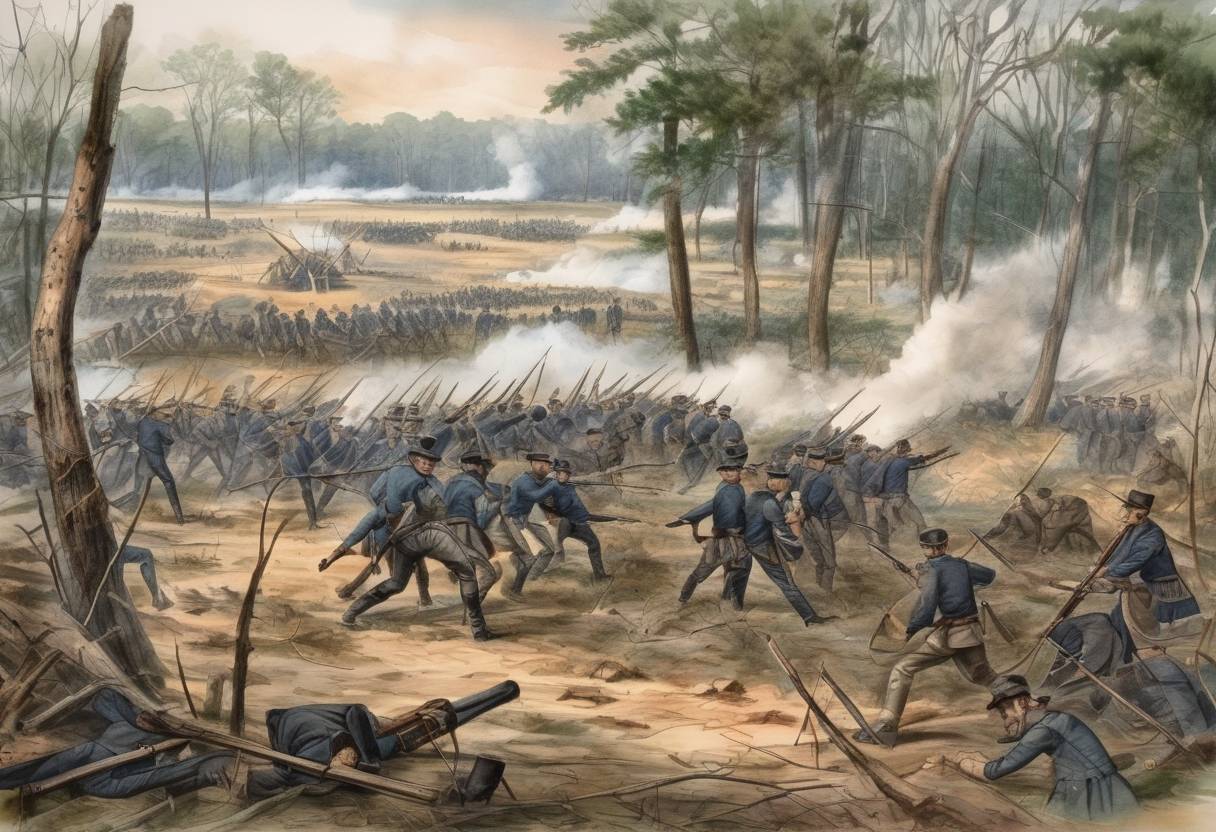
The Battle of Cold Harbor: June 3, 1864
The Battle of Cold Harbor, one of the final and most significant engagements of Union General Ulysses S. Grant’s Overland Campaign during the American Civil War, began on June 3, 1864. This battle is often remembered for its brutal and costly nature, particularly for the Union forces.
Context and Prelude
- Overland Campaign: Initiated in May 1864, the Overland Campaign was a series of battles fought in Virginia, aimed at capturing the Confederate capital of Richmond and destroying General Robert E. Lee’s Army of Northern Virginia.
- Strategic Importance: Cold Harbor was strategically significant due to its proximity to Richmond and its position as a crossroads, which provided vital supply and communication lines.
Key Events Leading Up to the Battle
- Movement to Cold Harbor: After the inconclusive Battle of North Anna, Grant maneuvered his forces southeast towards Cold Harbor, hoping to outflank Lee and cut off his supply lines.
- Confederate Defense: Anticipating Grant’s movements, Lee’s forces entrenched themselves in strong defensive positions around Cold Harbor, preparing for the Union assault.
The Battle
- Date: The main assault occurred on June 3, 1864.
- Union Assault: At dawn, Grant ordered a massive frontal assault against the entrenched Confederate positions. The attack was intended to break through Lee’s lines and force a decisive engagement.
- Heavy Casualties: The Union troops faced devastating artillery and rifle fire from well-fortified Confederate positions. Within a matter of hours, the Union suffered approximately 7,000 casualties, while Confederate losses were significantly lower.
Aftermath and Consequences
- Stalemate: The battle resulted in a tactical stalemate, with neither side achieving a decisive victory. However, the heavy Union losses marked it as a Confederate defensive success.
- Grant’s Regret: Grant later expressed regret over the assault, acknowledging the futility and high cost of the attack.
- Impact on the Campaign: Despite the setback, Grant continued his strategy of attrition, eventually leading to the Siege of Petersburg and the eventual fall of Richmond in April 1865.
Broader Historical Significance
- Public Perception: The Battle of Cold Harbor was one of the war’s bloodiest and most controversial battles, affecting public perception of the war’s progress and Grant’s leadership.
- Military Lessons: The battle underscored the challenges of frontal assaults against fortified positions, influencing future military tactics and strategies.
The Battle of Cold Harbor remains a poignant reminder of the brutal nature of the Civil War and the high human cost of military engagements during this period.