Launch of Telstar: The First Active Communications Satellite
1962 · Cape Canaveral, United States
Telstar, the world's first active communications satellite, was launched, enabling the first live transatlantic television broadcast.
March 17, 1958
The United States launched the Vanguard 1 satellite, the first solar-powered satellite, which remains the oldest human-made object still in orbit.
Cape Canaveral, United States | NASA
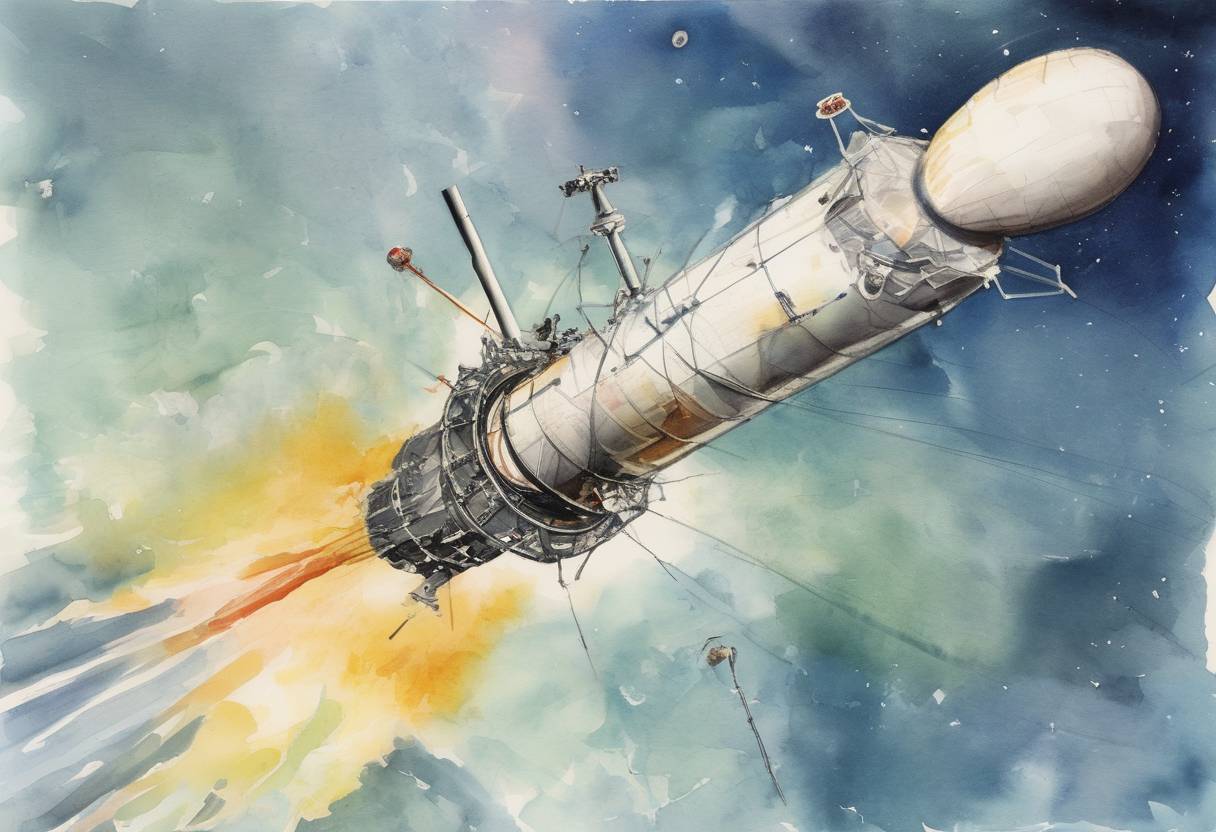
On March 17, 1958, the United States successfully launched Vanguard 1, marking a significant milestone in space exploration. This event was notable for several reasons, including its status as the first solar-powered satellite and its enduring presence in orbit, making it the oldest human-made object still circling the Earth.
The Vanguard project was part of the United States’ efforts during the International Geophysical Year (1957-1958), a period marked by global scientific collaboration. The project aimed to launch a series of satellites to gather data about the Earth’s atmosphere and space environment. This initiative was also part of the broader space race between the United States and the Soviet Union, which had already launched Sputnik 1, the world’s first artificial satellite, in October 1957.
Vanguard 1 was designed to test the capabilities of solar power in space, a pioneering technology at the time. It was equipped with six solar cells that powered its radio transmitter, allowing it to send data back to Earth.
The primary objectives of Vanguard 1 included:
Vanguard 1 successfully transmitted data for nearly seven years, until 1964, contributing valuable information to the understanding of Earth’s atmosphere and the feasibility of solar power in space.
Vanguard 1’s successful deployment and operation demonstrated the potential of solar energy for space missions, paving the way for future satellites and space exploration technologies. Despite its small size, the satellite’s impact on scientific research and technology development was substantial.
Today, Vanguard 1 remains in orbit, a testament to early space engineering and a symbol of the dawn of the space age. Its continued presence serves as a reminder of the rapid advancements in space technology and the enduring legacy of early space exploration efforts.
The launch of Vanguard 1 was a pivotal moment in the history of space exploration. It not only showcased the United States’ capabilities in the burgeoning space race but also laid the groundwork for future innovations in satellite technology and solar power utilization. As the oldest human-made object still in orbit, Vanguard 1 continues to inspire and inform the ongoing exploration of space.
Source: www.nasa.gov