Authorization for Use of Military Force Against Iraq Resolution of 2002
2002 · Washington D.C., United States
Congress of the United States passes a resolution authorizing President George W. Bush to use military force against Iraq.
October 17, 2001
The United States Congress passed the USA PATRIOT Act in response to the terrorist attacks on September 11, 2001, enhancing law enforcement investigatory tools regarding counter-terrorism.
Washington D.C., United States | United States Congress
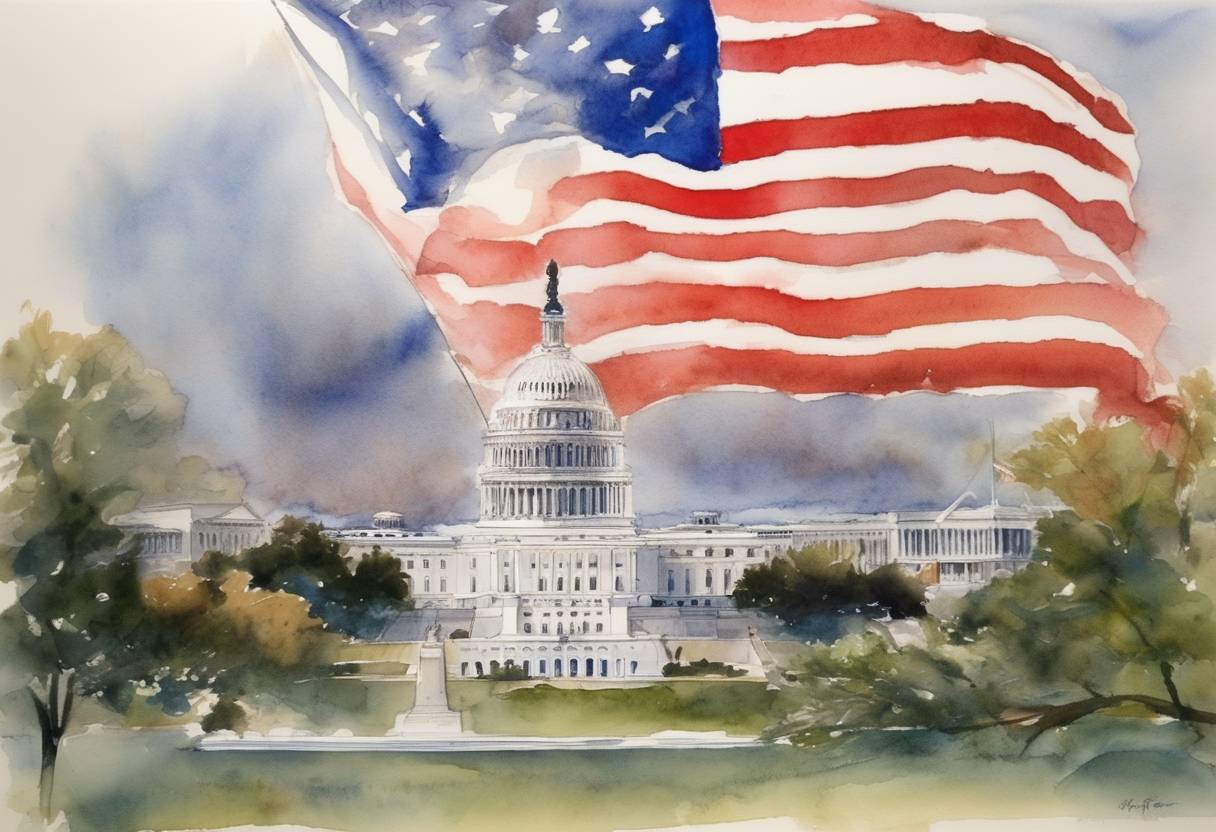
On October 17, 2001, the United States House of Representatives passed the USA PATRIOT Act in response to the September 11 terrorist attacks. The Act aimed to enhance law enforcement’s investigative tools and strengthen national security measures against terrorism.
The USA PATRIOT Act, an acronym for “Uniting and Strengthening America by Providing Appropriate Tools Required to Intercept and Obstruct Terrorism,” was crafted in the aftermath of the September 11, 2001, attacks which resulted in significant loss of life and a heightened sense of vulnerability in the United States.
The primary goal of the Act was to fortify domestic security against potential terrorist threats. It sought to achieve this through various means, including expanding the surveillance capabilities of law enforcement agencies, improving inter-agency communication, and increasing penalties for terrorism-related activities.
The Act included numerous provisions spread over ten titles, addressing different aspects of the nation’s response to terrorism. Some notable changes included:
Title II - Enhanced Surveillance Procedures: This section expanded the authority for monitoring and intercepting communications by law enforcement agencies. It allowed for the use of roving wiretaps, which enabled surveillance on specific individuals across various communication devices.
Title III - Anti-Money Laundering: Reinforced measures to prevent and detect money laundering activities related to terrorism, ensuring stricter regulations on banks and financial institutions.
Information Sharing: Facilitated greater coordination and information sharing among various federal agencies, such as the FBI and CIA, to effectively combat and prevent terrorist activities.
The expedited passage of the Act reflected the urgency and bipartisan support among lawmakers, motivated by the critical need to strengthen national security. However, the speed and breadth of the Act invited scrutiny and debate over the balance between civil liberties and security measures.
Critics expressed concern over potential overreach and infringement on personal freedoms, arguing that some provisions endangered rights to privacy and due process. Despite these critiques, the prevailing sentiment in Congress emphasized the necessity of decisive action in light of the recent attacks.
The USA PATRIOT Act’s enactment marked a significant shift in U.S. policy towards security and privacy. Its impacts were far-reaching, influencing legal standards and the operational landscape of law enforcement agencies.
Over the years, the Act has been subject to amendments and reauthorizations, reflecting ongoing debates about the delicate balance between ensuring security and protecting individual freedoms. Its legacy continues to be a focal point in discussions surrounding security, privacy rights, and governmental surveillance powers.
Source: www.congress.gov