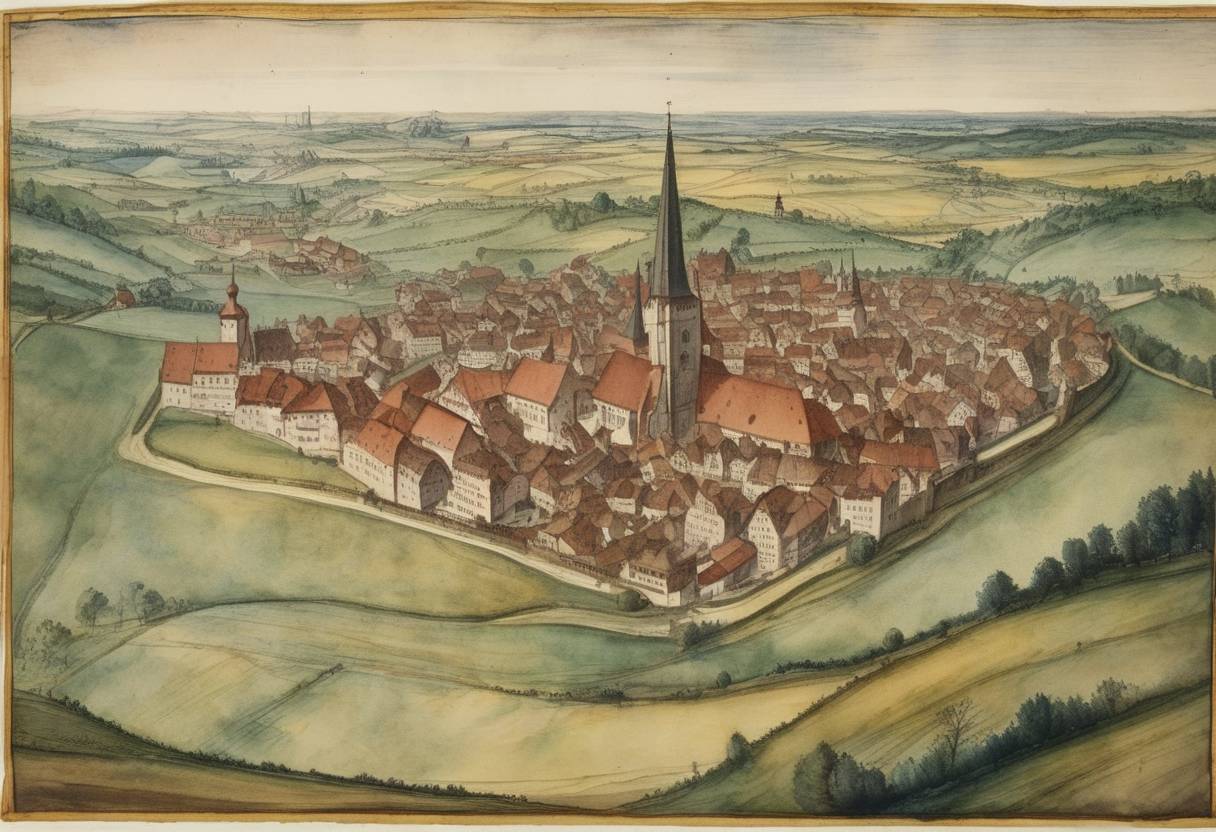
Celestial Phenomenon Over Nördlingen, April 14, 1561
On April 14, 1561, the city of Nördlingen experienced a remarkable atmospheric phenomenon known as a “sun dog.” In the 16th century, sun dogs, which are bright spots appearing on either side of the sun due to the refraction of sunlight through ice crystals in the atmosphere, were often interpreted as extraordinary and portentous events.
Historical Context
Nördlingen, a medieval city located in Bavaria, had citizens who were deeply influenced by the religious and superstitious beliefs typical of the Renaissance era. Celestial events were frequently viewed as divine signals or omens, reflecting the broader European sentiment of the time. The phenomenon occurred in a period marked by religious tension and fear of cosmic events, as reflected in the apocalyptic interpretations popular in this era.
The Phenomenon
A sun dog, or “parhelion,” presents itself as bright, rainbow-like patches on either side of the sun, often forming a halo around it. On that particular day, Nördlingen’s inhabitants witnessed what appeared to be multiple suns in the sky, a sight compounded by atmospheric refraction effects that could evoke the impression of a divine miracle or supernatural occurrence.
Interpretations and Consequences
In 1561, the interpretation of such phenomena could range from omens of divine displeasure or upcoming significant events. Given the spiritual climate of the time, this celestial demonstration in Nördlingen was likely seen as a sign from heaven, potentially as a warning or a divine blessing, depending on individual and collective beliefs. These interpretations were often disseminated through stories, illustrations, and pamphlets that could shape public perception and understanding.
Broader Historical Significance
The sun dog event in Nördlingen serves as an example of how natural phenomena were mystified before the advent of modern scientific explanations. This incident reflects the broader cultural and scientific transition of the period, where natural philosophy began to compete with mythological explanations, laying the groundwork for the Enlightenment in the centuries to follow.
The fascination with these events emphasizes the human tendency to seek meaning in the unexplained and the impact of cultural and religious beliefs in shaping historical narratives.