Recapture of Luoyang during the An Lushan Rebellion
762 · Luoyang, China
During the An Lushan Rebellion, the Tang dynasty recaptures Luoyang from the rebels.
June 2, 0760
The An Lu-shan Rebellion in China sees the rebels capture Liyang, making it a key stronghold.
Liyang, China | An Lushan Rebellion
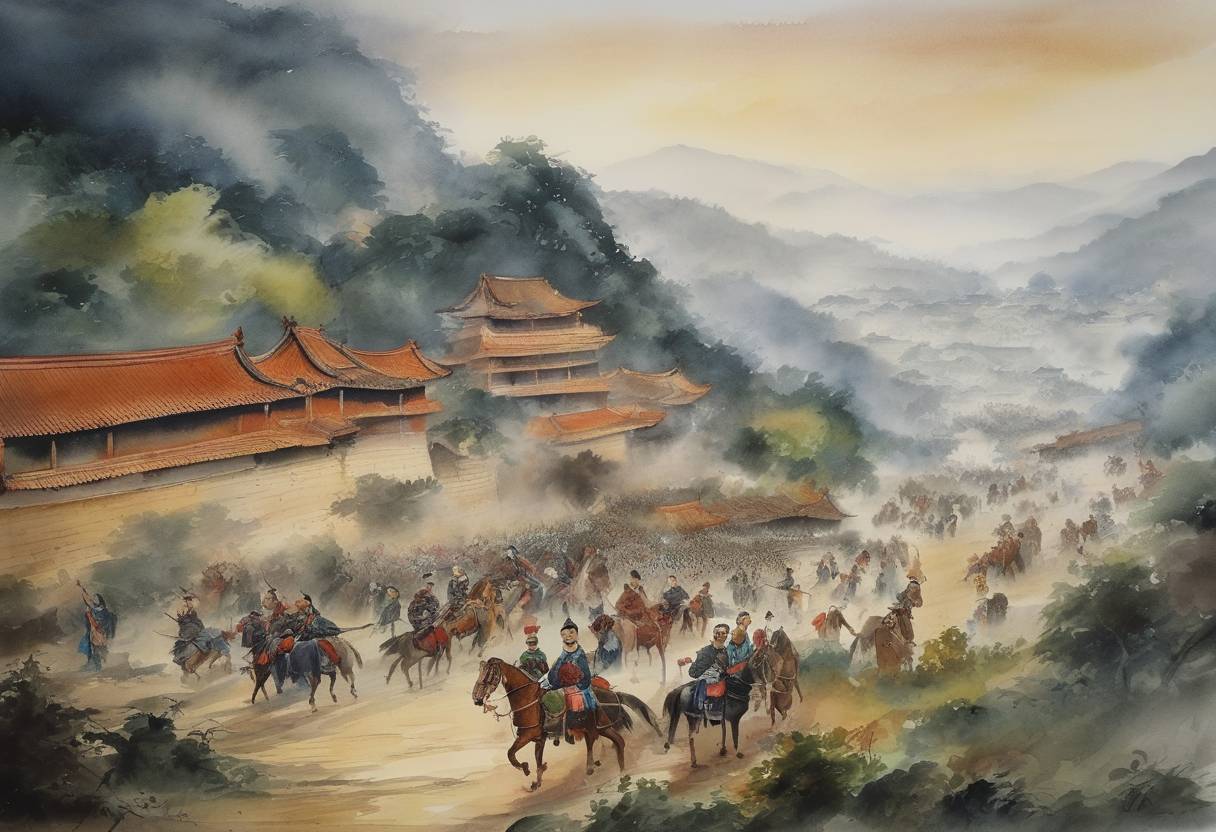
The An Lushan Rebellion, which began in 755, was a devastating uprising against the Tang Dynasty led initially by General An Lushan. It resulted in widespread chaos and territorial changes throughout China, significantly impacting the Tang Dynasty’s control and stability.
The rebellion erupted due to a combination of factors, including dissatisfaction with the Tang government, economic strife, and internal power struggles. An Lushan, a military governor of mixed Sogdian and Turkic descent, capitalized on these tensions to amass power.
Liyang, located in what is now modern-day Hebei Province, held strategic significance due to its geographical positioning. As a stronghold, it served as a critical point for controlling the North China Plain, which was essential for administering the region and securing supply lines.
On June 2, 760, amidst the throes of the rebellion, rebel forces succeeded in seizing Liyang. This capture marked a significant moment in the rebellion, as it bolstered rebel control in the region and further destabilized the Tang Dynasty’s ability to reclaim lost territory.
The fall of Liyang to rebel forces exacerbated the Tang government’s struggles. The Tang Dynasty, already strained by ongoing insurgencies and reduced resources, faced heightened difficulties in mounting an effective counterattack. This loss contributed to prolonged conflict and instability in the region.
The An Lushan Rebellion continued until 763, significantly weakening the Tang Dynasty and leading to immense loss of life and economic damage. The capture of Liyang illustrated the rebel forces’ capability and the Tang administration’s declining power, playing a crucial role in the protracted nature of the conflict.
Liyang’s occupation by rebels further highlighted the challenges faced by the Tang Dynasty in maintaining its expansive empire. The rebellion and its associated events marked a critical turning point that led to the eventual decline of one of China’s most celebrated dynasties.
Source: www.britannica.com