The Treaty of Cateau-Cambrésis and Scotland's Ratification
1559 · , Scotland
Scotland ratified the Treaty of Cateau-Cambrésis, ending wars with France. This marked the conclusion of the Italian Wars that had embroiled various European powers.
April 3, 1559
The Peace of Cateau-Cambrésis was signed, effectively ending the Italian Wars. This accord marked the conclusion of hostilities between the Kingdom of France and the Habsburg powers of Spain and the Holy Roman Empire. The treaty allowed Spain to retain control of Italy, solidifying its influence in the region, while France was forced to accept its territorial losses.
Le Cateau-Cambrésis, France | Kingdom of France, Habsburg Spain, and Holy Roman Empire
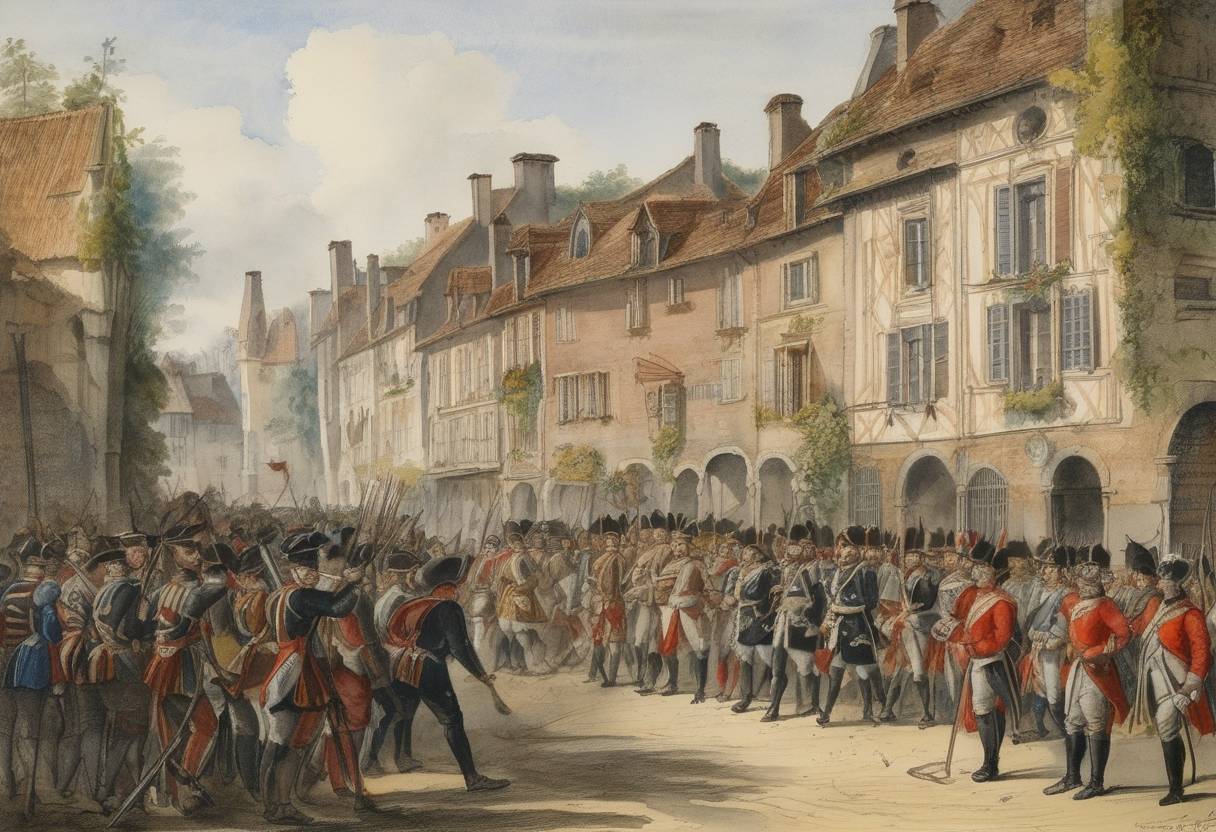
The Peace of Cateau-Cambrésis, signed on April 3, 1559, marked the end of the protracted Italian Wars—a series of conflicts fought from 1494 to 1559, primarily between the Kingdom of France and the Habsburg powers of Spain and the Holy Roman Empire. This accord was instrumental in concluding hostilities and reshaping the political landscape of Renaissance Europe.
For over six decades, the Italian Wars were characterized by shifting alliances and relentless battles over the richest regions of Italy. These conflicts stemmed from the growing ambitions of major European powers, particularly the French Crown and the Habsburg dynasty, each seeking dominance over the fragmented states and principalities of the Italian peninsula.
The treaties of Cateau-Cambrésis—actually comprising two separate accords, one between France and Spain and the other between France and England—were negotiated over the course of several weeks at Le Cateau-Cambrésis, a village in northern France. The primary outcomes were:
Spain Retained Dominance in Italy: Spain emerged as the dominant power in Italy. It retained control over the Kingdom of Naples, the Duchy of Milan, and Sicily. This consolidation of power positioned Spain as a pre-eminent force in European geopolitics.
France’s Territorial Losses: France was forced to relinquish its claims to various Italian territories. It ceded several fortresses and territories in the region, greatly diminishing its influence in Italy.
Restitution of Territories: Despite its losses, France managed to regain Calais from England, following agreements ratified within the treaties.
The signing of the Peace of Cateau-Cambrésis had profound implications:
End of the Italian Renaissance’s Political Strife: The peace allowed the Italian states to experience a period of relative stability, albeit under Spanish hegemony, ending one of the most turbulent periods in the peninsula’s history.
Habsburg-Spanish Hegemony: With Spain’s dominance solidified in Italy and across Europe, the Habsburgs established themselves as preeminent rulers. Philip II of Spain, in particular, saw his influence extended through this accord.
Shifting French Strategies: For France, the treaty marked the end of its ambitions in Italy. Consequently, French foreign policy refocused on conflicts within its own borders, such as the French Wars of Religion, which soon followed.
Overall, the Peace of Cateau-Cambrésis not only concluded the Italian Wars but also set the stage for the balance of power in Europe in the latter half of the 16th century, cementing Spain’s role as a dominant force in European and global affairs.
Source: en.wikipedia.org