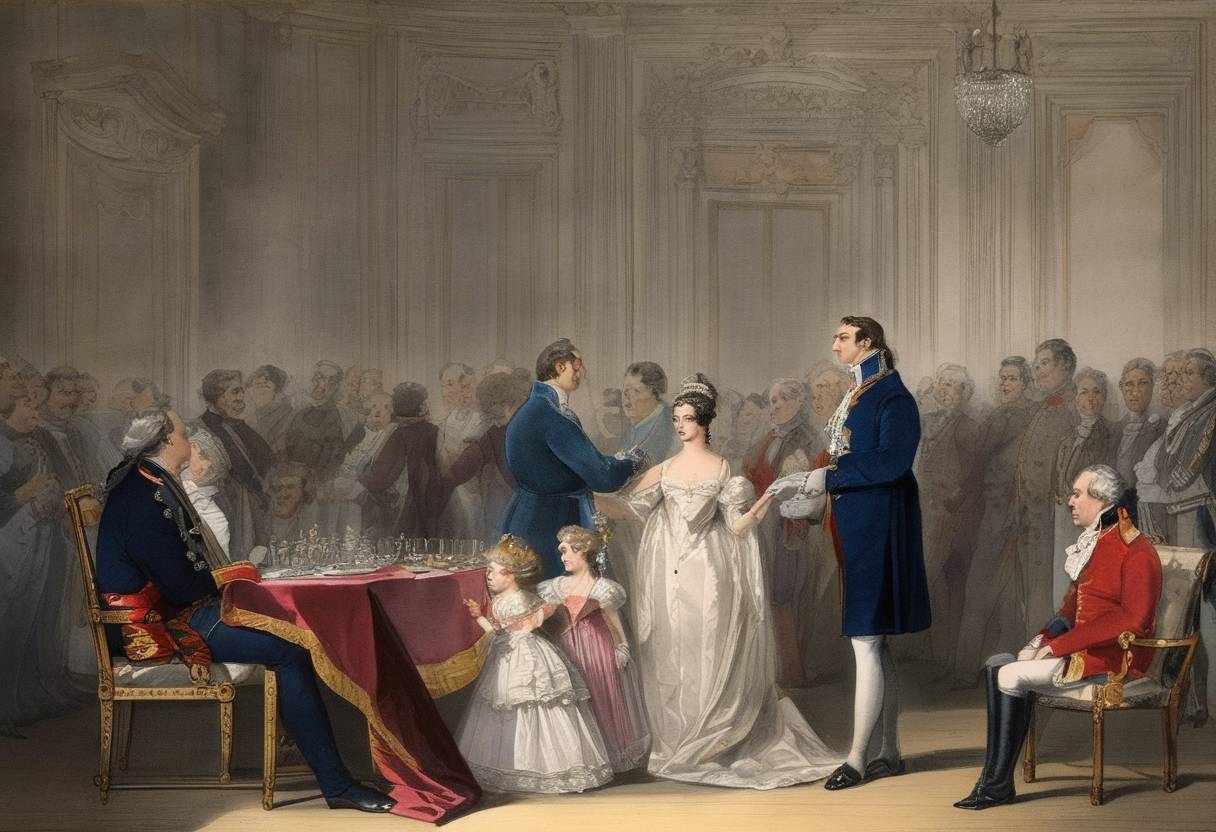
Charles X of France Abdicates: August 2, 1830
On August 2, 1830, amidst the tumult of the July Revolution, Charles X of France formally abdicated the throne. This event marked a pivotal moment in French history as it highlighted the nation’s transition from a monarchical order to a constitutional regime. Following a series of revolutionary upheavals that had erupted just days prior, Charles X sought to secure the crown for his Bourbon line by abdicating in favor of his grandson, Henri, the Count of Chambord.
Background
The July Revolution of 1830, also known as the “Three Glorious Days” (Les Trois Glorieuses), was a response to Charles X’s attempt to restore absolute monarchy and suppress freedom of the press through his July Ordinances. These controversial measures dissolved the Chamber of Deputies, restricted press freedom, and altered the electoral system to favor the conservative aristocracy, igniting widespread public dissatisfaction.
Events Leading to Abdication
The ordinances provoked massive protests and barricades in Paris, culminating in intense civil unrest from July 27 to July 29, 1830. In the face of mounting pressure and a rapidly escalating threat of revolution, Charles X decided that abdication might preserve the monarchy, at least nominally. On August 2, he signed the act of abdication at the Château de Rambouillet.
Attempt to Secure a Bourbon Future
In his abdication document, Charles X named his grandson, Henri, Count of Chambord, as his successor. Henri was merely ten years old at the time, and his accession was to be managed under the regency of his father, Louis-Antoine, Duke of Angoulême. This arrangement, however, ultimately failed to appease the revolutionary forces.
Aftermath and Historical Significance
The abdication did not restore stability to France. Henri was never recognized as king, and Charles’s hopes of securing his dynasty’s future were dashed. By August 7, the French Chamber of Deputies declared Louis-Philippe, Duke of Orléans, as the “King of the French,” initiating the July Monarchy.
Charles X lived in exile thereafter, reflecting on the collapse of his reign and the demise of the Bourbon Restoration. His abdication stands as a symbol of the declining power of monarchy in France and the broader shifts toward republicanism and constitutional governance in Europe during the 19th century.