1790 · Washington D.C., United States
The United States enacted its first copyright law, the Copyright Act of 1790, which laid the foundation for copyright protection in the country.
January 1, 1808
The importation of slaves into the United States was officially banned, in accordance with the Act Prohibiting Importation of Slaves enacted in 1807.
Washington D.C., United States | United States Congress
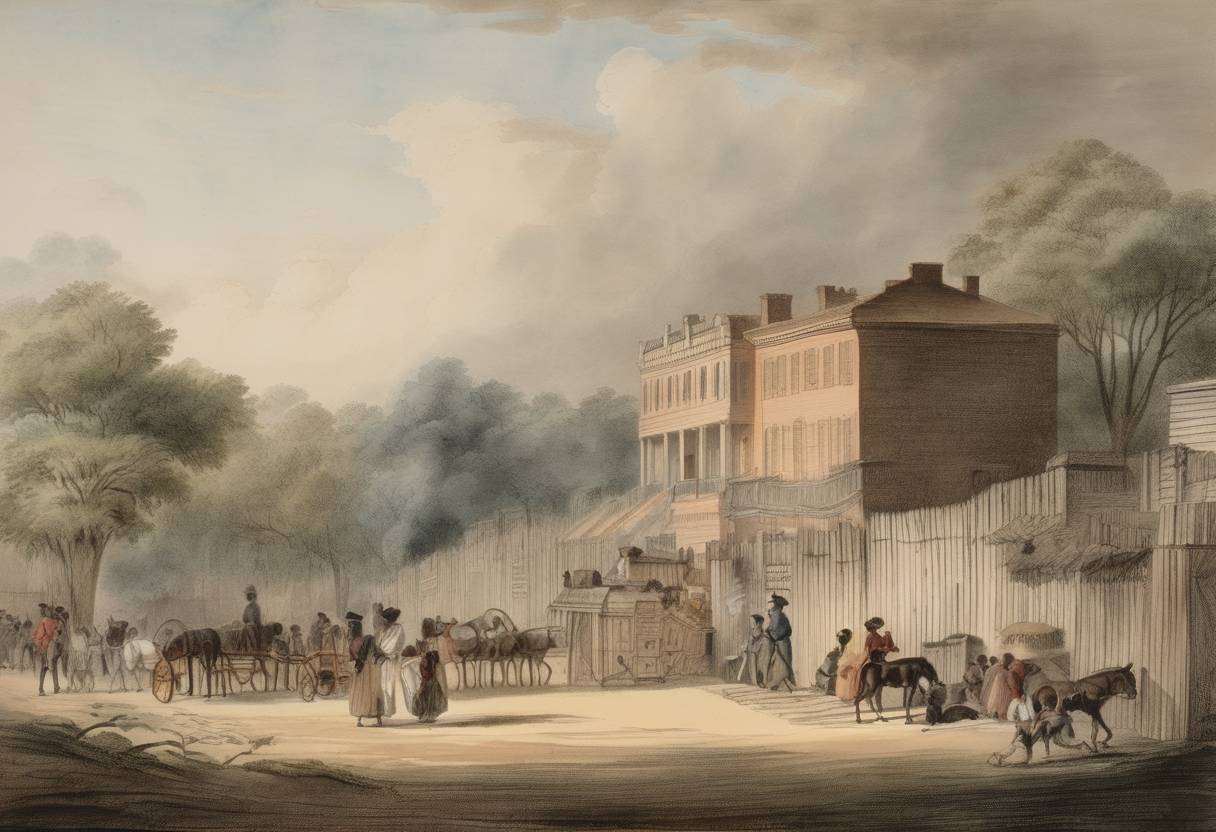
On January 1, 1808, the United States implemented a significant change in its legal and social landscape by officially prohibiting the importation of slaves. This stemmed from the Act Prohibiting Importation of Slaves, which was passed by Congress on March 2, 1807, and signed into law by President Thomas Jefferson.
Constitutional Allowance: The U.S. Constitution, ratified in 1788, included a provision that protected the importation of slaves until 1808, delaying Congress’s ability to ban it. Article I, Section 9, Clause 1 recognized the ongoing involvement of many states in the transatlantic slave trade, particularly in the southern states where the economy was heavily reliant on slave labor.
Antislavery Sentiment: By the early 19th century, antislavery sentiments were growing, especially in the northern states. Many viewed the movement to prohibit the slave trade as a moral imperative and a vital step towards eventual abolition.
Economic Pressures: Aside from moral arguments, economic factors also influenced the decision. Some argued that ending the importation of slaves would drive up the value of domestically born enslaved people, benefiting slaveholders financially.
The act made it illegal to import slaves into any port under U.S. jurisdiction, regardless of whether they were coming directly from Africa or through the Caribbean.
Individuals found participating in the illegal trade, including ship owners, captains, and crew members, faced hefty fines and the seizure of ships found to be involved in slave running.
Vessels discovered transporting enslaved people to the U.S. were seized, and their cargo was sold, with proceeds distributed among informers and law enforcement officers.
Continued Illegal Trade: Despite its prohibition, illegal slave importation into the United States persisted due to high demand and significant profits. Smugglers and traders found ways to evade detection, especially along the vast and poorly patrolled American coastline.
Internal Slave Trade Growth: The cessation of legal international importation led to an increase in the domestic slave trade, particularly from the Upper South to the burgeoning cotton plantations in the Deep South. This internal trade continued to separate families and fuel the expansion of slavery.
Permanent Ending of Legal Trade: While the act marked a step forward in the restriction of slavery, it did not affect the institution itself within U.S. borders. It would not be until the Civil War and the Emancipation Proclamation in 1863, followed by the Thirteenth Amendment in 1865, that slavery would be abolished in the United States.
The enforcement of the Act Prohibiting Importation of Slaves was a significant turning point in the long and turbulent history of slavery in the United States, reflecting the complex and often contradictory attitudes toward race and human rights during this period.
Source: en.wikipedia.org