1958 · Cape Canaveral, United States
The United States Army launched the Explorer 1 satellite, indicating the country's entry into the space race.
December 17, 1957
The United States successfully launches its first intercontinental ballistic missile (ICBM), the Atlas missile, from Cape Canaveral, Florida.
Cape Canaveral, United States | United States Air Force
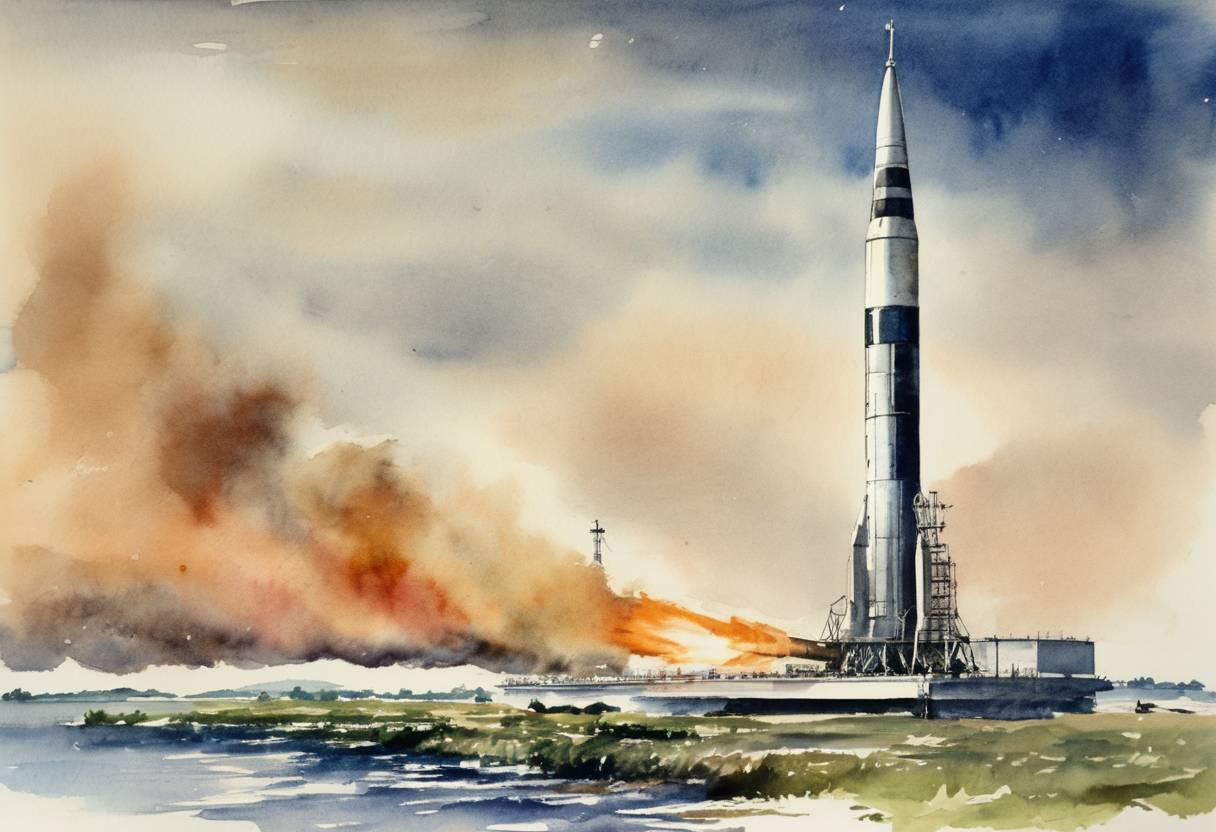
On December 17, 1957, the United States made a significant advancement in its military capabilities with the successful launch of its first intercontinental ballistic missile (ICBM), the Atlas missile. This event took place at the Cape Canaveral Air Force Station in Florida and marked a pivotal moment in both the Cold War and the Space Race.
The development of the Atlas missile began in the early 1950s, driven by the United States’ strategic need to strengthen its nuclear deterrent capabilities during the Cold War. With the Soviet Union having successfully tested their own ICBM earlier in 1957, there was an increased urgency for the United States to advance its missile technology.
The Atlas missile launched on this day, designated Atlas A, was the eighth in a series of test flights. Earlier tests had experienced various degrees of success and failure, but the December 17 launch achieved its objectives, demonstrating the missile’s ability to operate as intended.
The Atlas missile was a liquid-fueled rocket designed to deliver a nuclear warhead over intercontinental distances. It was a significant technological leap that provided the United States with a new strategic asset. The success was instrumental in bolstering national security during a time when the threat of nuclear conflict was a prominent concern.
The successful launch of the Atlas ICBM had profound implications:
The Atlas ICBM launch on December 17, 1957, was a milestone in both military history and the broader context of space exploration. It demonstrated the United States’ growing technological prowess during a period marked by intense focus on missile development and laid the groundwork for future endeavors in ballistic missile technology and space exploration.
Source: history.nasa.gov