Manuel Noriega's Surrender to U.S. Forces on January 3, 1990
1990 · Panama City, Panama
Former leader of Panama, Manuel Noriega, surrendered to U.S. forces.
August 26, 1994
The United States Army pulls out of Panama, ending a formal military presence that had lasted for 82 years.
Panama City, Panama | United States Army
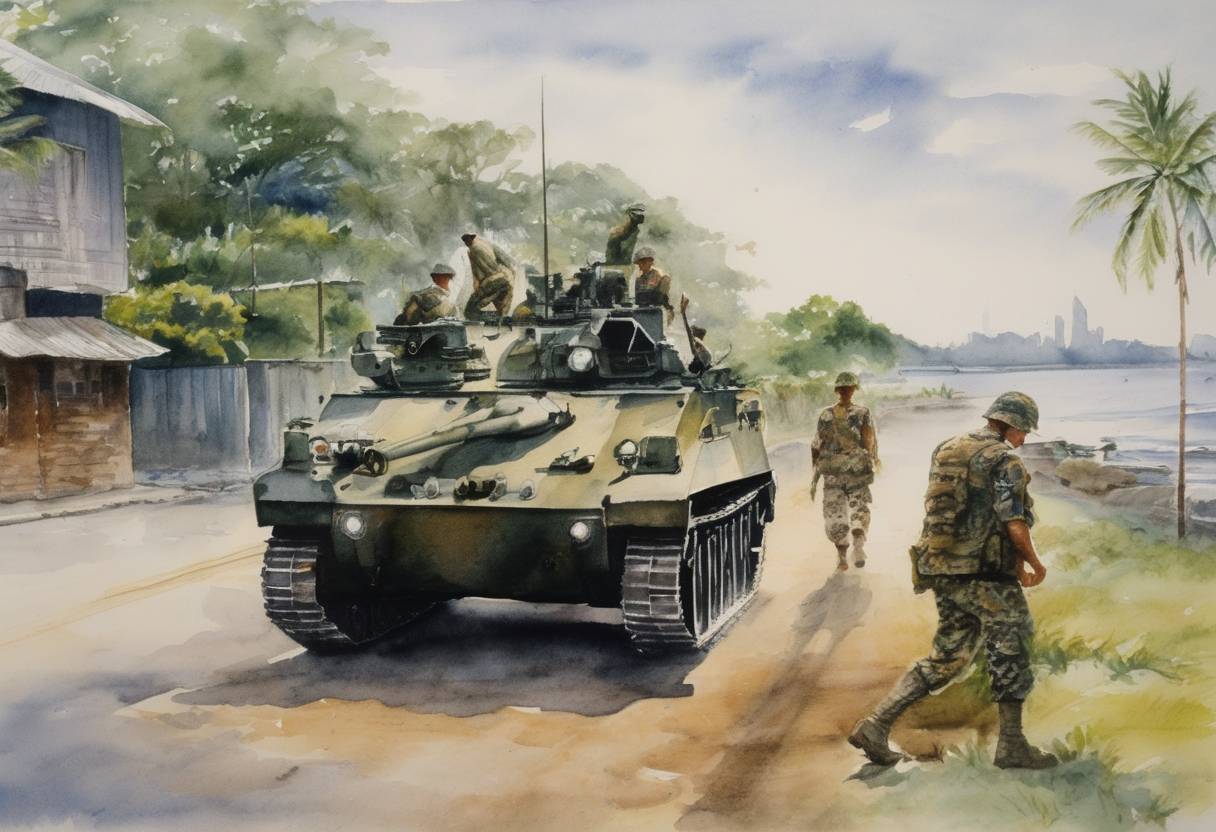
On August 26, 1994, the United States formally ended its military presence in Panama, a significant milestone marking the closure of an 82-year span of active military deployment in the Central American nation. This withdrawal was the culmination of a series of negotiations and treaties aimed at redefining and ultimately relinquishing U.S. control and military influence over the Panama Canal and the surrounding region.
The U.S. military presence in Panama was grounded in the construction and administration of the Panama Canal. Following Panama’s secession from Colombia in 1903, the U.S. began constructing the canal, which officially opened in 1914. The presence was formalized by the Hay–Bunau-Varilla Treaty of 1903, which granted the U.S. control over the Canal Zone in perpetuity. Consequently, U.S. military forces were stationed extensively throughout the Canal Zone to protect this critical infrastructure, representing a strategic American interest in global maritime trade.
The 1970s heralded a change in the way the Canal Zone was to be governed. Concern over sovereignty and control led to the signing of the Torrijos–Carter Treaties in 1977 under U.S. President Jimmy Carter and Panamanian leader Omar Torrijos. These treaties laid out plans for the gradual transfer of the Canal Zone to Panama by the end of the 20th century. Specifically, one of the treaties, the Panama Canal Treaty, mandated the complete withdrawal of U.S. military forces by the year 2000, with a schedule for the phased handover of control and management of canal operations.
While the formal handover of the Panama Canal would not be completed until December 31, 1999, the U.S. expedited portions of its military withdrawal throughout the 1990s. By August 26, 1994, the departure of U.S. Army troops marked the end of a significant chapter in Panama-U.S. relations, highlighting a period of geopolitical shift as the U.S. reassessed its international military commitments post-Cold War.
The withdrawal had broader implications, both regionally and globally. For Panama, the departure signified a restoration of full sovereignty over its territory and control over the Panama Canal, opening up new avenues for economic and political development. For the United States, the move reflected an evolving approach to foreign policy, emphasizing international cooperation and regional partnerships over unilateral control.
The end of the U.S. military presence in Panama underscored a commitment to respecting national sovereignty and adapting to global changes at the close of the 20th century. It remains a pivotal moment in the history of U.S.-Latin American relations, setting a precedent for future diplomatic engagements in the region.
Source: www.britannica.com