South Sudan Civil War: December 15, 2013
2013 · Juba, South Sudan
South Sudan's civil war began as fighting erupted between forces loyal to President Salva Kiir and those loyal to former Vice President Riek Machar.
July 9, 2011
South Sudan officially declared independence from Sudan, becoming the world's newest nation after decades of civil war and a 2011 referendum in which nearly 99% of South Sudanese voted for independence.
Juba, South Sudan | Government of South Sudan
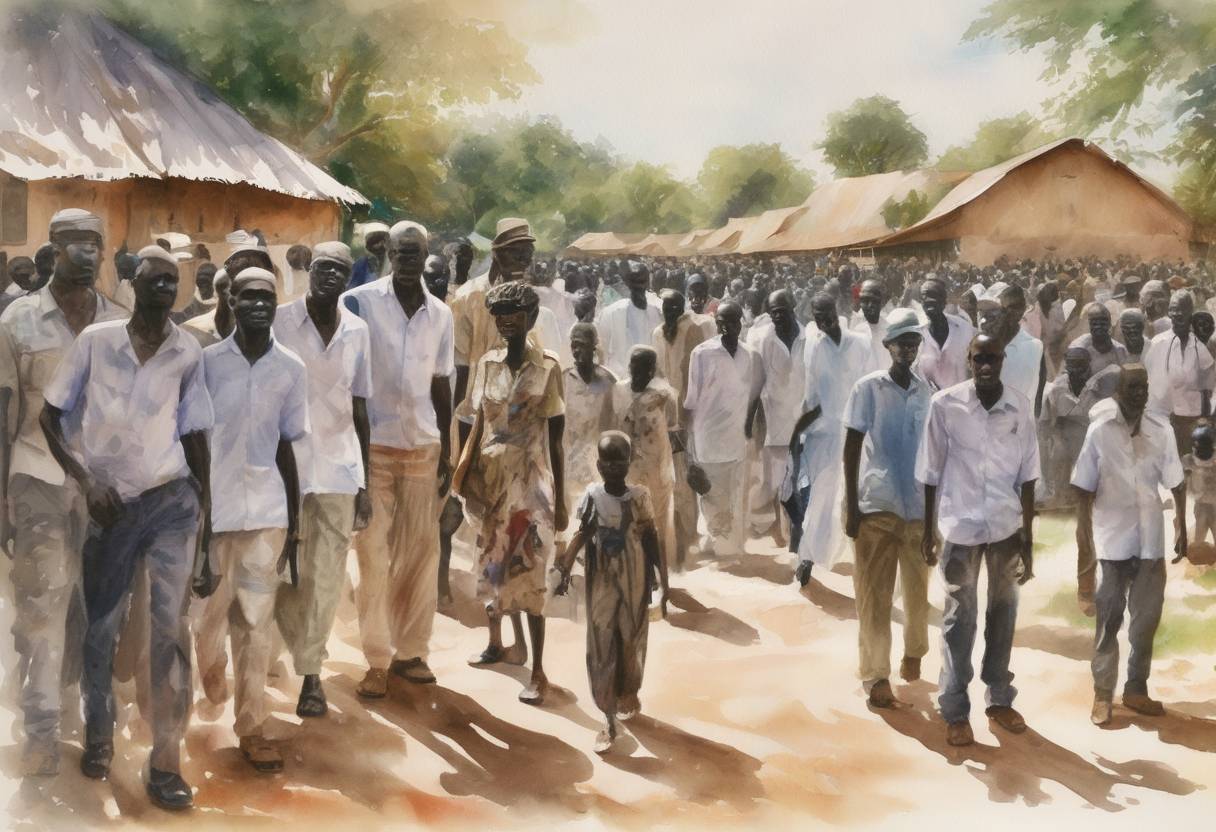
On July 9, 2011, South Sudan officially declared its independence from Sudan, marking the birth of the world’s newest nation. This historic event was the culmination of decades of conflict, a comprehensive peace agreement, and a landmark referendum.
The road to South Sudan’s independence was long and fraught with conflict. Sudan experienced two protracted civil wars, the first from 1955 to 1972 and the second from 1983 to 2005. These conflicts were primarily driven by religious, ethnic, and economic disparities between the predominantly Muslim, Arab north and the largely Christian and animist, African south.
The turning point came with the signing of the Comprehensive Peace Agreement (CPA) in 2005. This agreement, brokered with international support, ended the Second Sudanese Civil War and laid the groundwork for a potential secession of the south. Key components of the CPA included:
In January 2011, the long-awaited referendum took place. It was a momentous event, with nearly 99% of South Sudanese voters choosing independence. The referendum was widely regarded as free and fair, a testament to the strong desire for self-determination among the South Sudanese people.
On July 9, 2011, South Sudan officially became an independent nation. The capital, Juba, was the site of jubilant celebrations, attended by international dignitaries and leaders. Salva Kiir Mayardit, who had been serving as the President of the Government of Southern Sudan, became the first President of the Republic of South Sudan.
The independence of South Sudan was a significant milestone, but it also ushered in a new set of challenges:
South Sudan’s independence is a landmark event in African history, representing the successful exercise of self-determination after years of struggle. It highlights the complexities of nation-building in post-colonial Africa and underscores the importance of international support in peace processes.
In conclusion, July 9, 2011, stands as a testament to the resilience and determination of the South Sudanese people, marking both an end and a beginning in their quest for peace and prosperity.
Source: www.bbc.com