Capture of the British-Controlled Fort at Savannah - January 31, 1776
1776 · Savannah, United States
During the American Revolutionary War, the forces of Georgia and South Carolina took the British-controlled fort at Savannah in Georgia.
February 12, 1733
Englishman James Oglethorpe founds the colony of Georgia, establishing the city of Savannah as its first settlement.
Savannah, United States | British Crown
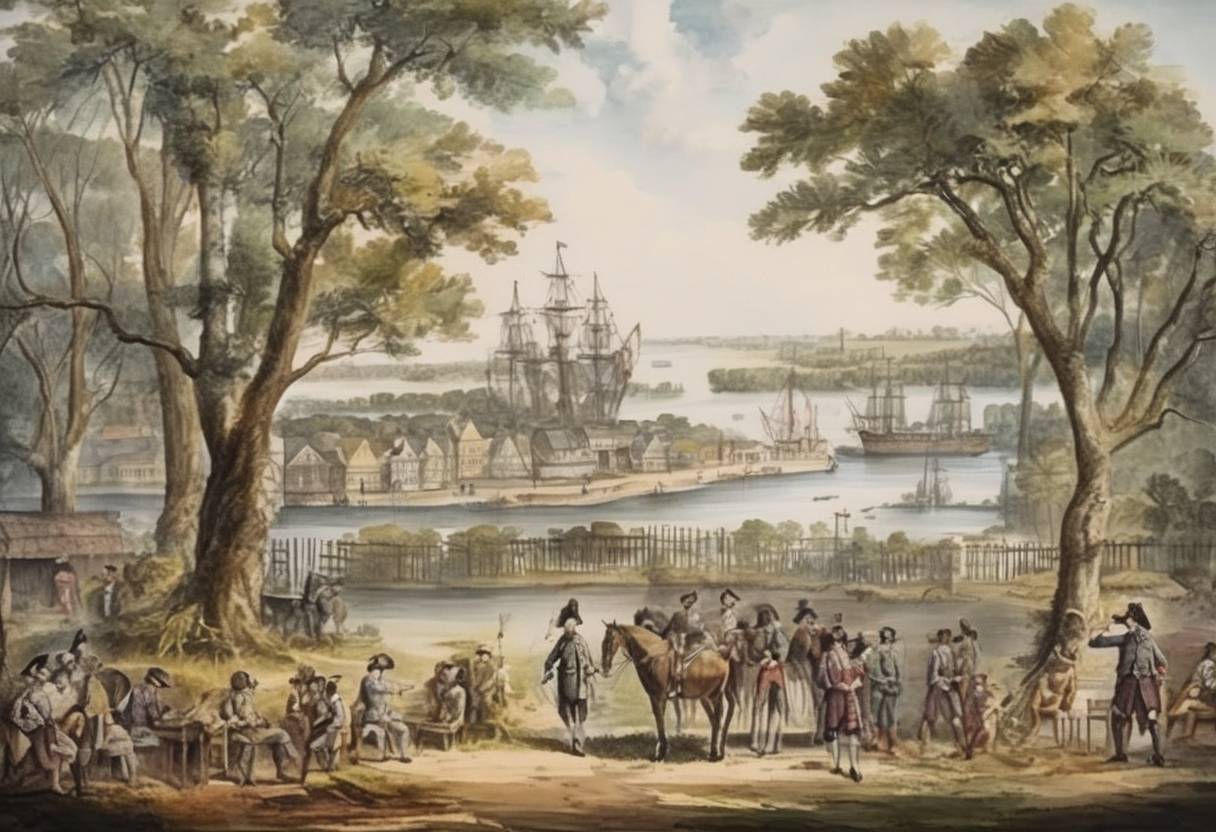
On February 12, 1733, Englishman James Oglethorpe founded the colony of Georgia, marking the establishment of Savannah as its first settlement. This event was a significant moment in the colonial history of what would become the United States, as Georgia was the last of the original Thirteen Colonies to be established.
Charter and Purpose: The colony of Georgia was chartered by King George II in 1732. It was named in his honor. The primary motivations for its establishment included creating a buffer zone to protect the more prosperous Carolinas from Spanish Florida and providing a fresh start for England’s poor and indebted citizens. The colony was envisioned as a place where debtors and the impoverished could begin anew, free from the constraints of their previous lives.
James Oglethorpe: A British general and Member of Parliament, Oglethorpe was a key figure in the founding of Georgia. He was motivated by humanitarian concerns and sought to create a society based on equality and opportunity. Oglethorpe’s vision included prohibiting slavery and limiting land ownership to prevent the rise of a landed aristocracy.
Arrival and Settlement: Oglethorpe and a group of settlers arrived on the ship Anne, landing at Yamacraw Bluff on the Savannah River. They were greeted by Tomochichi, the leader of the Yamacraw tribe, who played a crucial role in the peaceful establishment of the settlement. The cooperation between Oglethorpe and Tomochichi was instrumental in the colony’s early success.
City Planning: Savannah was meticulously planned, with a grid layout that included public squares, a feature that remains a hallmark of the city today. This design reflected Enlightenment ideals of order and rationality.
Economic and Social Development: Initially, the colony struggled economically due to restrictions on land ownership and the prohibition of slavery. However, these restrictions were eventually lifted, leading to economic growth and the establishment of plantations.
Military Importance: Georgia’s strategic location made it a crucial military buffer against Spanish incursions from Florida. This defensive role was a key factor in its early years.
Legacy: The founding of Georgia and Savannah contributed to the expansion and development of the southern United States. Savannah, in particular, grew into a vital port city and remains an important cultural and historical center.
In summary, the founding of Georgia and the establishment of Savannah on February 12, 1733, were pivotal in the colonial expansion of the British Empire in North America. James Oglethorpe’s vision for the colony laid the groundwork for its development, despite the challenges and changes that followed.
Source: en.wikipedia.org