Heraclius Overthrows Phocas and Becomes Byzantine Emperor
610 · Constantinople, Byzantine Empire
Heraclius arrives by ship from Africa at Constantinople, overthrows Byzantine Emperor Phocas, and is crowned as the new emperor.
October 5, 0610
Heraclius arrives by ship from Africa at Constantinople, overthrows Byzantine Emperor Phocas, and becomes the new emperor.
Constantinople, Byzantine Empire | Byzantine Empire
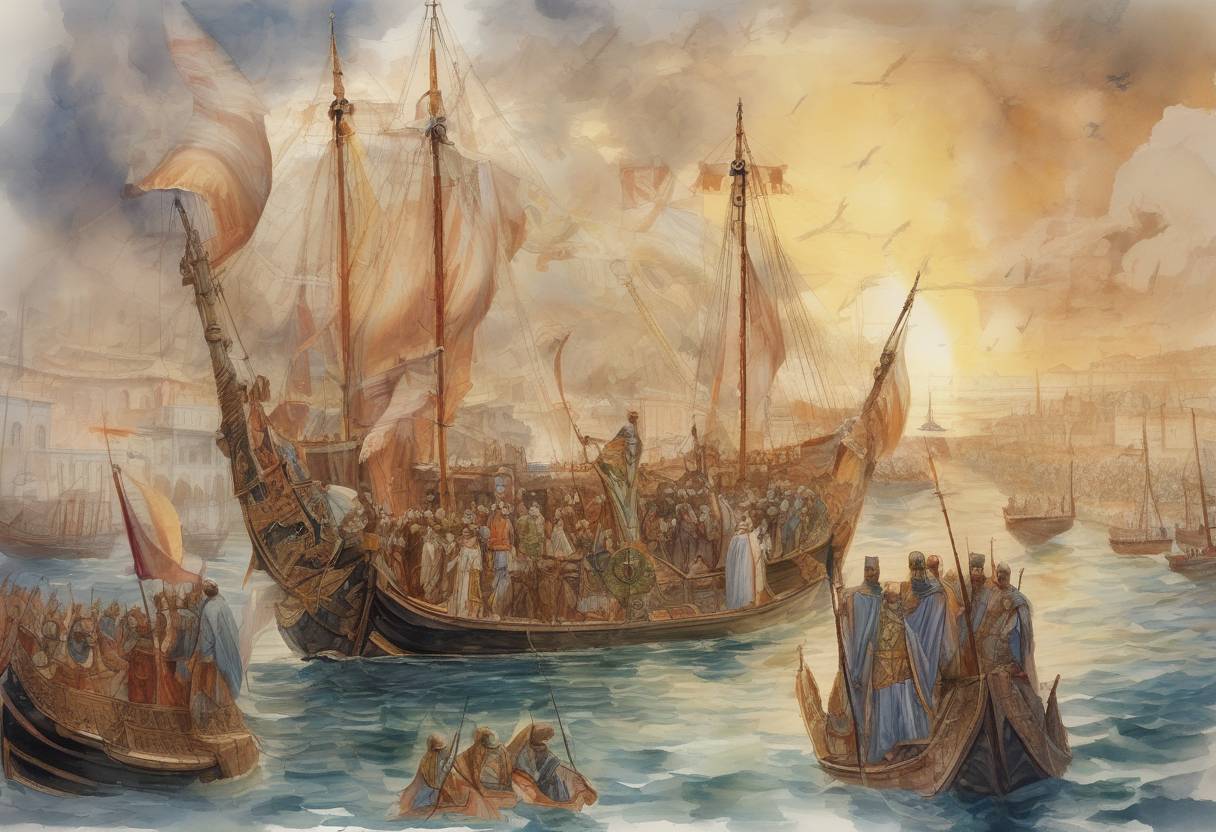
On October 5, 610, a pivotal event unfolded in the Byzantine Empire that would have lasting implications for its future. Heraclius, a prominent military leader, arrived in Constantinople from Africa and successfully overthrew the reigning Byzantine Emperor Phocas, ascending to the throne himself.
The Byzantine Empire, during the early 7th century, was embroiled in internal strife and external threats. Emperor Phocas, who had seized power in 602 through a violent coup against Emperor Maurice, was widely regarded as a tyrannical and ineffective ruler. His reign was marked by widespread dissatisfaction, heavy taxation, and military failures, particularly against the Sassanian Empire, which had taken advantage of the empire’s instability to launch invasions.
Heraclius was the son of the Exarch of Africa, also named Heraclius. The Exarchate of Africa was a crucial province of the Byzantine Empire, providing grain and other resources. Recognizing the empire’s dire state under Phocas, Heraclius the Elder and his son decided to act. They gathered support from the African provinces and assembled a fleet to challenge Phocas’ rule.
Heraclius set sail from Carthage, the capital of the Exarchate of Africa, and arrived in Constantinople on October 5, 610. His arrival was met with little resistance, as Phocas had alienated much of the military and the populace. The city’s defenders, disillusioned with Phocas, offered minimal opposition, allowing Heraclius to enter the capital with relative ease.
Phocas was captured and brought before Heraclius. According to historical accounts, Heraclius confronted Phocas, questioning his competence as a ruler. The deposed emperor was subsequently executed, marking the end of his tumultuous reign.
Heraclius’ ascension to the throne marked the beginning of a new era for the Byzantine Empire. His reign, which lasted until 641, was characterized by significant military, administrative, and religious reforms. Heraclius is particularly noted for:
Heraclius’ overthrow of Phocas and subsequent reign were significant for several reasons:
In summary, the events of October 5, 610, were a turning point for the Byzantine Empire, ushering in a period of recovery and transformation under Heraclius’ leadership.
Source: en.wikipedia.org