The Third Siege of Rome by the Visigoths: August 14, 410
410 · Rome, Western Roman Empire
The Visigoths, led by King Alaric I, begin their third siege of Rome, which eventually leads to the sack of the city later in August.
November 18, 0401
The Visigoths, led by King Alaric I, invade Italy, marking the beginning of the Visigothic War in Italy.
Italy, Western Roman Empire | Visigoths
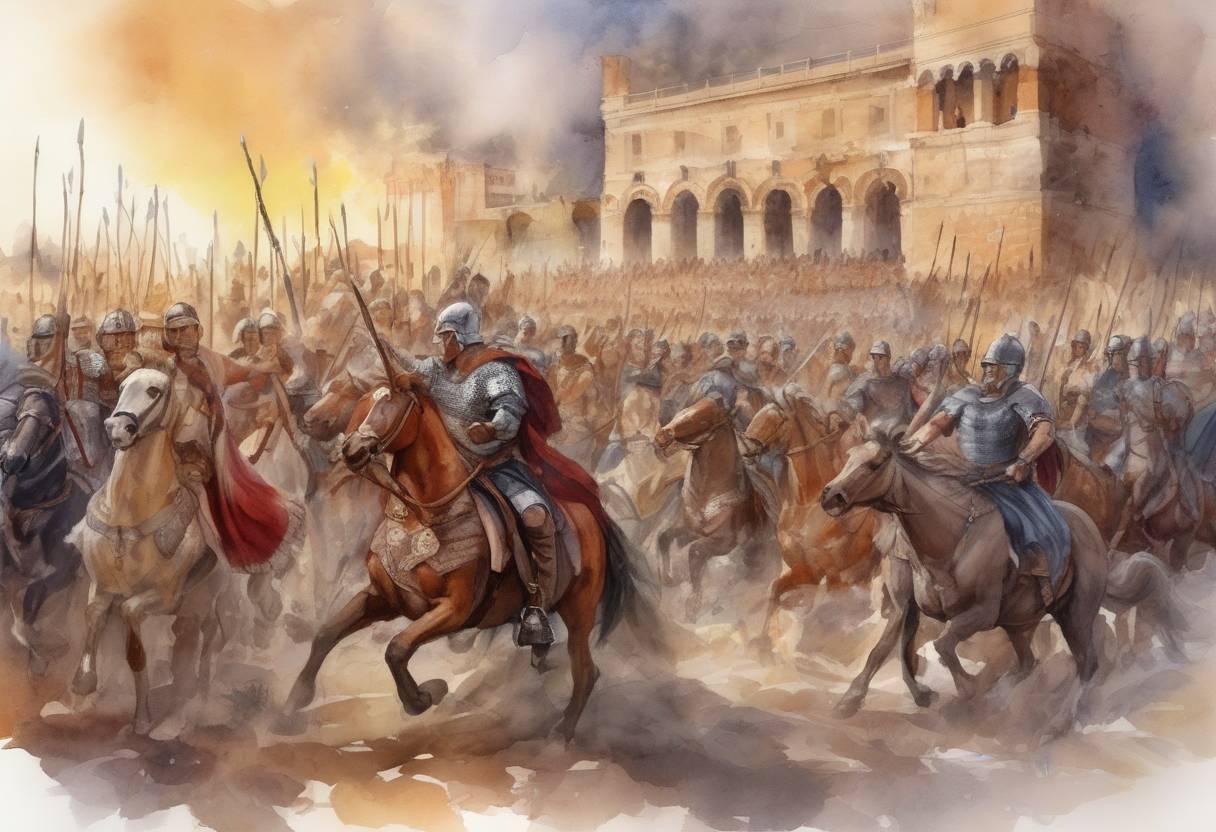
On November 18, 401, the Visigoths, under the leadership of King Alaric I, invaded Italy, marking the beginning of the Visigothic War in Italy. This event was a significant moment in the decline of the Western Roman Empire and set the stage for further incursions that would eventually lead to the sack of Rome in 410.
The Visigoths were a Germanic tribe that had settled in the Balkans as foederati, or allies, of the Roman Empire. However, tensions between the Visigoths and the Romans had been escalating due to unmet promises and the harsh treatment of the Visigoths by Roman officials. Alaric, who became king of the Visigoths around 395, sought to secure a more stable and prosperous future for his people, which led him to turn his attention towards Italy.
The invasion of Italy in 401 was driven by Alaric’s ambition to gain recognition and land for his people within the Roman Empire. The Visigoths crossed the Julian Alps and entered the Italian peninsula, causing panic among the Roman populace. The Roman military response was led by the capable general Stilicho, who was the magister militum (master of soldiers) of the Western Roman Empire.
Battle of Pollentia (402): One of the significant battles during this invasion was the Battle of Pollentia, which took place on Easter Sunday in 402. Stilicho managed to surprise the Visigoths and achieve a tactical victory, although Alaric’s forces were not decisively defeated.
Battle of Verona (403): Another confrontation occurred at Verona, where Stilicho again engaged Alaric’s forces. This battle forced Alaric to retreat from Italy temporarily, but it did not end the threat posed by the Visigoths.
Although Alaric’s initial invasion did not result in a permanent settlement in Italy, it exposed the vulnerabilities of the Western Roman Empire and demonstrated the growing power of the barbarian groups within its borders. The invasion was a precursor to the more devastating sack of Rome in 410, which Alaric would lead, marking a symbolic moment in the decline of Roman power.
The Visigothic invasions highlighted the shifting dynamics of power in late antiquity, where barbarian groups increasingly played a pivotal role in the political landscape of Europe. The events of 401 and the subsequent interactions between the Visigoths and the Roman Empire underscored the challenges faced by the empire in maintaining its territorial integrity and political stability.
In summary, the Visigothic invasion of Italy in 401 was a critical event that foreshadowed the eventual fall of the Western Roman Empire and the transformation of the European political order in the centuries to come.
Source: en.wikipedia.org