United Nations General Assembly Resolution 383
1950 · New York City, United States
The United Nations General Assembly passes Resolution 383, which calls for a ceasefire and withdrawal of Chinese and North Korean forces from the Korean Peninsula.
November 19, 1950
The United Nations General Assembly passed Resolution 377, known as the 'Uniting for Peace' resolution, allowing the General Assembly to act if the Security Council fails to maintain international peace.
New York City, United States | United Nations
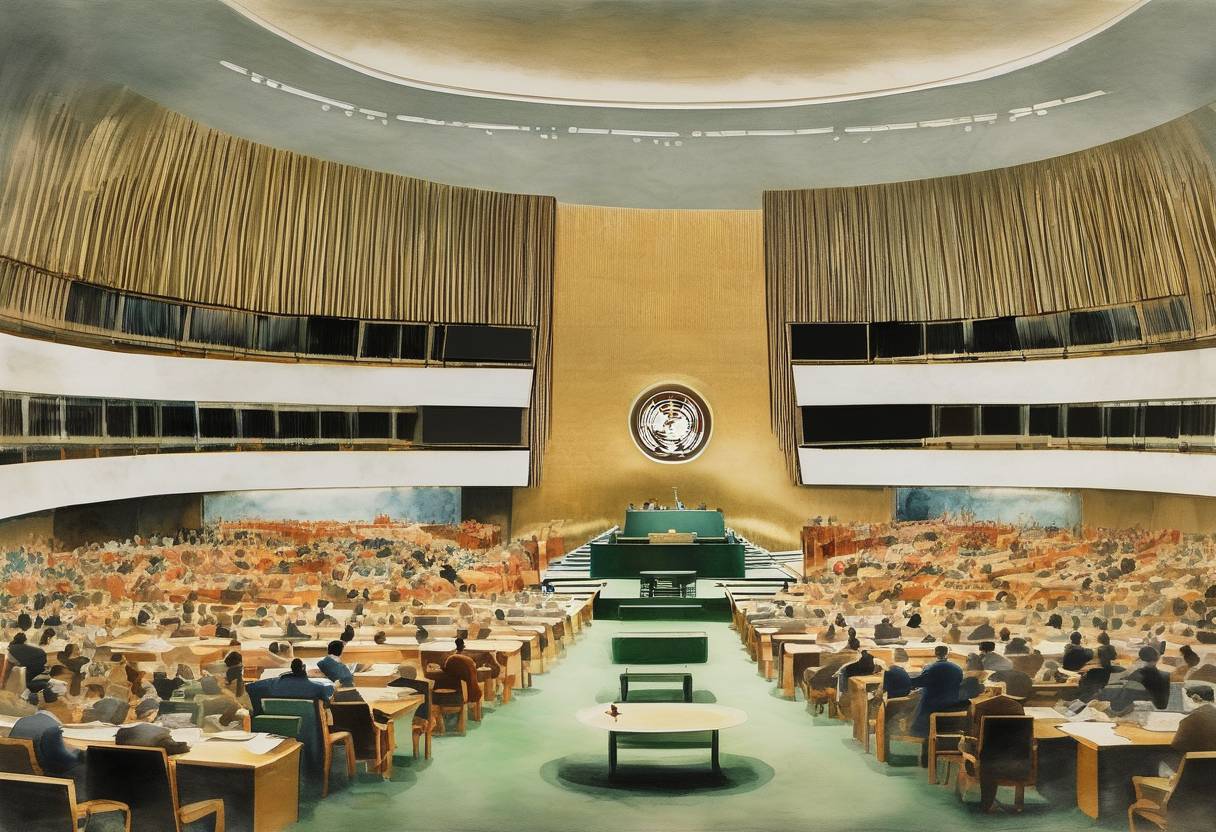
On November 19, 1950, the United Nations General Assembly passed Resolution 377, commonly known as the “Uniting for Peace” resolution. This significant resolution was adopted during the fifth session of the General Assembly and was a pivotal moment in the history of the United Nations, as it addressed the limitations of the Security Council in maintaining international peace and security.
The backdrop to the adoption of Resolution 377 was the early Cold War period, characterized by heightened tensions between the United States and the Soviet Union. The Security Council, which is primarily responsible for maintaining international peace and security, was often paralyzed by the veto power wielded by its permanent members. This was particularly evident during the Korean War, which began in June 1950, when the Soviet Union’s absence from the Security Council allowed for the passage of resolutions supporting military intervention in Korea.
Resolution 377 was designed to circumvent the deadlock often encountered in the Security Council due to the veto power. The key provisions of the resolution include:
Empowerment of the General Assembly: The resolution allows the General Assembly to convene an emergency special session within 24 hours if the Security Council, due to a lack of unanimity among its permanent members, fails to act in a situation where there appears to be a threat to peace, breach of the peace, or act of aggression.
Recommendations for Collective Measures: During such emergency sessions, the General Assembly can recommend collective measures, including the use of armed force, to maintain or restore international peace and security.
Role of the Secretary-General: The resolution also emphasizes the role of the UN Secretary-General in facilitating the convening of such sessions and in implementing the recommendations made by the General Assembly.
The adoption of the “Uniting for Peace” resolution was a crucial development in the functioning of the United Nations. It provided a mechanism for the General Assembly to take action when the Security Council was unable to do so, thus ensuring that the UN could still play a role in addressing international crises.
Increased Role of the General Assembly: The resolution effectively increased the influence and responsibility of the General Assembly in matters of international peace and security, traditionally the domain of the Security Council.
Precedent for Future Actions: The resolution set a precedent for future actions by the General Assembly in situations where the Security Council was deadlocked. It has been invoked several times since its adoption, including during the Suez Crisis in 1956 and the Soviet invasion of Hungary in the same year.
Resolution 377, or the “Uniting for Peace” resolution, remains a testament to the adaptability of the United Nations in the face of geopolitical challenges. By empowering the General Assembly to act when the Security Council is unable to do so, it has provided an alternative pathway for the international community to address threats to peace and security, reinforcing the UN’s commitment to maintaining global stability.
Source: www.un.org