North Korea's Missile Launch on July 4, 2009
2009 · Pyongyang, North Korea
North Korea launched seven ballistic missiles into the Sea of Japan, escalating tensions in the region and drawing international condemnation.
February 8, 2005
North Korea publicly announced for the first time that it possessed nuclear weapons, escalating tensions in the region and complicating diplomatic efforts to denuclearize the Korean Peninsula.
Pyongyang, North Korea | North Korean Government
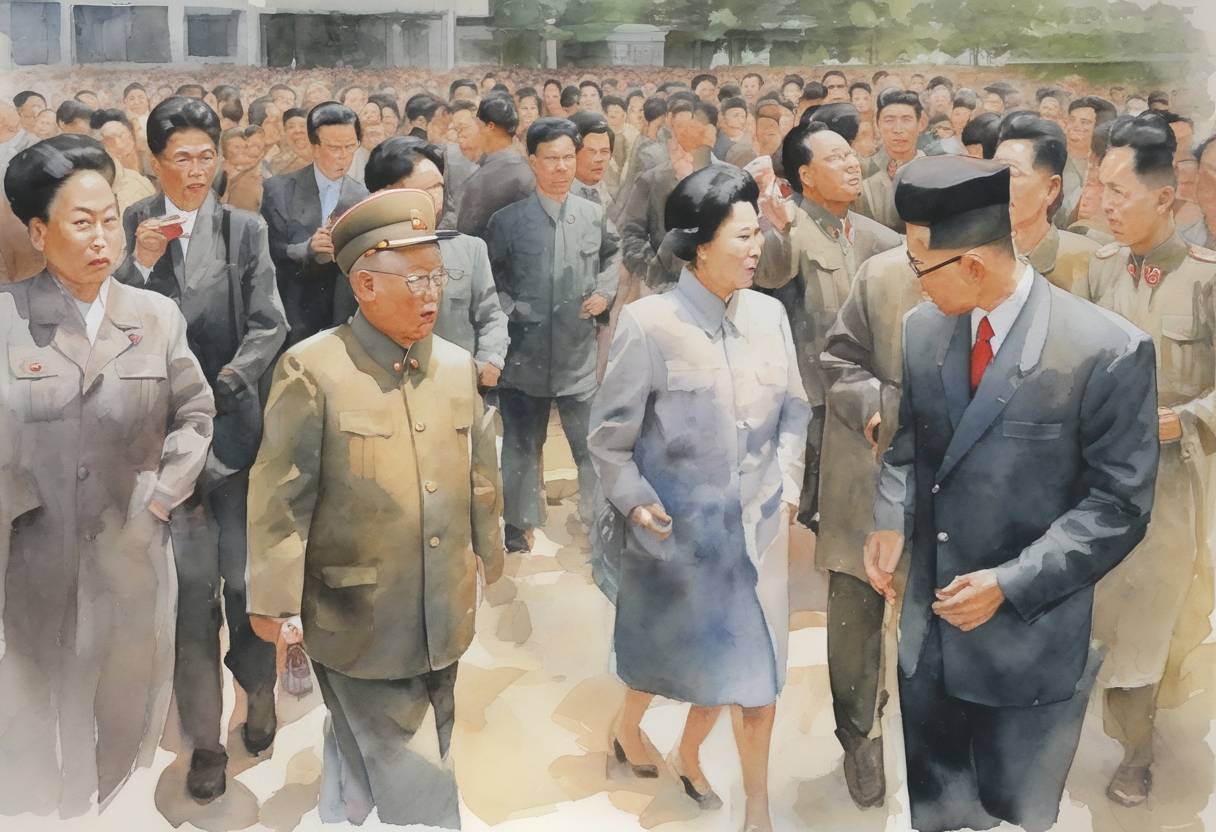
On February 8, 2005, North Korea publicly declared for the first time that it possessed nuclear weapons. This announcement marked a significant escalation in the ongoing tensions on the Korean Peninsula and posed a substantial challenge to international diplomatic efforts aimed at denuclearization.
The roots of North Korea’s nuclear ambitions can be traced back to the mid-20th century, but significant developments began in the 1990s:
1994 Agreed Framework: North Korea and the United States reached an agreement in which North Korea would freeze its illicit plutonium weapons program in exchange for aid in producing two power-generating nuclear reactors.
2002 Breakdown: The Agreed Framework collapsed when the U.S. accused North Korea of pursuing a secret uranium enrichment program. This led to heightened tensions and the eventual withdrawal of North Korea from the Nuclear Non-Proliferation Treaty (NPT) in 2003.
Six-Party Talks: Initiated in 2003, these talks involved North Korea, South Korea, Japan, China, Russia, and the United States, aiming to find a peaceful resolution to the security concerns posed by North Korea’s nuclear program.
On February 8, 2005, North Korea’s Foreign Ministry issued a statement declaring that it had manufactured nuclear weapons for self-defense. The statement cited the need to protect its sovereignty against what it perceived as a hostile U.S. policy. This was the first official acknowledgment by North Korea of its nuclear arsenal, although suspicions had existed for years.
International Reaction: The announcement was met with widespread concern and condemnation. The United States, South Korea, Japan, and other nations urged North Korea to return to the Six-Party Talks and abandon its nuclear ambitions.
Regional Tensions: The declaration heightened security concerns in East Asia, prompting discussions on defense strategies and the potential need for increased military readiness among neighboring countries.
Diplomatic Efforts: Despite the setback, diplomatic efforts continued. The Six-Party Talks resumed later in 2005, although progress remained slow and fraught with challenges.
North Korea’s announcement in 2005 was a pivotal moment in the history of nuclear proliferation. It underscored the complexities of diplomatic negotiations with states pursuing nuclear capabilities and highlighted the challenges of ensuring regional stability in the face of nuclear threats. The event also set the stage for future negotiations and policy decisions regarding North Korea’s nuclear program, which continue to be a critical issue in international relations.
In summary, North Korea’s public acknowledgment of its nuclear weapons in 2005 was a significant development that reshaped the geopolitical landscape of the Korean Peninsula and posed enduring challenges for global non-proliferation efforts.
Source: www.bbc.com