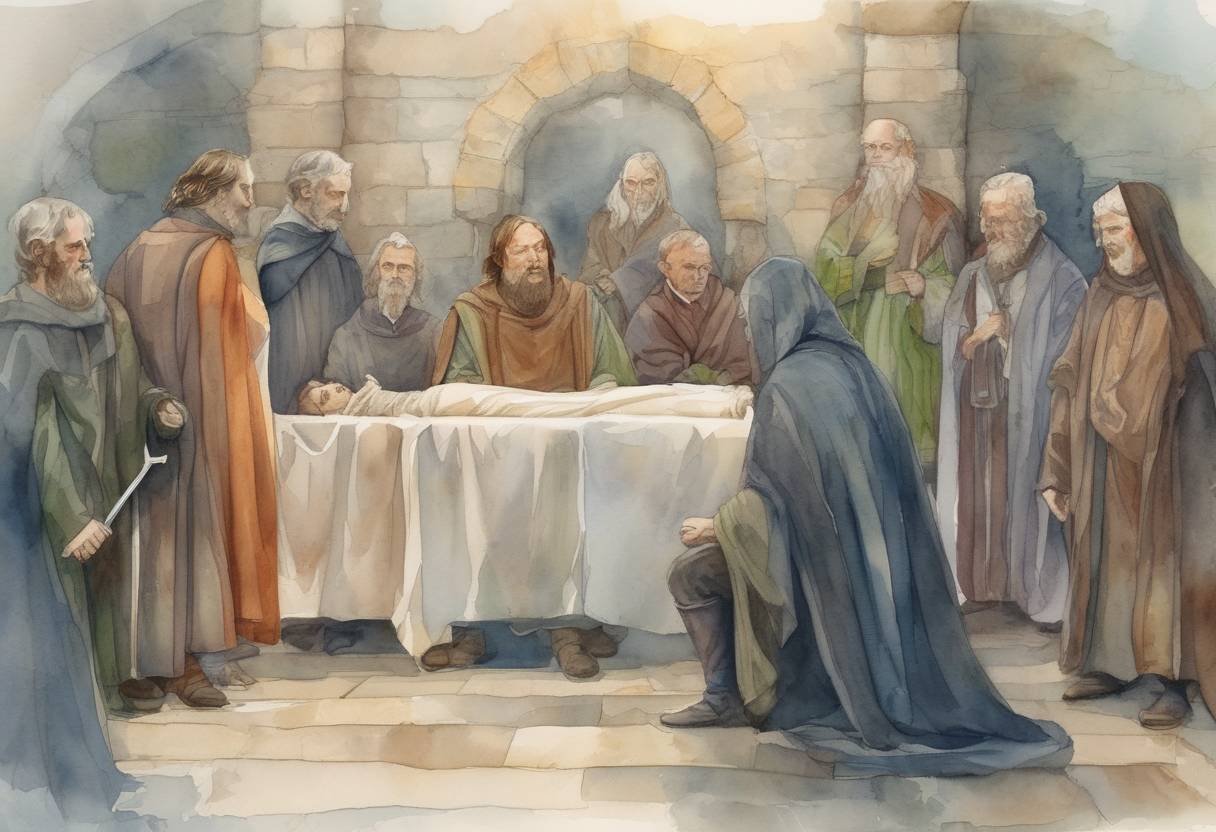
Death of Saint Columba
Overview
Saint Columba, also known as Colum Cille, was an influential Irish abbot and missionary who played a pivotal role in the spread of Christianity in Scotland. He is best known for founding the abbey on the island of Iona, which became a center of religious learning and missionary activity. Columba’s death on June 9, 597, marked the end of a significant chapter in the Christianization of the British Isles.
Early Life and Mission
- Birth and Background: Columba was born around 521 in Gartan, in present-day County Donegal, Ireland. He hailed from a noble family and was a descendant of Niall of the Nine Hostages, a legendary Irish king.
- Monastic Life: Columba was educated at monastic schools in Ireland, where he became a monk and later a priest. He founded several monasteries in Ireland, including those at Derry and Durrow.
- Exile and Mission to Scotland: In 563, Columba left Ireland, possibly due to a dispute that led to a battle, and sailed to Scotland with 12 companions. He established a monastic community on the island of Iona, which became a base for his missionary work among the Picts and other tribes in Scotland.
Contributions and Legacy
- Iona Abbey: The monastery on Iona became a renowned center for learning and religious activity. It played a crucial role in the spread of Christianity throughout Scotland and beyond.
- Missionary Work: Columba is credited with converting several Pictish kings and establishing numerous churches and monastic communities across Scotland.
- Cultural Impact: Columba’s work helped to preserve and transmit Christian teachings and classical knowledge during a time of great upheaval in Europe. The scriptorium at Iona produced many important manuscripts, including the Book of Kells, although it was likely completed after Columba’s time.
Death and Aftermath
- Death: Columba died on June 9, 597, at the age of 75. According to tradition, he passed away peacefully in the church on Iona, surrounded by his monks.
- Veneration: Columba was quickly venerated as a saint, and his feast day is celebrated on June 9. His life and works were chronicled by Adomnán, the ninth abbot of Iona, in the “Vita Columbae” (Life of Columba), which remains a key source of information about his life.
- Historical Significance: Columba’s legacy is evident in the enduring influence of Iona as a spiritual and cultural center. His efforts laid the groundwork for the Christianization of Scotland and contributed to the broader Christian heritage of the British Isles.
Saint Columba’s life and mission exemplify the dynamic interplay of faith, culture, and politics in early medieval Europe, highlighting the transformative power of religious conviction and leadership.